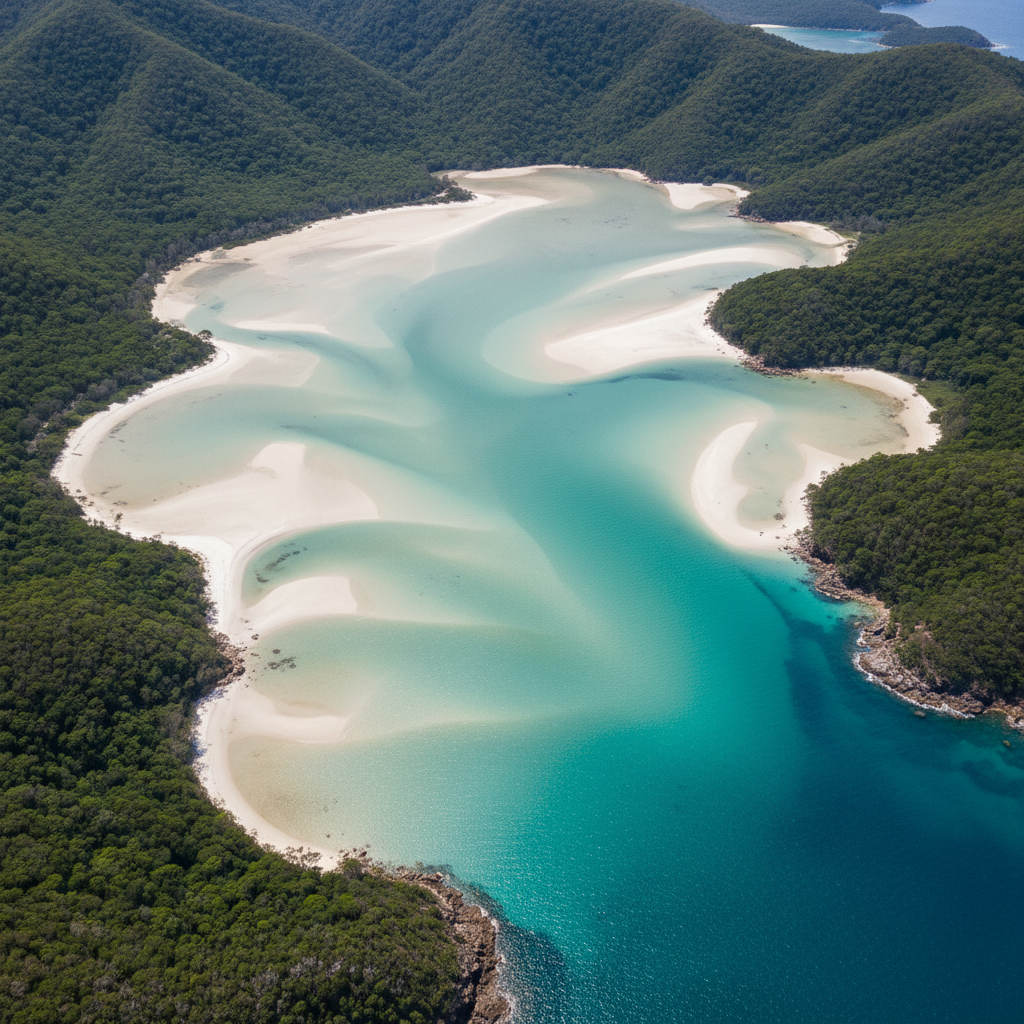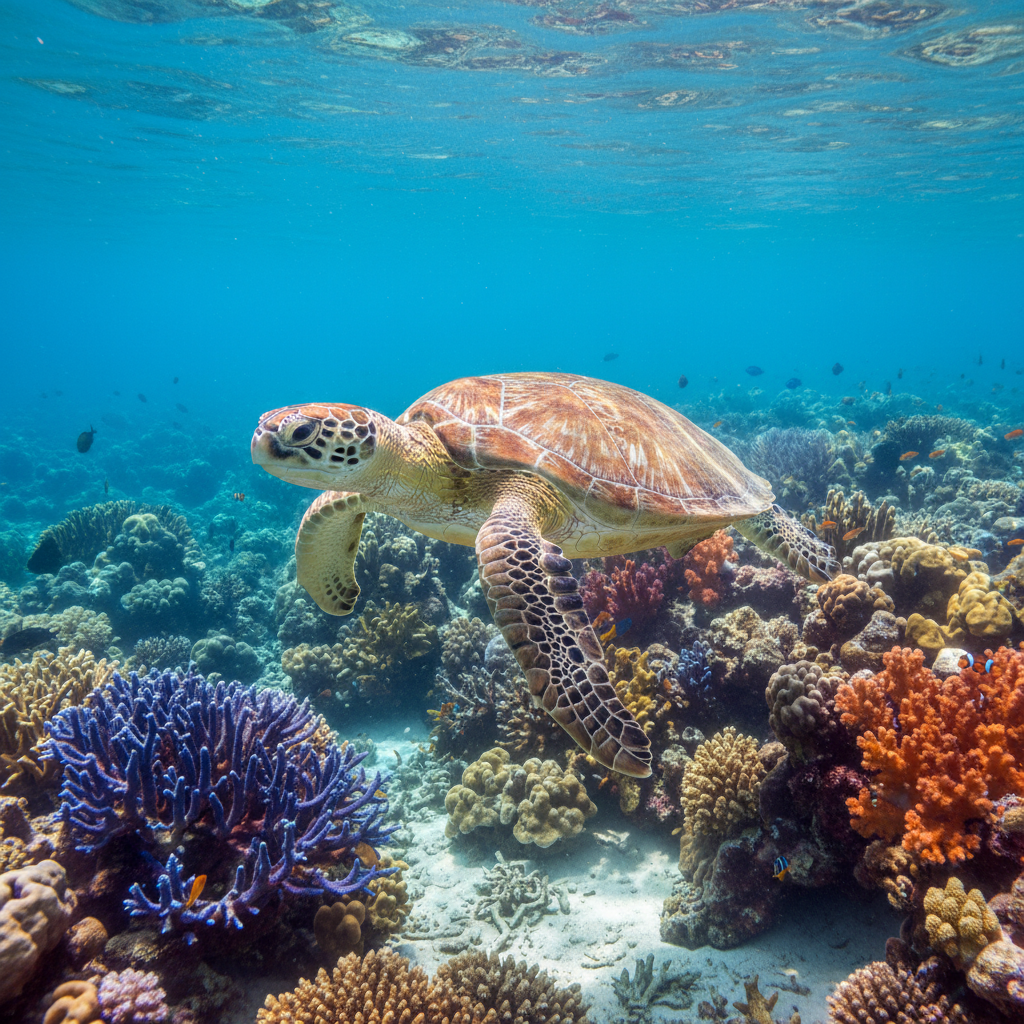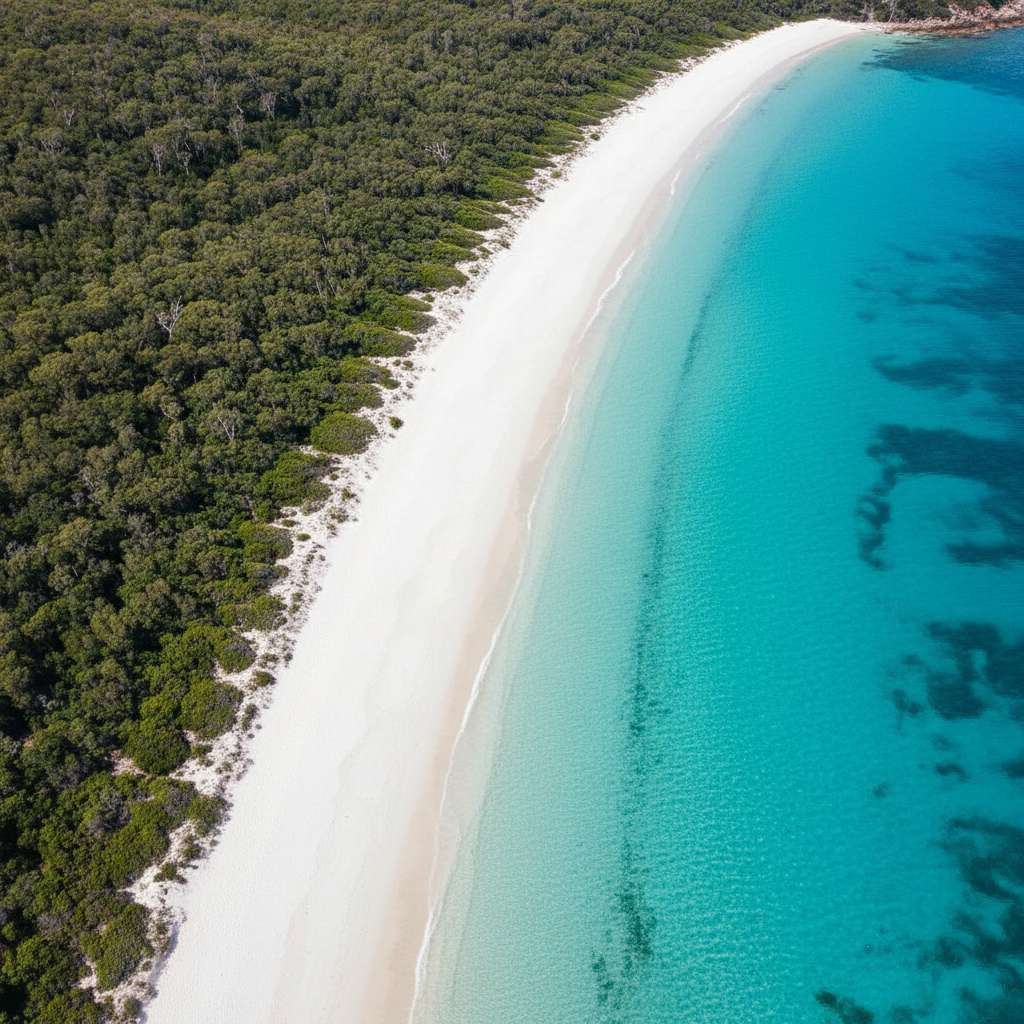
The crystal-clear waters surrounding the Whitsunday Islands create one of Australia's most spectacular underwater photography destinations. From the vibrant coral gardens at Hook Island to the pristine reefs near Hamilton Island, these protected marine waters offer endless opportunities to capture stunning images of tropical fish, coral formations, and marine life. Whether you're wielding a professional underwater housing or a simple GoPro, the Whitsundays' exceptional visibility and diverse marine ecosystems provide the perfect canvas for underwater photography.
What camera gear do you need for underwater photography in the Whitsundays?
Essential underwater photography gear for the Whitsundays includes a waterproof camera or housing, underwater strobes or lights for colour correction, red filters for blue water, and backup equipment due to saltwater exposure risks.
Your camera choice depends on your experience level and budget. Entry-level photographers often start with action cameras like the GoPro Hero 11 ($599 AUD) or DJI Action 3 ($499 AUD), which offer excellent image stabilisation and built-in waterproofing to 10 metres. For more serious work, mirrorless cameras in underwater housings provide superior image quality - the Sony A7R V in an Ikelite housing ($8,500 AUD total) delivers exceptional results in the Whitsundays' varying light conditions.
Underwater strobes become crucial beyond 5 metres depth, where natural red light disappears completely. Twin Ikelite DS160 strobes ($1,200 AUD) provide even lighting for close-up shots of coral formations and fish portraits. For ambient light photography, red filters help restore natural colours - a simple screw-on red filter for your GoPro costs around $25 AUD and dramatically improves colour rendition in blue water.
Don't forget essential accessories: silica gel packets prevent fogging inside housings, lens cleaning cloths handle salt spray between dives, and floating straps prevent expensive gear from sinking into the Coral Sea's 60-metre depths around some reef sites.
Which GoPro settings work best in Whitsundays waters?
Optimal GoPro settings for Whitsundays underwater photography include 4K/24fps video, RAW photo format, medium field of view to reduce distortion, manual white balance at 3000K, and higher ISO tolerance for deeper reef shooting.
Set your GoPro to Linear mode rather than Wide to minimise the fisheye distortion that makes coral formations appear unnaturally curved. For video work around the reefs, 4K resolution at 24fps provides cinematic quality while conserving battery life during longer snorkelling sessions. Switch to 60fps only when capturing fast-moving subjects like reef sharks or schools of trevally.
White balance requires special attention in tropical waters. Auto white balance often fails in blue water beyond 8 metres depth, creating overly blue images. Set manual white balance to 3000K for depths between 5-15 metres, which covers most recreational snorkelling in the Whitsundays. For shallower reef flats around Whitehaven Beach, 5500K works better.
Enable RAW photo capture through GoPro Labs firmware for maximum post-processing flexibility. RAW files retain more colour information crucial for correcting the blue-green colour cast common in tropical waters. Increase ISO tolerance to 800-1600 for shooting in deeper reef channels where natural light diminishes rapidly.
What are the best underwater photography locations in the Whitsundays?
Top underwater photography spots include Manta Ray Bay for pelagic species, Blue Pearl Bay's coral gardens for macro photography, Hook Island's Butterfly Bay for diverse reef fish, and Catseye Beach reef for accessible shore-based shooting opportunities.
Manta Ray Bay on Hook Island offers the Whitsundays' most reliable encounters with larger marine species. The bay's 15-20 metre visibility allows photographers to capture manta rays (wingspan up to 4 metres), white tip reef sharks, and schools of barracuda. The coral bommies in 8-12 metres of water provide excellent wide-angle opportunities, especially during morning dives when light penetration reaches maximum intensity.
Blue Pearl Bay showcases the region's healthiest hard coral formations, with over 350 coral species creating a kaleidoscope of colours perfect for macro photography. The protected bay's calm conditions and 20+ metre visibility make it ideal for beginners practising underwater photography techniques. Focus areas include the staghorn coral gardens in 3-5 metres of water and the plate coral formations along the bay's eastern wall.
Butterfly Bay on Hook Island's northern shore features the Whitsundays' most diverse fish populations. Regular sightings include Maori wrasse (up to 1.8 metres long), schools of sweetlip emperor, and over 40 species of butterfly fish. The bay's varied topography - from shallow coral gardens to deeper boulder formations - provides multiple composition opportunities within a single snorkelling session.
For those seeking accessible shore-based photography, Catseye Beach on Hamilton Island offers excellent reef photography without boat access. The fringing reef extends 200 metres offshore in depths of 2-6 metres, perfect for photographing green sea turtles, reef fish, and coral formations using natural lighting.
How do you handle lighting for underwater photos in tropical waters?
Effective underwater lighting in the Whitsundays requires understanding light absorption, using strobes for close subjects, positioning lights at 45-degree angles to minimise backscatter, and shooting upward toward surface light for dramatic silhouettes.
Water absorbs light rapidly - red wavelengths disappear within 3 metres, orange by 5 metres, and yellow by 10 metres depth. This leaves only blue-green light penetrating to typical snorkelling depths around the Whitsunday reefs. Artificial lighting becomes essential for capturing true colours of coral formations and tropical fish species.
Position underwater strobes at 45-degree angles from your camera housing to minimise backscatter from suspended particles in the water column. The Whitsundays' generally clear waters (visibility 15-30 metres) produce less backscatter than murkier locations, but proper strobe positioning remains crucial for professional-quality results.
For ambient light photography, shoot upward toward the surface to create dramatic silhouettes of subjects like green sea turtles or reef sharks against the bright tropical sky. This technique works particularly well during the golden hours just after sunrise (6:30 AM) or before sunset (6:00 PM) when surface light creates stunning colour gradients in the water column.
Consider the inverse square law when positioning strobes - doubling your distance from the subject quarters the light intensity reaching your subject. In the crystal-clear waters around Hamilton Island and Hayman Island, you can effectively light subjects up to 1.5 metres away with twin strobes, perfect for photographing larger coral formations or small fish schools.
When is the best time for underwater photography in the Whitsundays?
Peak underwater photography conditions occur during the dry season (May to October) with 25-30 metre visibility, calm seas, optimal light penetration between 10 AM-2 PM, and reduced stinger risk allowing unrestricted water access.
The dry season delivers consistently excellent underwater photography conditions with minimal rainfall affecting water clarity. Southeast trade winds average 10-15 knots during this period, creating manageable surface conditions for boat-based photography trips. Water temperatures remain comfortable at 22-26°C, allowing extended underwater sessions without thick wetsuits that can limit mobility.
Daily timing significantly impacts image quality. Optimal light penetration occurs between 10 AM and 2 PM when the sun reaches its highest angle, maximising natural light reaching reef depths. During these peak hours, you can capture vibrant coral colours in natural light down to 12-15 metres depth around the outer reefs near Hayman Island and Hamilton Island.
Stinger season (November to May) requires stinger suits for water entry, which can complicate equipment handling and camera operation underwater. However, this period also coincides with calmer weather patterns and warmer water temperatures (26-29°C), creating trade-offs that advanced photographers often find worthwhile.
Moon phases affect marine life behaviour patterns. New moon periods (complete darkness) often produce more active nocturnal species, while full moon phases can trigger coral spawning events - spectacular but unpredictable photographic opportunities that occur annually between October and December in the Whitsundays region.
What marine life can you photograph in Whitsundays waters?
Common photographic subjects include green sea turtles, reef sharks, giant trevally schools, over 350 coral species, Maori wrasse, manta rays, humpback whales (June-September), and diverse tropical fish including parrotfish, angelfish, and butterfly fish species.
Green sea turtles (Chelonia mydas) represent the most reliable large marine life encounters for photographers, with over 2,000 individuals residing in Whitsunday waters year-round. These gentle creatures, reaching up to 1.5 metres in length, feed on seagrass beds around Hamilton Island and can be approached slowly for close-up photography. Maintain a respectful 4-metre distance as required by Great Barrier Reef Marine Park regulations.
Reef sharks, primarily grey reef sharks (Carcharhinus amblyrhynchos) and white tip reef sharks (Triaenodon obesus), patrol the deeper coral drop-offs around Hook Island and Hayman Island. These apex predators, measuring 1.5-2 metres in length, provide excellent wide-angle photography opportunities when photographed against blue water backgrounds. They're generally shy and require patient approach techniques for successful photography.
The region supports over 350 hard and soft coral species, creating diverse macro photography opportunities. Staghorn corals (Acropora species) dominate shallow reef flats, while massive brain corals (Diploria species) create dramatic wide-angle subjects in deeper waters. Soft corals including sea fans and barrel sponges add colour variety to reef photography compositions.
During whale season (June to September), humpback whales (Megaptera novaeangliae) migrate through Whitsunday waters, offering rare opportunities for whale photography from licensed tour operators. These magnificent creatures, reaching 16 metres in length, can be photographed from the surface during breathing sequences, though underwater whale photography requires special permits and professional guidance.
How do you maintain camera equipment in saltwater conditions?
Essential saltwater maintenance includes immediate freshwater rinses after each use, O-ring inspection and lubrication, silica gel placement in housings, proper drying before storage, and regular professional servicing every 50-100 saltwater dives.
Saltwater corrosion poses the primary threat to underwater photography equipment in the Whitsundays. Rinse all gear thoroughly with fresh water immediately after each dive session - salt crystals continue damaging metal components even after equipment appears dry. Pay special attention to threaded connections, control buttons, and port surfaces where salt residue commonly accumulates.
O-ring maintenance determines waterproof housing reliability. Inspect main housing O-rings before each dive for nicks, debris, or degradation. Clean O-rings with fresh water only - avoid petroleum-based products that can damage rubber compounds. Apply thin layers of silicone grease annually or after every 25 dives, whichever comes first. Replace O-rings showing any signs of permanent deformation or cracking.
Control moisture inside housings using silica gel capsules designed for underwater photography. Replace gel packets when they change colour from blue to pink, indicating moisture saturation. In the Whitsundays' high humidity environment (often 70-80%), consider vacuum-sealing systems for expensive camera housings to eliminate condensation risks entirely.
Store equipment in air-conditioned environments when possible - the region's tropical climate accelerates corrosion and fungal growth. Remove batteries from strobes and cameras during extended storage periods. Schedule professional housing servicing annually or after 50-100 saltwater exposures, particularly important given the Whitsundays' active marine environment and frequent equipment use during peak tourist seasons.
What composition techniques work best for underwater reef photography?
Effective underwater compositions utilise the rule of thirds, leading lines from coral formations, negative space in blue water, foreground-background layering for depth, and upward angles to capture surface light creating dramatic rim lighting effects.
The rule of thirds applies powerfully in underwater environments where natural reference points are limited. Position key subjects like sea turtles or large coral formations at intersection points rather than dead centre. This creates more dynamic compositions that guide viewers' eyes through the frame while maintaining visual balance in the three-dimensional underwater environment.
Coral formations provide excellent leading lines that draw viewers deeper into your photographs. The branching patterns of staghorn corals naturally create diagonal lines pointing toward focal subjects, while table corals form strong horizontal elements that anchor compositions. Use these natural formations to guide attention toward your main subject, whether it's a colourful fish or interesting coral detail.
Negative space in blue water backgrounds helps isolate subjects and create clean, professional-looking images. Position yourself below your subject and shoot upward to capture them against the bright blue water column rather than against busy coral backgrounds. This technique works particularly well for photographing larger fish species or sea turtles in the clear waters around the outer Whitsunday reefs.
Create depth through foreground-background layering by including coral elements in your foreground while focusing on fish or marine life in the middle ground. This technique adds three-dimensional feel to underwater images and helps viewers understand the scale and context of reef environments. The exceptional visibility in Whitsunday waters (often 20-30 metres) allows effective use of this technique even with wide-angle lenses.
How do you photograph fast-moving marine life underwater?
Capturing fast-moving marine life requires continuous autofocus modes, higher shutter speeds (minimum 1/125s), pre-focusing techniques, anticipating movement patterns, and shooting in burst modes for increased success rates with unpredictable subjects.
Switch your camera to continuous autofocus (AI Servo for Canon, AF-C for Nikon) when photographing active fish species like trevally schools or reef sharks. These subjects move unpredictably through three-dimensional space, requiring constant focus adjustment. Set focus tracking sensitivity to moderate levels to avoid the system jumping focus when temporary obstructions (like coral branches) enter the frame.
Minimum shutter speeds depend on subject size and distance. For large subjects like Maori wrasse (up to 1.8 metres long), 1/125 second suffices when they're swimming slowly. Smaller, more active fish species like parrotfish or angelfish require 1/250 second or faster to freeze motion effectively. The excellent lighting conditions in shallow Whitsunday reefs allow these faster shutter speeds without sacrificing image quality.
Pre-focusing techniques work well with predictable marine behaviour. Many fish species follow established patrol routes around coral formations - observe patterns during initial reconnaissance before raising your camera. Focus on a point along their expected path and wait for the subject to enter your pre-focused zone rather than attempting to track them continuously.
Burst mode photography significantly increases success rates with unpredictable subjects. Most modern cameras can capture 8-12 frames per second, allowing you to select the best composition and timing from multiple exposures. This technique proves invaluable when photographing schooling fish or capturing peak action moments like fish feeding behaviours around coral cleaning stations.
What post-processing techniques enhance underwater photos from the Whitsundays?
Key post-processing steps include colour correction for blue-green water cast, contrast enhancement for lost detail, selective colour adjustments, noise reduction for higher ISO reef shots, and sharpening to counteract water softening effects on image clarity.
Colour correction forms the foundation of underwater image processing. The Whitsundays' tropical waters create strong blue-green colour casts that remove warm tones from your images. Use the white balance eyedropper tool on neutral elements like white coral sand or grey rocks to establish accurate colour baselines. Alternatively, adjust temperature sliders toward warmer settings (typically +200 to +500 Kelvin) to restore natural coral and fish colours.
Contrast enhancement recovers detail lost in the flat lighting conditions common underwater. Increase overall contrast moderately while using shadow/highlight adjustments to prevent clipping. The clarity slider in Lightroom or texture adjustments in Photoshop help restore the crisp detail that water naturally softens through light scattering.
Selective colour adjustments target specific issues in underwater images. Boost orange and red channels to enhance coral colours that water naturally absorbs. Increase yellow saturation carefully to restore warmth to fish species like angelfish or butterfly fish. Use luminosity masks to apply these adjustments only to appropriate areas while preserving natural blue water backgrounds.
Noise reduction becomes crucial for images shot in deeper waters or challenging lighting conditions around the Whitsunday reefs. Higher ISO settings (800-1600) often necessary for maintaining adequate shutter speeds produce visible noise that requires careful processing. Use dedicated noise reduction software like DxO or Topaz for optimal results while preserving important image details.
Ready to capture the underwater magic of the Whitsundays? Browse our comprehensive photography tours and snorkelling adventures at Airlie to Whitehaven. Our experienced guides know the best photography locations, optimal timing, and can provide equipment recommendations to help you create stunning underwater images in one of Australia's most pristine marine environments. Book your Whitsundays underwater photography adventure today and return home with incredible images of this World Heritage-listed marine paradise.