The twin marinas of Airlie Beach serve as the heart of Whitsundays fishing adventures, with Shute Harbour and Abel Point Marina offering distinct fishing experiences for both shore-based anglers and charter boat enthusiasts. These bustling departure points provide everything from casual jetty fishing opportunities to world-class deep-sea fishing charter departures, making them essential stops for anyone looking to wet a line in the pristine waters surrounding the Whitsunday Islands.
What fishing opportunities are available directly from Shute Harbour?
Shute Harbour offers excellent jetty fishing for species like trevally, queenfish, and flathead, plus serves as the main departure point for reef fishing charters targeting coral trout, red emperor, and Spanish mackerel in deeper waters around the islands.
The Shute Harbour jetty extends into Conway Bay's deeper waters, creating ideal conditions for both day and night fishing. The eastern side of the main jetty produces consistent catches of golden trevally (averaging 2-4kg), giant trevally (up to 15kg), and queenfish (1-3kg), particularly during the rising tide periods.
Flathead are abundant around the sandy bottom areas near the boat ramp, with dusky flathead commonly reaching 40-60cm. The rock walls attract estuary cod, mangrove jack, and the occasional fingermark bream. Night fishing proves particularly productive, with catfish, grunter, and threadfin salmon active after sunset.
Most reef fishing charters departing from Shute Harbour target the outer reefs 15-25 nautical miles offshore. Popular destinations include Bait Reef, Hook Reef, and the Stepping Stones, where coral trout (30-60cm), red emperor (2-8kg), Spanish mackerel (5-15kg), and mackerel tuna provide excellent sport fishing opportunities.
Charter boats typically depart between 6:30-7:30am for full-day trips, returning around 4:00-5:00pm. Half-day morning charters usually run 7:00am-12:00pm, while afternoon trips operate 1:00-6:00pm. Prices range from $180-220 per person for half-day trips to $280-350 for full-day reef fishing expeditions.
Can you fish from the jetties at Abel Point Marina?
Abel Point Marina permits fishing from designated areas of the northern breakwater and finger jetties, targeting species like trevally, whiting, and bream, though space is limited due to the marina's primary function as a recreational boating facility.
The northern rock wall breakwater at Abel Point Marina provides the best fishing access, extending approximately 200 meters into Pioneer Bay. This structure attracts trevally, queenfish, and occasional Spanish mackerel during warmer months (October-April).
Sand whiting (20-35cm) are common in the sandy shallows near the boat ramp area, particularly effective during early morning and late afternoon periods. Small bream, tarwhine, and juvenile snapper frequent the marina's finger jetties, though fishing space is restricted to avoid interfering with boat movements.
The marina's main channel drop-off holds larger trevally and queenfish, accessible from the outer jetty areas. Night fishing can be productive for flathead, catfish, and grunter, though security lighting limits some fishing positions.
Fishing regulations require all anglers to maintain Queensland recreational fishing licenses and observe marine park zoning restrictions. The marina management requests anglers fish responsibly and avoid areas where boats are maneuvering or moored.
Which marina offers better fishing charter departures?
Shute Harbour serves as the primary departure point for most fishing charters due to deeper water access and dedicated commercial berths, while Abel Point Marina caters more to smaller recreational fishing boats and private charters.
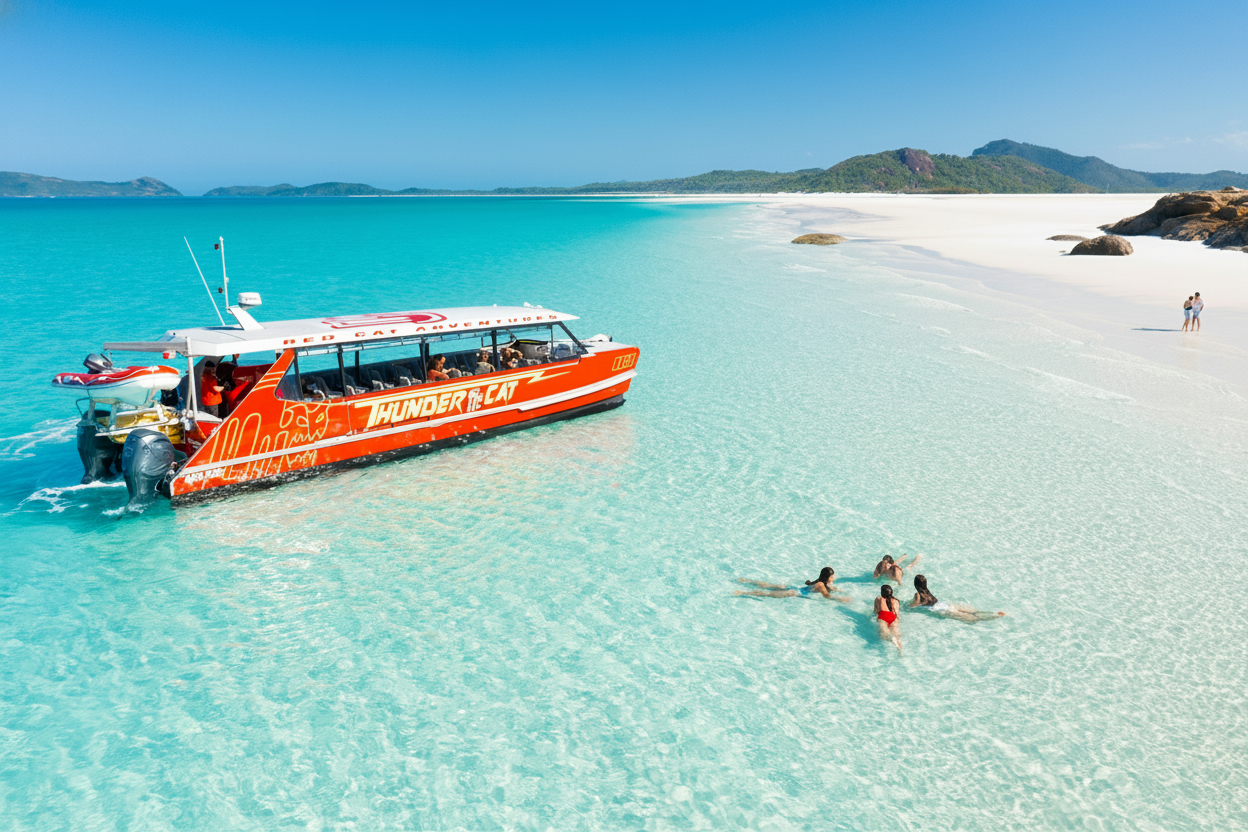
Shute Harbour's commercial wharf accommodates larger fishing vessels (12-20 meters), including purpose-built reef fishing catamarans that can carry 30-60 passengers safely to outer reef locations. The deeper channel (4-6 meters at low tide) allows these vessels to operate year-round without tidal restrictions.
Major fishing charter operators departing from Shute Harbour include Whitsunday Fishing Adventures, Reel Deal Fishing Charters, and Ocean Rafting's fishing expeditions. These operators offer comprehensive packages including tackle, bait, fishing licenses, and often lunch for full-day trips.
Abel Point Marina hosts smaller fishing charters (6-12 passengers) and private boat operators, including half-day inshore fishing trips targeting Spanish mackerel, trevally, and reef species around the inner islands. The marina's 280 berths house numerous private fishing boats available for charter.
Boutique fishing experiences departing from Abel Point often focus on specialized techniques like fly fishing for queenfish and trevally, or trolling for Spanish mackerel around Dent Island and Hamilton Island's northern shores.
What fishing species can you target from each marina location?
Both marinas access similar species ranges, with Shute Harbour's deeper waters favoring larger pelagic species like Spanish mackerel and tuna, while Abel Point's protected location excels for smaller reef fish, trevally, and whiting.
From Shute Harbour's jetty and nearby waters, anglers regularly catch golden trevally (1-6kg), giant trevally (8-20kg), queenfish (1-4kg), dusky flathead (30-70cm), estuary cod (20-40cm), and mangrove jack (25-45cm). The deeper channel holds Spanish mackerel (3-12kg) during warmer months and occasional coral trout (30-50cm).
Abel Point Marina's fishing produces sand whiting (15-30cm), yellowfin bream (20-35cm), tarwhine (20-30cm), small trevally species (500g-2kg), and juvenile snapper. The breakwater structure attracts larger queenfish (2-5kg) and occasional Spanish mackerel (4-8kg) during peak season.
Charter boats from both locations access identical offshore species including coral trout (prime target: 35-55cm), red emperor (2-10kg), Spanish mackerel (5-18kg), mackerel tuna (3-8kg), sweetlip varieties (25-45cm), and various cod species including flowery cod and coronation trout.
Seasonal variations affect species availability, with Spanish mackerel most active October-May, coral trout peak during April-September, and red emperor providing year-round opportunities on deeper reefs. Stinger season (November-May) requires protective clothing for wade fishing but doesn't affect boat-based fishing.
What facilities and services are available for anglers at each marina?
Shute Harbour provides comprehensive angler facilities including tackle shops, bait supplies, boat ramp access, and charter booking services, while Abel Point Marina offers fuel, ice, limited tackle supplies, and boat chandlery services for visiting anglers.
Shute Harbour's facilities include the Whitsunday Marine and Tackle store (open 6:00am-6:00pm daily), offering fresh bait (prawns, pilchards, squid), frozen bait varieties, complete tackle ranges, and fishing licenses. The store stocks specialized reef fishing equipment including quality reels, heavy-duty rods, and selection of lures.
The harbor's public amenities include clean toilets, fish cleaning stations with running water, ample parking (free for first 2 hours, then $5/day), and shaded picnic areas. The boat ramp (4-lane concrete) operates 24/7 with launching fees of $15 for trailerboat access.
Abel Point Marina's Whitsunday Marine World provides fuel (diesel and unleaded), ice, basic tackle supplies, and boat maintenance services. The marina store stocks essential fishing gear including hooks, sinkers, basic lures, and can arrange bait supplies with advance notice.
Marina facilities include modern amenities blocks, fish cleaning stations (available to marina users and charter passengers), secure parking ($10/day), and the popular Fish D'Vine restaurant overlooking the marina. Berth holders receive 24/7 access to fuel and facilities.
How do fishing conditions vary between the two marina locations?
Shute Harbour's exposure to Conway Bay creates better water movement and fish activity but stronger currents, while Abel Point Marina's protected Pioneer Bay location offers calmer conditions but potentially less fish activity during certain tidal phases.
Conway Bay's tidal flow at Shute Harbour creates excellent feeding conditions for predatory species, with the strongest fishing typically occurring during the first two hours of both rising and falling tides. The 2-3 meter tidal range brings nutrient-rich water through the system, activating baitfish and subsequently attracting larger predators.
Wind conditions affect each location differently, with Shute Harbour receiving more protection from prevailing southeast trade winds due to surrounding hills, while Abel Point Marina can experience choppy conditions during strong easterly winds. The marina's northern orientation provides excellent protection from southerly weather systems.
Water depth variations create different fishing opportunities, with Shute Harbour's deeper waters (4-8 meters near the jetty) holding larger specimens, while Abel Point's shallower areas (1-4 meters) concentrate smaller species but offer easier fishing for beginners and families.
Seasonal weather patterns affect both locations similarly, with the dry season (April-November) providing optimal fishing conditions, stable weather, and lower rainfall. The wet season (December-March) brings afternoon thunderstorms, higher humidity, and increased stinger presence requiring protective clothing.
What are the best times to fish from these marina locations?
Early morning (5:00-8:00am) and late afternoon (4:00-7:00pm) provide peak fishing times at both marinas, with dawn sessions particularly productive for Spanish mackerel and trevally, while evening periods excel for flathead and cod species.
Tidal timing significantly influences fishing success, with the two hours either side of high tide generally producing the most consistent results. Rising tides activate baitfish movements, triggering feeding responses from predatory species. The incoming tide pushes bait and nutrients through both marina systems.
Seasonal timing affects species availability and fishing quality. April through September represents peak fishing season, with stable weather, minimal rainfall, and optimal water temperatures (22-26°C). Spanish mackerel fishing peaks during October-December and March-May when water temperatures reach 24-28°C.
Moon phases impact fishing activity, with new moon and full moon periods often producing increased fish activity, particularly for night fishing sessions. The darker periods around new moons excel for flathead and cod fishing, while full moon nights can trigger Spanish mackerel feeding frenzies.
Weather conditions play crucial roles, with overcast conditions often producing better daytime fishing than bright sunny days. Light rain can stimulate fish activity, though heavy rainfall and thunderstorms require fishing suspension for safety reasons.
Are there regulations specific to fishing from these marinas?
Both marinas operate under Queensland recreational fishing regulations requiring valid licenses, size and bag limits compliance, and marine park zoning restrictions, with additional marina-specific rules regarding fishing locations and boat traffic safety.
Queensland recreational fishing licenses cost $47 for residents (3-year validity) and $15 for short-term visitors (1-month validity). Licenses are available online, from participating retailers, or from tackle shops at both locations. All anglers over 18 years must carry valid licenses while fishing.
Bag limits apply to all species: coral trout (7 fish, minimum 30cm), Spanish mackerel (1 fish, minimum 50cm), trevally (10 fish combined species, minimum 25cm), and flathead (5 fish, minimum 30cm). These limits apply per person per day and include fish caught on charter trips.
Marine Park zoning affects fishing locations, with most areas around both marinas designated as General Use zones permitting recreational fishing. However, some nearby areas including parts of Pioneer Bay and certain reef locations operate under Habitat Protection or Marine National Park zones prohibiting all fishing.
Marina-specific regulations include fishing only from designated areas, avoiding interference with boat movements, proper disposal of fishing waste, and compliance with marina operating hours. Night fishing requires permission from marina management and adherence to lighting restrictions.
When you're ready to experience the incredible fishing opportunities that both Shute Harbour and Abel Point Marina offer, let Airlie to Whitehaven help you find the perfect fishing charter or experience. Our local expertise and comprehensive tour selection ensure you'll make the most of your Whitsundays fishing adventure, whether you're targeting reef species on a full-day charter or enjoying a peaceful session from the jetty.