The Whitsunday Islands are one of Australia's premier fishing destinations, but they're also a heavily protected marine environment with strict Queensland fishing regulations. Whether you're casting a line from the shore at Airlie Beach or heading out to the reef, understanding these rules isn't just about avoiding hefty fines — it's about preserving this incredible ecosystem for future generations. From marine park zones to catch limits, bag restrictions to closed seasons, here's everything you need to know about fishing legally in the Whitsundays.
What are the main Queensland fishing regulations that apply to the Whitsunday region?
Queensland fishing regulations in the Whitsundays include marine park zoning restrictions, recreational fishing licences for certain species, bag and size limits, closed seasons, and gear restrictions. These rules are enforced by Queensland Boating and Fisheries Patrol with penalties up to $288,000.
The Great Barrier Reef Marine Park Authority (GBRMPA) and Queensland Department of Agriculture and Fisheries jointly manage fishing regulations in the Whitsundays. The region falls under the Great Barrier Reef Marine Park, which means additional restrictions apply beyond standard Queensland fishing rules.
Key regulatory bodies include Queensland Boating and Fisheries Patrol, who conduct regular inspections and have the authority to issue on-the-spot fines ranging from $288 to $2,875. Serious breaches can result in court proceedings with maximum penalties reaching $288,000 for individuals and $1.44 million for corporations.
All anglers must carry proof of compliance, including valid fishing licences where required, and must be able to demonstrate their catch meets size and bag limit requirements. Ignorance of the rules is not accepted as a defence under Queensland law.
Do I need a fishing licence to fish in the Whitsundays?
Most recreational fishing in Queensland waters doesn't require a licence, but you need a Stocked Impoundment Permit (SIP) for some freshwater locations and specific endorsements for mud crab apparatus or river prawn yabby pumps in certain areas.
For general recreational fishing from boats, beaches, or jetties around the Whitsunday Islands, no licence is required. However, if you're targeting specific species like mud crabs using apparatus (pots, dillies), you'll need a $47.85 Mud Crab Apparatus Licence.
Commercial fishing requires entirely different licensing through the Queensland Department of Agriculture and Fisheries, with costs ranging from hundreds to thousands of dollars depending on the fishery and quota allocations.
Spearfishing doesn't require a separate licence, but additional restrictions apply in marine park zones. You cannot use spearfishing equipment (including spearguns) in Yellow Zones (Habitat Protection) or any higher protection zones within the Great Barrier Reef Marine Park.
What are the marine park zones around the Whitsunday Islands and how do they affect fishing?
The Whitsundays contain five marine park zones: General Use (dark blue), Habitat Protection (yellow), Conservation Park (light blue), Buffer (olive green), and National Park (green). Each zone has different fishing restrictions, from full access to complete prohibition.
General Use Zones (dark blue) allow all forms of recreational fishing, including line fishing, netting, crabbing, and spearfishing. These areas make up the majority of fishing grounds around the outer reef and many popular spots near Hamilton Island and the Whitsunday Passage.
Habitat Protection Zones (yellow) permit line fishing and limited netting but prohibit spearfishing, trawling, and most commercial fishing activities. Many inshore areas around the Whitsunday Islands fall into this category, including popular fishing spots near Airlie Beach.
Conservation Park Zones (light blue) allow line fishing only — no netting, spearfishing, or collecting. These zones protect sensitive habitats while still allowing basic recreational fishing activities.
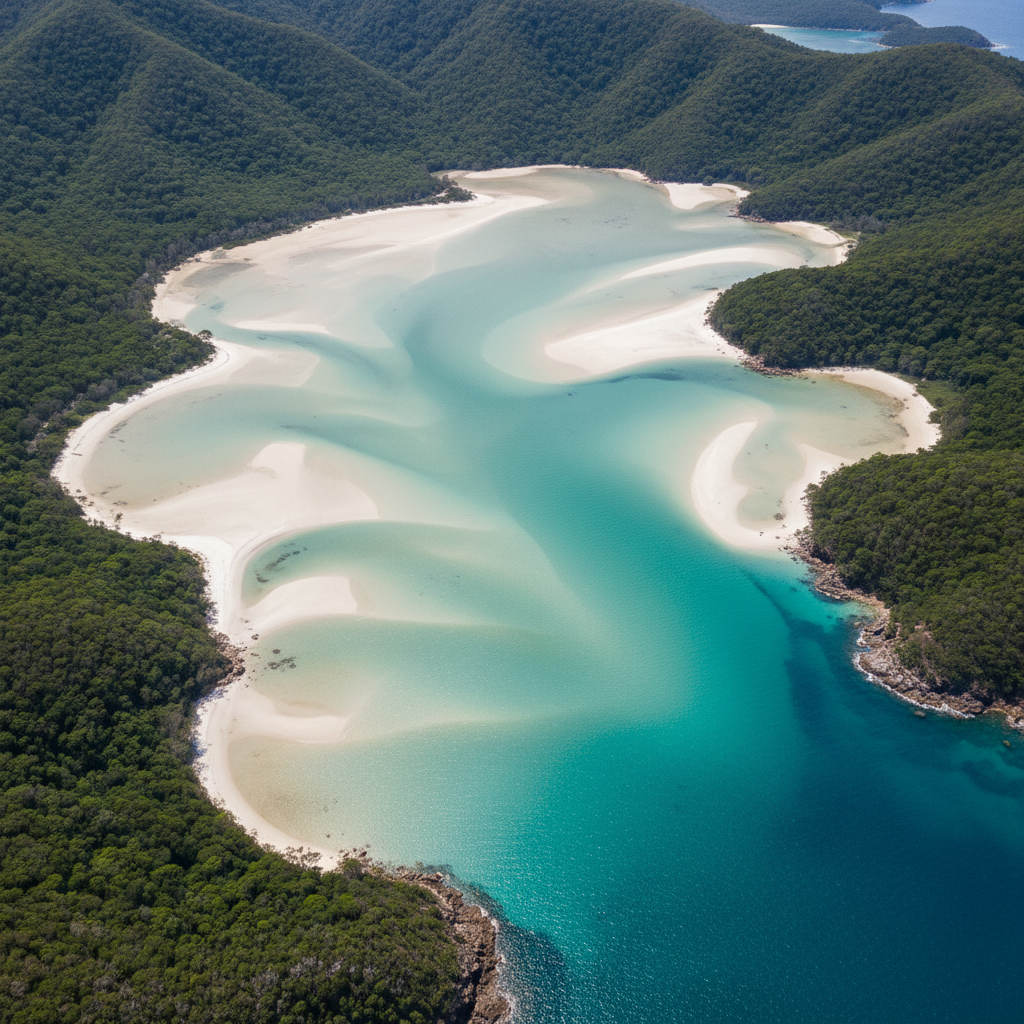
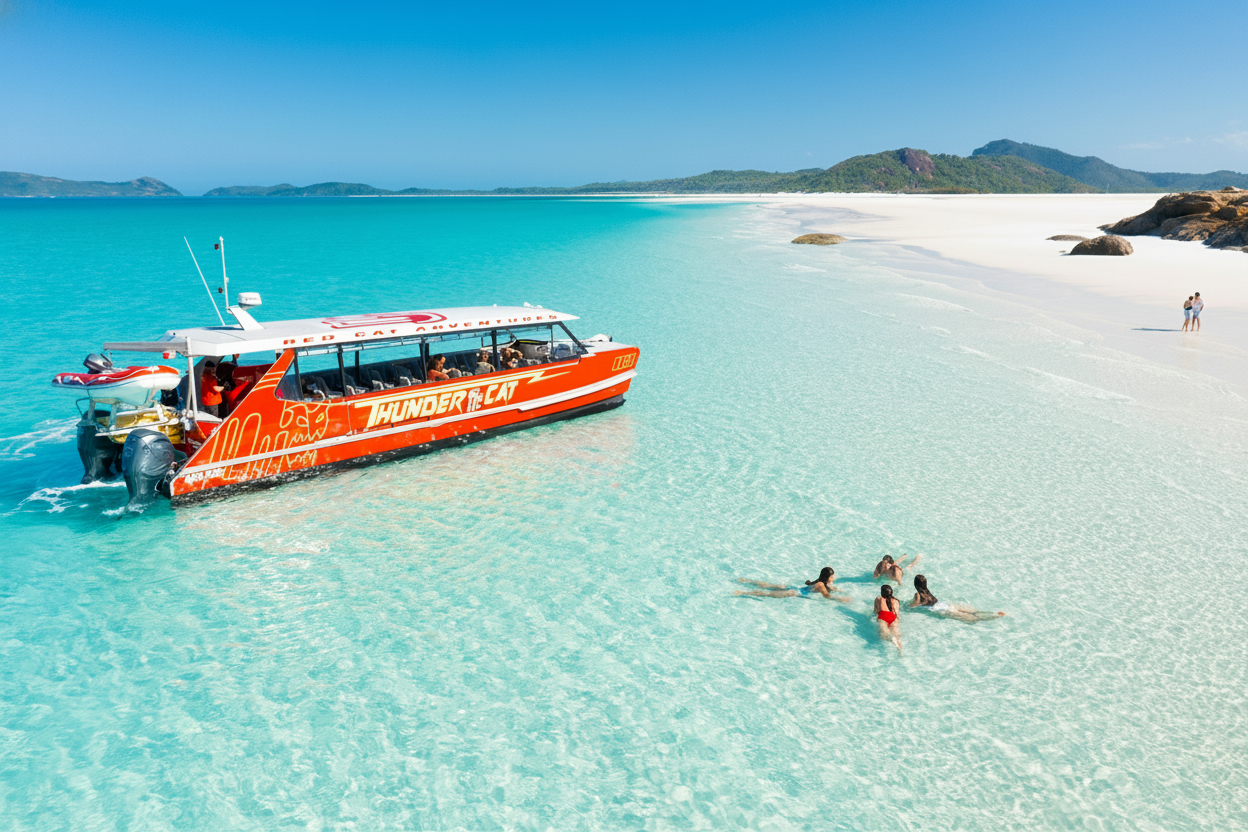
Buffer Zones (olive green) and National Park Zones (green) are no-take areas where all forms of fishing and collecting are prohibited. Whitehaven Beach and Hill Inlet are examples of National Park Zones where fishing is completely banned.
You can identify zones using the official GBRMPA zoning maps available through their website or mobile app. GPS coordinates and zone boundaries are clearly marked, and it's your responsibility to know which zone you're fishing in.
What are the bag and size limits for popular fish species in the Whitsundays?
Popular Whitsunday species have specific limits: Coral trout (38cm minimum, 7 per person), Red emperor (55cm minimum, 5 per person), Mackerel (50cm Spanish, 90cm spotted, 5 combined), and Barramundi (58cm minimum, 5 per person with seasonal closures).
Coral trout, the region's most prized catch, must be at least 38cm in length with a bag limit of 7 fish per person. However, only 2 of these can exceed 50cm, protecting breeding-size fish. The possession limit (what you can have in storage) is 14 fish per person.
Spanish mackerel must be at least 50cm, while spotted mackerel require 90cm minimum length. The combined bag limit for all mackerel species is 5 fish per person, with a possession limit of 10 fish.
Red emperor has a minimum size of 55cm with a bag limit of 5 fish per person. These fish are slow-growing and long-lived, making size limits crucial for population sustainability.
Barramundi fishing has a closed season from 1 November to 31 January in all Queensland waters, coinciding with their spawning period. Outside this period, the minimum size is 58cm with a bag limit of 5 fish.
Snapper regulations vary by location — around the Whitsundays, they must be at least 35cm with a bag limit of 4 per person. However, snapper fishing is completely closed from 15 September to 15 November to protect spawning fish.
Are there seasonal closures for fishing in the Whitsunday region?
Yes, several species have seasonal closures in the Whitsundays. Barramundi (1 November - 31 January), Australian bass (September-October), coral trout spawning aggregations (1 October - 31 December in specific locations), and snapper (15 September - 15 November).
The barramundi closure affects all Queensland waters and coincides with their spawning season. During this period, you cannot target, take, or possess barramundi, with penalties up to $13,785 for breaches.
Coral trout spawning aggregation sites have additional protection during peak breeding times. While general coral trout fishing continues, specific reef locations known for spawning aggregations become no-take areas from 1 October to 31 December.
Australian bass in freshwater areas (including some mainland streams feeding into the Whitsunday region) are protected during September and October. Snapper face the most restrictive closure, with all Australian snapper species protected for two months during their spawning peak.
These closures are scientifically determined to protect breeding populations and ensure sustainable fishing for future generations. Dates can vary slightly year to year, so always check current Queensland Government fishing closure information before your trip.
What gear restrictions apply when fishing in Whitsunday waters?
Gear restrictions include hook limits (30 hooks maximum per person when line fishing), net size restrictions, spearfishing equipment prohibited in Yellow Zones and above, and bait restrictions including live coral use prohibition in all marine park areas.
When line fishing, you're limited to 30 hooks in the water at any one time per person. This includes all hooks on all lines, rigs, and lures you're using simultaneously. Rod limits vary by location but generally allow up to 6 rods per person in most Whitsunday waters.
Netting restrictions are complex and vary by zone and net type. Cast nets up to 8 metres radius are generally permitted in General Use and Habitat Protection zones, while seine nets face stricter limitations. Commercial-style netting methods are prohibited for recreational fishers.
Spearfishing equipment cannot be used in Habitat Protection (Yellow) zones or any higher protection zones. This means popular areas around many Whitsunday Islands are off-limits to spearfishers, though General Use zones remain accessible.
Using live coral as bait is completely prohibited throughout the Great Barrier Reef Marine Park. This includes hard and soft corals, with penalties up to $1,437 for breaches. Sustainable bait options include locally caught pilchards, prawns, and squid.
How do I measure fish correctly to comply with size limits?
Fish must be measured from the tip of the snout to the end of the tail fin using the total length method. For fish with damaged tails, measure to where the tail would naturally end. Round down measurements — 37.9cm coral trout doesn't meet the 38cm minimum.
Always measure fish on a flat surface using a proper measuring device — boat gunwales, tackle boxes, or dedicated measuring boards work well. Many anglers carry waterproof measuring stickers on their tackle boxes for convenience.
For filleted fish, size compliance becomes difficult to prove, so it's recommended to keep fish whole until you're confident they meet size requirements. If transporting filleted fish, keep the head and carcass as proof of legal size.
When in doubt, release the fish. Fisheries officers don't accept "it was close enough" as compliance — measurements must be exact, and penalties for undersized fish start at $287 per fish.
Take photos of your catch with a measuring device if you're unsure about compliance. This provides evidence of your attempt to follow regulations, though it doesn't guarantee legal protection if the fish is actually undersized.
What are the penalties for breaching fishing regulations in Queensland waters?
Penalties range from $287 on-the-spot fines for minor breaches like undersized fish to court-imposed maximums of $288,000 for individuals. Serious offences include equipment forfeiture, boat confiscation, and potential imprisonment for commercial-scale illegal fishing operations.
Common infringement penalties include $287 for each undersized fish, $574 for exceeding bag limits, $1,437 for fishing in no-take zones, and $2,875 for using prohibited methods like explosives or poisons. These fines are issued immediately by Queensland Boating and Fisheries Patrol officers.
Repeat offenders face escalating penalties and potential prosecution through the courts. Court-imposed penalties can reach $288,000 for individuals and $1.44 million for corporations, particularly for serious breaches involving threatened species or significant environmental damage.
Equipment forfeiture applies to serious breaches — boats, motors, fishing gear, and vehicles used in illegal fishing can be permanently confiscated. This particularly applies to commercial-scale poaching operations or repeated serious violations.
Beyond financial penalties, convictions result in criminal records that can affect employment, travel, and other activities. The Queensland Government maintains a prosecution register of serious fisheries offences as a public deterrent.
Where can I find up-to-date information on fishing regulations before my Whitsundays trip?
Official sources include the Queensland Department of Agriculture and Fisheries website, GBRMPA zoning maps, FishQ mobile app, and local tackle shops. Regulations change regularly, so check multiple sources and verify information within 30 days of your fishing trip.
The FishQ mobile app provides GPS-enabled zone identification, current bag and size limits, and seasonal closure information. It works offline once downloaded, making it perfect for use while on the water without mobile coverage.
Local tackle shops in Airlie Beach often have the most current information about specific area closures, recent regulation changes, and practical compliance advice. Staff are usually experienced local anglers who understand both the rules and the best fishing practices.
Queensland Boating and Fisheries Patrol maintains a 24-hour phone line (13 25 23) for regulation queries and reporting illegal fishing activities. They can provide specific advice about complex situations or unusual fishing scenarios.
For detailed information about Whitsunday-specific fishing regulations and how they apply to different areas around the islands, including zone maps and practical compliance tips, our comprehensive guide covers everything local anglers need to know.
How do these regulations affect fishing tours and charter operations?
Licensed fishing charter operators must comply with all recreational fishing regulations plus additional commercial requirements. They're responsible for ensuring client compliance, maintaining detailed catch logs, and operating only in permitted zones with appropriate vessel certifications and insurance coverage.
Charter operators require Marine Tourism Operator permits through GBRMPA, commercial vessel registration, and appropriate insurance coverage. They must provide pre-trip briefings on fishing regulations and actively monitor client compliance throughout the trip.
Professional fishing guides are legally responsible for their clients' actions and can face penalties if clients breach regulations under their supervision. This includes ensuring proper measurement of catches, compliance with bag limits, and adherence to zone restrictions.
Many charter operators provide measuring devices, zone maps, and regulation summaries to help clients stay compliant. They also typically handle fish cleaning and storage to ensure legal requirements are met during transport back to shore.
For those interested in guided fishing experiences in the Whitsundays, our detailed guide explains what to expect from professional operators and how they help ensure both successful and legal fishing adventures.
What should I know about fishing near protected areas like national parks?
Areas within the Whitsunday Islands National Park are strictly protected with no fishing permitted. This includes waters around Whitehaven Beach, Hill Inlet, and designated sections of most islands. Even anchoring for fishing purposes can result in penalties.
National Park zones (green zoning) represent the highest level of protection in the marine park system. These areas protect critical habitats, breeding grounds, and reference sites for scientific research. All extractive activities, including fishing, are completely prohibited.
Buffer zones (olive green) surrounding national park areas also prohibit fishing while allowing some other activities like boating and snorkelling. These zones create graduated protection around the most sensitive areas.
Popular tourist destinations often overlap with highly protected zones. Whitehaven Beach, arguably the Whitsundays' most famous attraction, sits within a National Park zone where fishing has been prohibited since the marine park's establishment.
When planning fishing trips, always check zone maps before departing and have alternative locations prepared. Many excellent fishing spots exist in nearby General Use zones without compromising protected areas.
Ready to experience world-class fishing in the Whitsundays while staying completely compliant with all Queensland regulations? At Airlie to Whitehaven, we partner with licensed charter operators who know these waters intimately and take the guesswork out of fishing legally in this stunning region. Our professional guides handle all the regulatory requirements while you focus on landing that trophy coral trout or Spanish mackerel. Book your fully compliant Whitsundays fishing adventure today and discover why this region offers some of Australia's best recreational fishing — all while protecting this incredible marine environment for future generations.