Hamilton Island offers some of Australia's most spectacular whale watching opportunities during the annual humpback migration. From June to September, these magnificent 40-tonne giants journey through the Whitsunday waters, offering visitors front-row seats to breaching, tail slapping, and the intimate mother-calf interactions that make this one of Queensland's premier wildlife experiences.
When is whale watching season on Hamilton Island?
Whale watching season on Hamilton Island runs from June to September, with peak activity occurring in July and August when humpback whales migrate through Whitsunday waters during their annual 5,000-kilometre journey between Antarctica and tropical breeding grounds.
The humpback whale migration follows a predictable pattern that makes Hamilton Island perfectly positioned for sightings. During winter months, pregnant females and mothers with calves travel north through the Whitsunday Passage, seeking the warm, protected waters around the islands to give birth and nurse their young.
Peak whale activity typically occurs from mid-July through late August, when daily sightings are almost guaranteed. During this period, the Whitsunday Marine Park becomes a highway for these marine mammals, with pods of 2-4 whales commonly spotted from Hamilton Island's elevated vantage points and during dedicated whale watching tours.
The migration timing varies slightly each year based on water temperatures and food availability. Early season (June-July) brings northbound whales, including pregnant females, while late season (August-September) features southbound whales with newborn calves, offering different but equally spectacular viewing opportunities.
What whale species can you see around Hamilton Island?
Humpback whales dominate Hamilton Island whale watching, representing over 95% of sightings. These 12-16 metre giants are easily identified by their distinctive white belly markings, extremely long pectoral fins, and acrobatic surface behaviours including breaching and tail slapping.
Humpback whales (Megaptera novaeangliae) are the stars of Hamilton Island's whale watching scene. Adults measure 12-16 metres and weigh 25-40 tonnes, with females typically larger than males. Their distinctive features include knobby heads covered in tubercles, extremely long pectoral fins (up to one-third of their body length), and unique black and white tail fluke patterns used for individual identification.
Minke whales occasionally appear in Whitsunday waters, though sightings are less predictable. These smaller whales (7-10 metres) are more elusive, typically staying submerged longer and showing less surface activity than humpbacks. They're distinguished by their pointed snouts, curved dorsal fins, and white bands across their pectoral fins.
Rare but documented sightings include southern right whales, blue whales, and pilot whales. Southern right whales, identified by their distinctive callosities (white growths on their heads), occasionally use Whitsunday waters as calving grounds. Blue whales, the world's largest animals at up to 30 metres, are extremely rare visitors typically spotted in deeper waters beyond the continental shelf.
Where are the best whale watching spots on Hamilton Island?
Catseye Beach, One Tree Hill Lookout, and Passage Peak offer Hamilton Island's premier shore-based whale watching locations, providing elevated vantage points across the Whitsunday Passage where humpback whales frequently surface during their migration journey.
Catseye Beach provides accessible shoreline viewing with unobstructed views across the Whitsunday Passage. The beach's northern end offers the best vantage point, particularly during early morning hours when whale activity peaks. Visitors can spot whale spouts, breaches, and surface activity from 2-5 kilometres offshore without needing specialised equipment.
One Tree Hill Lookout, accessible via a moderate 30-minute bushwalk, offers Hamilton Island's highest public viewing point at 230 metres above sea level. This elevated position provides panoramic views across the entire Whitsunday Passage, allowing whale spotters to track pods across larger areas and observe behaviour patterns from multiple angles.
Passage Peak represents Hamilton Island's ultimate whale watching challenge, requiring a steep 45-minute hike to reach 230 metres elevation. The summit provides 360-degree views across the Coral Sea, Whitsunday Passage, and surrounding islands, offering the best opportunity to spot whales at greater distances and understand their migration patterns.
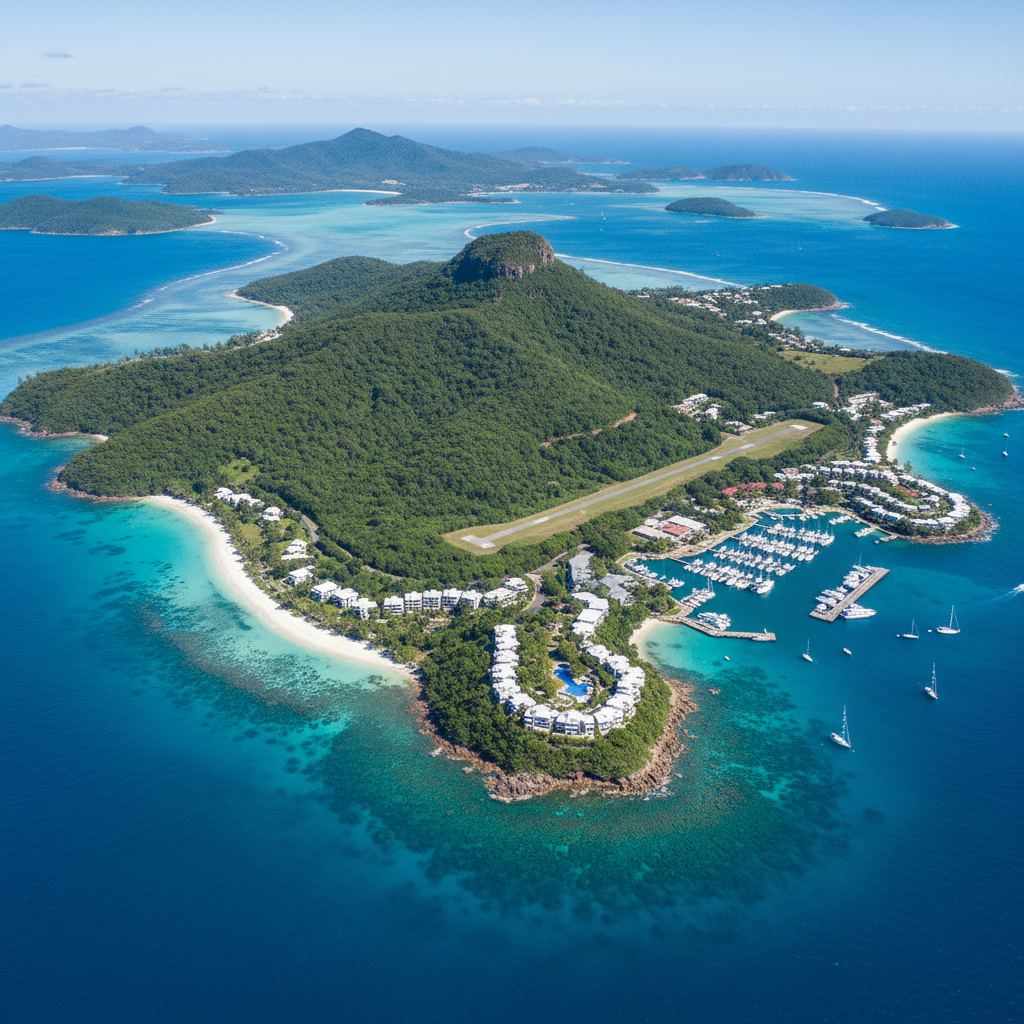
Hamilton Island Marina serves as the departure point for dedicated whale watching tours, where commercial operators use specialised vessels and hydrophones to locate whale pods and provide close-range viewing opportunities not available from shore-based locations.
What whale watching tour options are available from Hamilton Island?
Hamilton Island offers half-day whale watching tours aboard specialised vessels equipped with hydrophones for whale detection, full-day sailing trips combining whale watching with snorkeling, and helicopter tours providing aerial perspectives of whale behaviour and migration patterns.
Commercial whale watching operators depart from Hamilton Island Marina offering 4-6 hour dedicated whale watching experiences aboard vessels specifically designed for wildlife viewing. These tours utilise underwater microphones (hydrophones) to detect whale songs and movements, significantly increasing sighting success rates to over 95% during peak season.
Sailing catamaran tours combine whale watching with broader Whitsunday experiences, incorporating snorkeling at fringing reefs, beach visits, and gourmet meals. These full-day trips (8-10 hours) provide more relaxed whale viewing opportunities while exploring multiple locations throughout the Whitsunday Marine Park.
Helicopter whale watching tours offer unique aerial perspectives unavailable from water-based platforms. These 30-60 minute flights provide bird's-eye views of whale pods, allowing passengers to observe diving patterns, pod formations, and the impressive size scale of these marine giants against the surrounding seascape.
Private charter options accommodate smaller groups seeking personalised whale watching experiences. These tours can be customised for photography enthusiasts, families with young children, or visitors with specific interests in marine biology and whale behaviour studies.
How much do whale watching tours from Hamilton Island cost?
Whale watching tour prices from Hamilton Island range from $120-180 per adult for half-day boat tours, $250-350 for full-day sailing experiences, and $300-500 for helicopter whale watching flights, with children typically receiving 20-30% discounts.
Standard whale watching boat tours typically cost $140-180 per adult for 4-6 hour experiences, including morning tea, lunch, and all viewing equipment. Children (4-14 years) usually pay $80-120, while infants under 4 travel free. These prices include professional wildlife commentary, hydrophone whale detection, and guaranteed sighting policies during peak season.
Full-day sailing catamaran tours with whale watching components range from $250-350 per adult, incorporating additional activities like snorkeling, beach visits, and premium meal service. These comprehensive experiences provide 8-10 hours on the water with multiple opportunities for whale encounters throughout the day.
Helicopter whale watching experiences command premium pricing at $300-500 per person for 30-60 minute flights. While more expensive, these aerial tours offer unique perspectives and photography opportunities impossible from water-based platforms, plus guaranteed departures regardless of sea conditions.
Private charter costs vary significantly based on vessel size, duration, and inclusions, typically starting around $2,000-3,000 for half-day experiences accommodating 6-12 passengers. These personalised tours offer maximum flexibility for serious whale watchers and photography enthusiasts.
What whale behaviours can you observe from Hamilton Island?
Hamilton Island whale watchers regularly observe breaching, tail slapping, spy hopping, and mother-calf interactions. Humpback whales display these surface behaviours for communication, play, and teaching young calves essential survival skills during their migration through Whitsunday waters.
Breaching represents the most spectacular whale behaviour, where humpbacks launch their entire 40-tonne bodies out of the water before crashing back to the surface. Scientists believe breaching serves multiple purposes including communication across long distances, parasite removal, and play behaviour, particularly among juveniles and mothers with calves.
Tail slapping involves whales lifting their massive tail flukes above the surface and slapping them down forcefully, creating loud sounds that travel for kilometres underwater. This behaviour appears to be a form of long-distance communication, warning signals, or aggressive displays during competitive interactions between males.
Spy hopping occurs when whales vertically lift their heads above the surface to observe their surroundings, rotating slowly to achieve 360-degree visibility. This behaviour demonstrates the whales' curiosity about their environment and ability to see above water, often occurring when whales encounter boats or other marine activities.
Mother-calf interactions provide intimate glimpses into humpback family life, including nursing behaviour, protective positioning, and teaching activities where mothers guide calves through essential migration skills. These interactions are particularly common in the protected waters around Hamilton Island during late season (August-September).
Are there responsible whale watching guidelines for Hamilton Island?
Hamilton Island whale watching follows strict Australian Marine Park regulations requiring vessels to maintain 100-metre distances from whales, limit viewing time to 30 minutes per pod, and avoid separating mothers from calves to ensure minimal disturbance to migrating humpback whales.
The Australian Marine Parks Authority enforces comprehensive whale watching guidelines designed to protect migrating humpback whales while allowing sustainable wildlife tourism. All commercial operators must maintain minimum distances of 100 metres from adult whales and 150 metres from mothers with calves, with engines in neutral when whales approach closer.
Maximum viewing time per whale pod is limited to 30 minutes to prevent stress and disruption to natural behaviours. Operators must avoid approaching whales directly from front or behind, instead positioning vessels parallel to whale movement patterns to minimise disturbance and allow whales to control interaction levels.
Swimming with whales is strictly prohibited throughout Australian waters, carrying significant penalties including fines up to $165,000 for individuals and $825,000 for corporations. These regulations protect both whales and humans, as humpback whales' massive size and unpredictable movements pose serious safety risks.
Noise pollution guidelines require vessels to maintain steady speeds, avoid sudden engine changes, and limit sonar use in whale presence. Many operators voluntarily exceed minimum requirements, using specialised quiet hull designs and electric motors for approaching whale pods.
The Whitsunday Marine Park operates under the Great Barrier Reef Marine Park Authority's zoning system, with specific areas designated for whale protection during migration season. Understanding these zones helps visitors appreciate the comprehensive conservation efforts protecting marine life in the Whitsundays.
What should you bring for whale watching from Hamilton Island?
Essential whale watching gear includes polarised sunglasses, broad-spectrum sunscreen, wide-brimmed hat, layered clothing for changing weather conditions, camera with telephoto lens, and sea sickness medication, as Hamilton Island tours operate in open ocean conditions.
Sun protection is critical during whale watching tours, as vessels spend extended periods on open water with reflected UV radiation from the ocean surface. Broad-spectrum SPF 50+ sunscreen should be applied generously and reapplied every two hours, while wide-brimmed hats and long-sleeved UV protection shirts provide additional coverage.
Polarised sunglasses significantly enhance whale spotting ability by reducing surface glare and improving visibility into the water. Quality polarised lenses allow whale watchers to spot subtle signs like whale spouts, shadows beneath the surface, and the distinctive footprints left by diving whales.
Camera equipment should include telephoto lenses (minimum 200mm) for capturing whale behaviours from respectful distances. Extra memory cards and waterproof camera bags protect equipment from salt spray, while portable phone chargers ensure devices remain functional throughout long tours.
Layered clothing accommodates Hamilton Island's variable marine conditions, where morning temperatures around 20°C can rise to 25°C+ by midday, with ocean breezes creating wind chill effects. Windproof jackets, warm layers, and non-slip deck shoes ensure comfort and safety throughout the experience.
Sea sickness prevention is essential for sensitive passengers, as whale watching tours venture into open ocean areas with potential for larger swells. Natural remedies like ginger tablets taken 30 minutes before departure, along with traditional medications, help ensure comfortable viewing experiences.
How do Hamilton Island whale watching tours compare to other Whitsunday locations?
Hamilton Island provides convenient whale watching access with direct airport connections and marina departures, while Airlie Beach offers more tour variety and competitive pricing. Both locations access identical whale migration routes through the Whitsunday Passage.
Hamilton Island's advantage lies in convenience and infrastructure, with commercial airlines providing direct access from Brisbane, Sydney, and Melbourne, eliminating the need for ground transfers required when flying into Proserpine Airport for Airlie Beach access. The island's resort-style accommodation and dining options create seamless whale watching holiday experiences.
Airlie Beach offers greater tour operator variety and competitive pricing due to higher competition among multiple marine tourism businesses. The mainland departure point provides easier access for budget-conscious travelers and those combining whale watching with broader Queensland coastal experiences.
Both locations access identical whale migration routes through the Whitsunday Passage, ensuring similar wildlife viewing opportunities. The key difference lies in departure logistics and pricing rather than whale encounter quality or frequency.
Weather protection varies between locations, with Hamilton Island's sheltered marina providing more consistent departures during marginal conditions, while Airlie Beach's exposed coastline may experience cancellations during strong weather events.
For visitors planning comprehensive Whitsunday experiences combining Hamilton Island activities with whale watching, the island base provides logical convenience, while mainland-based travelers benefit from Airlie Beach's broader accommodation and tour options.
What marine conservation efforts protect whales in the Whitsundays?
The Great Barrier Reef Marine Park Authority implements strict vessel regulations, seasonal speed restrictions, and whale protection zones throughout the Whitsundays, while research programs monitor humpback whale population recovery from historic whaling to current estimates exceeding 40,000 individuals.
The Australian Humpback Whale Recovery Plan represents one of marine conservation's greatest success stories, with population estimates increasing from fewer than 500 individuals in the 1960s to over 40,000 today. This recovery demonstrates the effectiveness of international whaling bans and comprehensive habitat protection measures.
Vessel strike prevention programs require commercial vessels to maintain reduced speeds (6 knots maximum) in designated whale protection areas during migration season. These measures significantly reduce collision risks in high-traffic areas like the Whitsunday Passage, where whale migration routes intersect with major shipping lanes.
Research programs conducted by James Cook University, Griffith University, and the Australian Marine Conservation Society monitor whale population trends, individual identification through tail fluke photography, and the impacts of climate change on migration patterns and breeding success.
Citizen science initiatives engage whale watching tourists in data collection, with tour operators recording sighting locations, pod sizes, and behavioural observations that contribute to ongoing research and conservation planning efforts.
Marine park zoning protects critical whale habitat through seasonal closures in sensitive areas, restrictions on fishing gear that could entangle whales, and comprehensive education programs that promote responsible wildlife viewing practices among tourists and local communities.
Ready to experience the magic of humpback whale migration firsthand? Airlie to Whitehaven connects you with Hamilton Island's premier whale watching tours, ensuring you don't miss these magnificent giants during their annual journey through the Whitsundays. Book your whale watching adventure today and create memories that will last a lifetime while supporting sustainable marine tourism in one of Australia's most important whale sanctuaries.