The Whitsundays offer some of Australia's most spectacular stargazing opportunities, with minimal light pollution and crystal-clear tropical skies revealing the full majesty of the southern hemisphere's night sky. From the iconic Southern Cross to the brilliant Milky Way stretching across the horizon, these pristine islands provide the perfect backdrop for astronomical adventures that combine with your tropical island escape.
What makes the Whitsundays ideal for stargazing?
The Whitsundays' remote location 900 kilometres north of Brisbane creates exceptionally dark skies with minimal light pollution. The region's dry season from April to November offers clear nights with low humidity, while the southern latitude of 20°S provides perfect viewing of southern hemisphere constellations.
The Whitsunday Islands sit in what astronomers call a "dark sky zone" – areas where artificial light barely impacts natural night sky visibility. Unlike mainland coastal towns, most of the 74 islands have no permanent settlements or street lighting. Hamilton Island and Daydream Island generate minimal light pollution, while uninhabited islands like Whitsunday Island, Hook Island, and the northern islands maintain pristine darkness.
The region's tropical climate creates stable atmospheric conditions during the dry season, reducing the "twinkling" effect that can blur celestial objects. Trade winds keep humidity levels manageable, preventing the hazy conditions that often plague coastal stargazing locations. Water temperatures averaging 24°C year-round mean comfortable overnight conditions for extended stargazing sessions.
Which constellations and celestial objects can you see from the Whitsundays?
The Southern Cross, Centaurus, Scorpius, and Sagittarius dominate the southern sky, while the Milky Way's brightest section stretches overhead from April to October. Jupiter, Saturn, Mars, and Venus are regularly visible, with the Large and Small Magellanic Clouds appearing as fuzzy patches on moonless nights.
The Southern Cross (Crux) constellation appears year-round but reaches optimal viewing from April to July when it sits high in the southern sky. Two bright pointer stars, Alpha Centauri and Beta Centauri in the constellation Centaurus, help locate this iconic southern hemisphere marker. The Coalsack Nebula, a dark cloud silhouetted against the Milky Way, sits adjacent to the Southern Cross.
Scorpius constellation dominates winter skies from May to September, with the red supergiant star Antares marking the scorpion's heart. The constellation's distinctive hook shape makes it easily recognizable, while the bright star clusters within Scorpius provide excellent targets for binoculars. Sagittarius follows Scorpius across the sky, marking the direction of our galaxy's center.
The Magellanic Clouds – two dwarf galaxies orbiting the Milky Way – appear as distinctive cloudy patches in the southern sky. The Large Magellanic Cloud in the constellation Dorado spans about 6 degrees of sky (12 full moon widths), while the Small Magellanic Cloud in Tucana covers roughly 3 degrees. These galaxies, visible only from the southern hemisphere, contain millions of stars located 160,000 and 200,000 light-years away respectively.
When is the best time for stargazing in the Whitsundays?
April to November offers the best stargazing conditions with clear skies and low humidity. New moon phases provide darkest skies, while the dry season's stable weather patterns ensure minimal cloud cover. Peak viewing occurs between 9 PM and 4 AM when most constellations reach optimal positions.
The dry season from April to November coincides with the region's trade wind patterns, which push moisture and clouds away from the coast. Monthly rainfall drops to under 50mm during these months, compared to over 200mm during the wet season peaks of January and February. Cloud cover reduces from 70% during summer to just 30% during winter months.
New moon phases, occurring monthly, eliminate lunar glare that can wash out faint stars and nebulae. The three nights around new moon provide optimal conditions for photographing the Milky Way and observing deep-sky objects. However, quarter moon phases still offer excellent viewing while providing enough illumination for safe movement around boats and campsites.
Astronomical twilight ends approximately 90 minutes after sunset, marking when the sky reaches maximum darkness. During winter months (May to August), this occurs around 7:30 PM, giving stargazers longer periods of darkness. Summer twilight extends until nearly 9 PM, but the trade-off includes potential storm activity and higher humidity levels.
Where are the best stargazing locations in the Whitsundays?
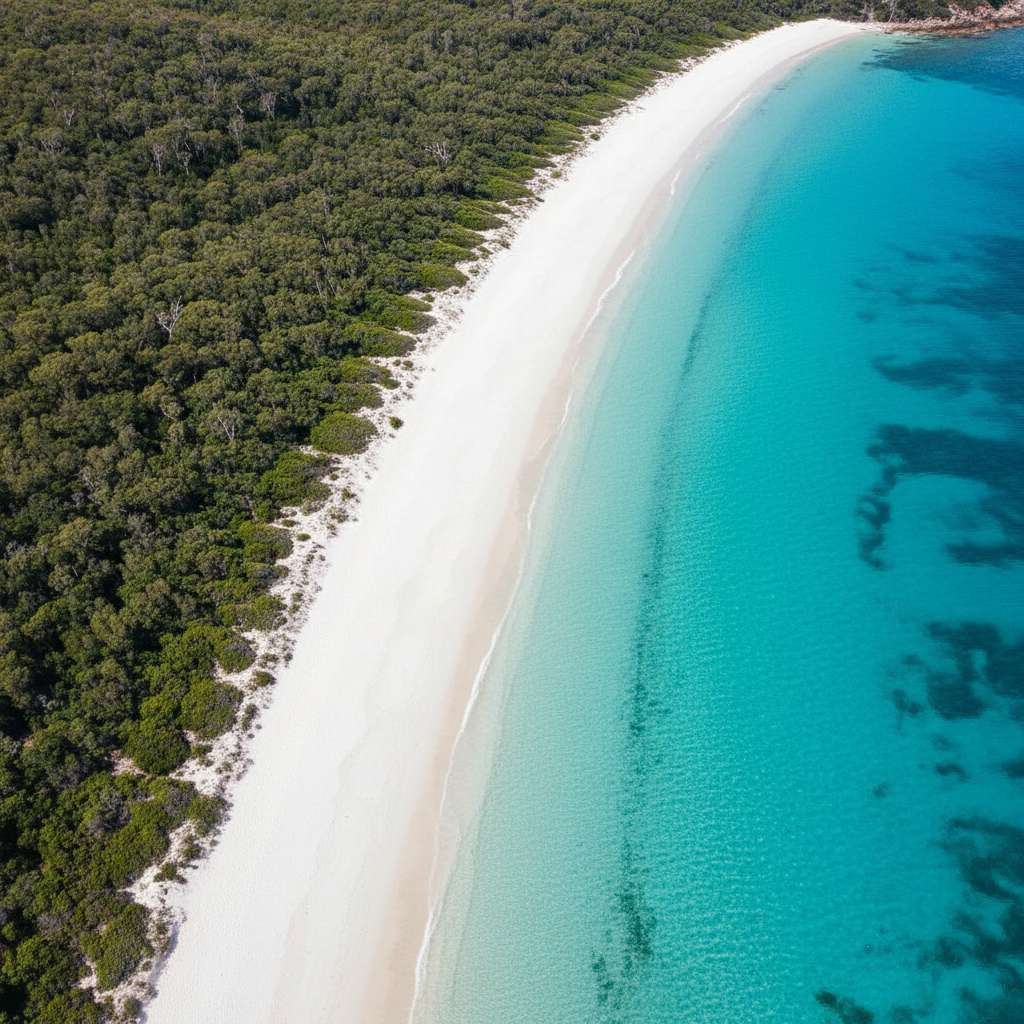
Whitehaven Beach's 7-kilometre stretch offers unobstructed 360-degree sky views with zero light pollution. Hook Island's northern beaches, Langford Island's sandbar, and remote anchorages around the outer islands provide equally pristine conditions away from any artificial lighting or development.
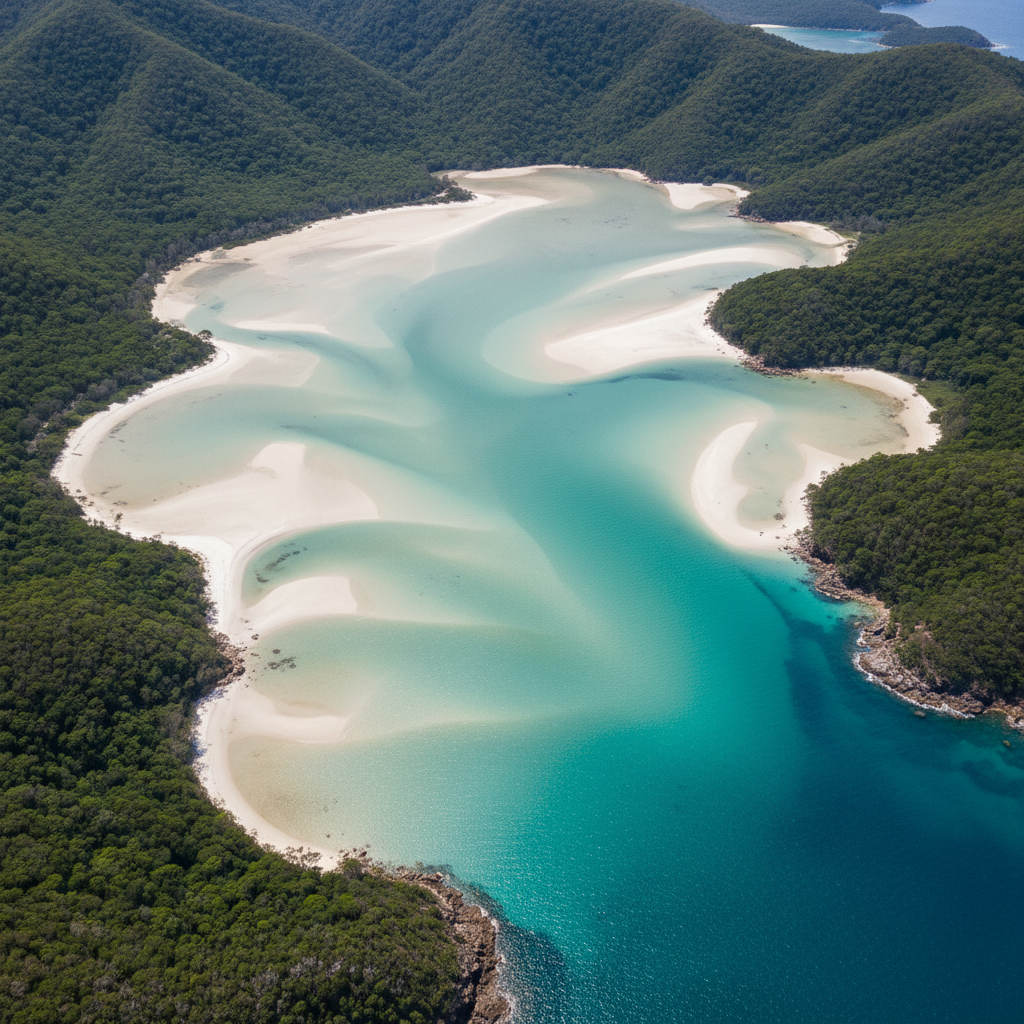
Whitehaven Beach on Whitsunday Island ranks as the region's premier stargazing destination due to its complete lack of development and expansive open beach. The beach's silica sand reflects minimal light, while its east-west orientation provides unobstructed views of both northern and southern sky sections. The beach's 4-kilometre northern section, accessible only by boat, offers the most isolated conditions.
Hook Island's Butterfly Bay and Nara Inlet provide sheltered anchoring spots with excellent northern sky visibility. The island's mountainous terrain blocks light from Hamilton Island and Shute Harbour, creating darker conditions than beaches facing the mainland. Hook Island's camping areas at Maureen Cove offer elevated positions for enhanced horizon visibility.
Langford Island, a small sand cay 17 kilometres northwest of Hamilton Island, provides 360-degree sky visibility during low tide when the sandbar extends. The island sits far enough from Hamilton Island to avoid light pollution while remaining accessible for day trips. However, overnight stays require camping permits and careful tide planning as the island partially submerges during high tide.
Remote anchorages around Border Island, Armit Island, and Double Cone Island offer complete isolation from artificial light sources. These locations require experienced navigation skills and proper marine radio communication, as they sit beyond mobile phone coverage areas. The outer reef locations provide exceptional clarity but demand careful weather monitoring due to exposure to ocean swells.
What stargazing experiences and tours are available?
Overnight sailing tours provide dedicated stargazing experiences with expert guides and telescopes. Some operators offer sunset-to-sunrise astronomy charters from AUD $400 per person, while camping packages include guided night sky sessions. Photography workshops combine stargazing with astrophotography instruction for serious enthusiasts.
Overnight sailing experiences represent the most comprehensive stargazing option, with purpose-built tours departing from Abel Point Marina. These 2-3 day experiences include professional astronomers who provide telescopes, star charts, and detailed constellation explanations. Pricing ranges from AUD $389 to $650 per person depending on vessel size, duration, and included meals.
Specialised astronomy charters operate during new moon periods, offering dedicated stargazing vessels equipped with red-filtered lighting to preserve night vision. These tours typically include high-quality telescopes for planetary and deep-sky observation, plus camera mounts for astrophotography enthusiasts. Advanced booking is essential as these tours accommodate maximum 12 passengers for optimal viewing conditions.
Some romantic sailing packages incorporate stargazing elements, combining sunset dinners with guided constellation tours. These experiences focus on the mythological stories behind constellation patterns while providing comfortable seating and blankets for extended sky watching. Couples' packages range from AUD $450 to $800 per couple for 2-day experiences.
Photography workshops teach astrophotography techniques specific to the southern hemisphere's unique sky features. Professional photographers provide instruction on camera settings, composition, and post-processing for capturing the Milky Way, star trails, and planetary conjunctions. These workshops require participants to bring DSLR cameras with manual controls and sturdy tripods.
How do you prepare for stargazing in the Whitsundays?
Bring red-filtered flashlights to preserve night vision, warm clothing for temperature drops, and comfortable reclining chairs or blankets. Download stargazing apps like SkyView or Star Walk 2, check weather forecasts, and plan for locations with unobstructed southern horizon views.
Night temperatures in the Whitsundays drop 8-12°C below daytime highs, requiring layers even during summer months. Winter nights (June to August) can reach 15°C with strong trade winds creating wind chill effects. Pack long pants, windproof jackets, and closed shoes for comfortable extended viewing sessions. Lightweight sleeping bags provide warmth without restricting movement between viewing positions.
Red-filtered flashlights or headlamps preserve the rhodopsin in your eyes that enables night vision. White light exposure requires 20-30 minutes for eyes to readjust to darkness. Many astronomy enthusiasts create red filters by covering standard flashlights with red cellophane or purchasing purpose-made astronomy lighting. Smartphone apps can provide red screen modes for checking star charts without disrupting night vision.
Reclining camping chairs or inflatable loungers prevent neck strain during extended sky observation. Ground mats and waterproof blankets provide comfort for lying on beaches while stargazing. Insect repellent becomes essential during warmer months, though trade winds typically keep mosquito populations minimal on exposed beaches and boat decks.
Smartphone apps like SkySafari, Star Walk 2, or PhotoPills help identify constellations and plan optimal viewing times for specific celestial objects. These apps use GPS and phone orientation to overlay constellation patterns onto the real sky. Many apps include information about planet positions, satellite passes, and lunar phases to enhance your stargazing experience.
What equipment enhances the stargazing experience?
Binoculars (7x50 or 8x42) reveal star clusters, nebulae, and Saturn's rings more clearly than naked eyes. Small telescopes show Jupiter's moons and lunar craters, while cameras with manual settings capture Milky Way photographs. Star charts specific to the southern hemisphere help identify unfamiliar constellation patterns.
Binoculars provide the best entry-level equipment for enhanced stargazing, offering 5-7 times more light-gathering capability than human eyes. The 7x50 specification (7x magnification, 50mm objective lens) provides optimal balance between magnification and light gathering for astronomy. Quality binoculars reveal the Orion Nebula's structure, Jupiter's four largest moons, and countless star clusters invisible to naked eyes.
Compact telescopes in the 70-90mm aperture range offer significant sky detail while remaining portable for boat-based adventures. These instruments clearly show Saturn's rings, Jupiter's atmospheric bands, lunar craters, and bright nebulae. However, telescopes require stable mounting systems and protection from salt spray, making them more suitable for land-based camping than sailing adventures.
DSLR cameras with wide-angle lenses (14-24mm) capture stunning Milky Way photographs using 15-30 second exposures. Camera settings typically require ISO 1600-3200, f/2.8 apertures, and manual focus set to infinity. Sturdy tripods prevent camera movement during long exposures, while intervalometers enable time-lapse sequences showing star movement across the sky.
Planispheres (rotating star charts) designed for 20°S latitude show which constellations appear at specific times throughout the year. These circular charts account for the Earth's orbital motion, helping predict when particular stars and planets reach optimal viewing positions. Waterproof versions withstand marine environments better than paper alternatives.
What wildlife might you encounter during night stargazing?
Flying foxes and fruit bats create silhouettes against star fields during evening hours. Noddy terns and shearwaters return to nesting sites after dark, while green sea turtles come ashore during nesting season (November to March) at various Whitsundays beaches.
Large fruit bats (flying foxes) become active at dusk, creating distinctive wing-beat silhouettes against twilight skies. Three species inhabit the Whitsundays: spectacled flying foxes, black flying foxes, and little red flying foxes. These mammals play crucial pollination roles for native trees while providing impressive aerial displays during stargazing sessions. Their echolocation calls create distinctive clicking sounds audible to human ears.
Wedge-tailed shearwaters nest in burrows on many uninhabited islands, returning from ocean foraging flights throughout the night. These seabirds create ethereal calls that enhance the nighttime island atmosphere. Their peak activity occurs between October and April when breeding colonies become most vocal. Brown noddies and bridled terns also return to roosting sites after dark, sometimes landing near stargazing locations.
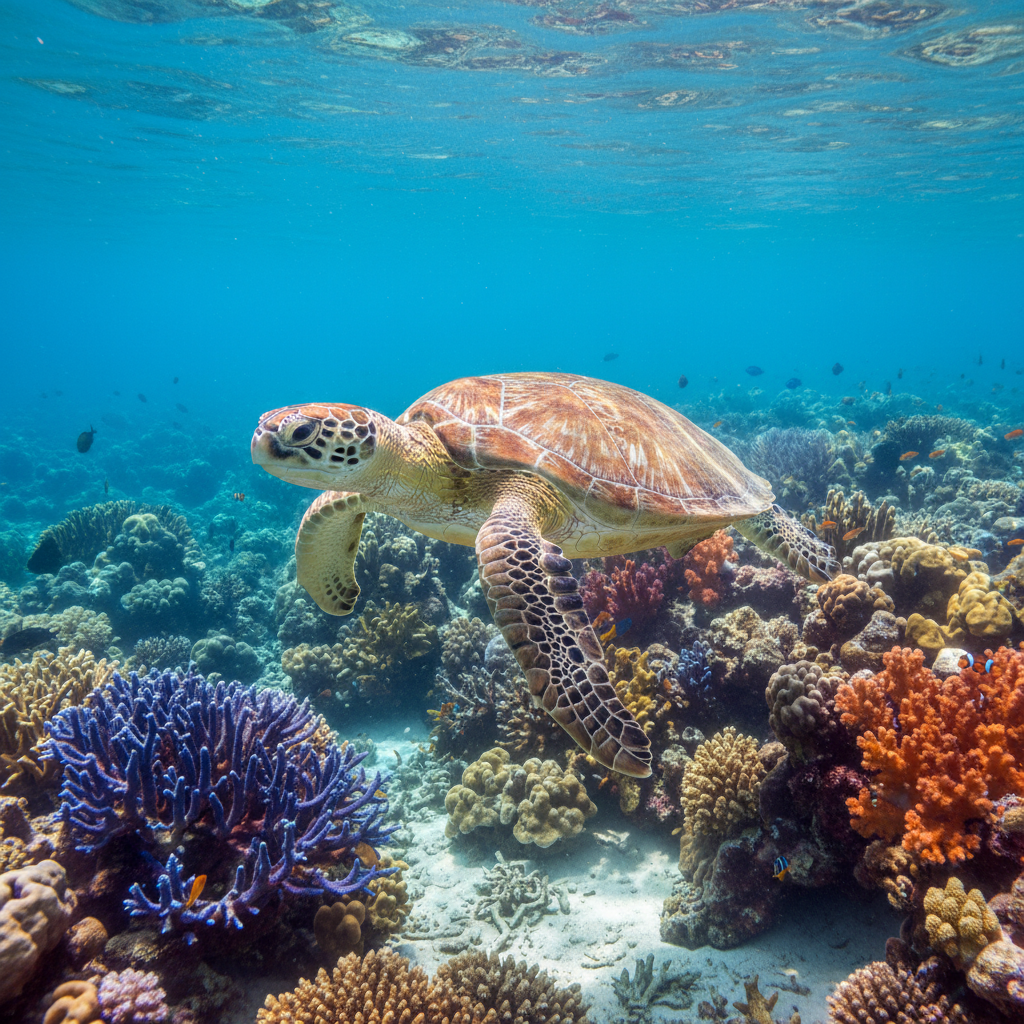
Green sea turtles nest on several Whitsundays beaches between November and March, with peak activity occurring during December and January. Females come ashore during high tide periods, typically 2-3 hours either side of high tide. Nesting usually begins after 9 PM and continues through early morning hours. Observers must maintain 20-metre distances and avoid using bright lights that can disorient nesting females.
Microbats hunt insects around beach areas and anchorages, creating erratic flight patterns visible against star backgrounds. Several species including little bent-wing bats and chocolate wattled bats use echolocation to catch moths, beetles, and mosquitoes. Their presence actually benefits stargazers by reducing biting insect populations around viewing areas.
How does moon phase affect stargazing conditions?
New moon phases provide darkest skies ideal for Milky Way viewing and faint deep-sky objects. Quarter moons offer balanced conditions with enough illumination for safe movement while still revealing most stars. Full moons create bright conditions better suited for lunar observation and planet viewing than deep-sky stargazing.
New moon periods, occurring every 29.5 days, eliminate lunar glare that can wash out faint stars, nebulae, and the Milky Way's dimmer sections. During these moonless nights, the sky reaches maximum darkness approximately 90 minutes after sunset. The three nights centered on new moon provide optimal conditions for astrophotography and observing galaxies like the Magellanic Clouds.
First and third quarter moon phases create half-illuminated lunar discs that provide enough light for safe navigation around boats and beaches without overwhelming faint stars. These phases offer excellent opportunities for lunar observation through binoculars or telescopes, clearly showing crater details along the terminator line where sunlight meets shadow. Quarter moons set around midnight or rise around midnight, providing both moonlit and dark sky portions during single viewing sessions.
Full moon creates brightness equivalent to dim street lighting, making it unsuitable for observing faint deep-sky objects but excellent for general constellation learning and planet spotting. The full moon's illumination reveals landscape features and creates dramatic silhouettes of islands against the night sky. Many photography enthusiasts use full moon periods for capturing moonlit seascapes combined with bright stars and planets.
Moonrise and moonset times vary significantly throughout the lunar cycle and seasons. During summer months, full moons rise around sunset and remain visible all night, while winter full moons stay lower in the sky. New moons remain below the horizon during nighttime hours, creating the darkest possible conditions for stargazing activities.
What safety considerations apply to nighttime stargazing?
Marine stingers present risks during warmer months (November to May), requiring protective clothing when swimming at night. Navigation requires GPS and radio communication, while proper lighting prevents falls on boats and beaches. Weather monitoring ensures safe conditions as storms can develop rapidly in tropical waters.
Box jellyfish and Irukandji stingers inhabit Whitsundays waters primarily during stinger season from November through May, with peak activity during January to March. Night swimming becomes particularly risky as these potentially lethal creatures become difficult to spot in darkness. Stinger suits provide essential protection, though most stargazing activities focus on beach and boat-based viewing rather than water activities.
Marine navigation at night requires GPS chartplotters, radar systems, and VHF radio communication for safe movement between islands. The Great Barrier Reef Marine Park Authority mandates specific lighting requirements for vessels operating in reef waters after dark. Anchor lights, navigation lights, and emergency beacons ensure other vessels can locate your position during overnight stays.
Weather conditions can change rapidly in tropical waters, with afternoon thunderstorms sometimes extending into evening hours. Bureau of Meteorology weather forecasts and marine warnings provide essential safety information. Wind speeds above 25 knots create hazardous conditions for small vessels, while lightning storms pose risks to exposed stargazing locations.
Personal safety on beaches and boats requires non-slip footwear and handholds when moving in darkness. Red-filtered lighting preserves night vision while providing enough illumination for safe movement. Emergency communication devices including EPIRBs (Emergency Position Indicating Radio Beacons) become essential for remote island locations beyond mobile phone coverage.
The Whitsundays' pristine night skies offer unforgettable stargazing experiences that transform your tropical island getaway into an astronomical adventure. Whether you're planning a romantic evening under the stars or seeking to capture the Southern Cross in all its glory, these crystal-clear skies provide memories that last long after your return home. Book your stargazing adventure through Airlie to Whitehaven to discover the perfect overnight sailing experience that combines luxury island hopping with world-class astronomy – your gateway to both earthly paradise and celestial wonders.