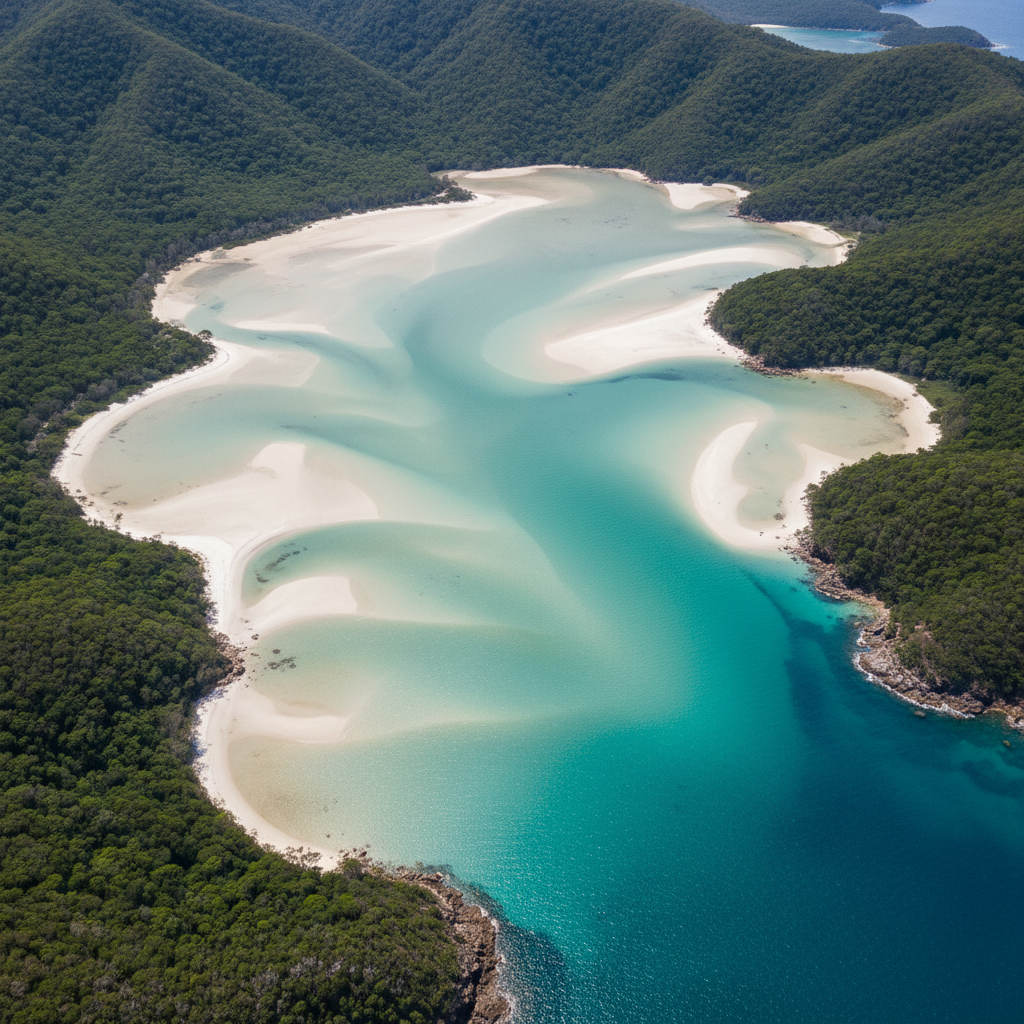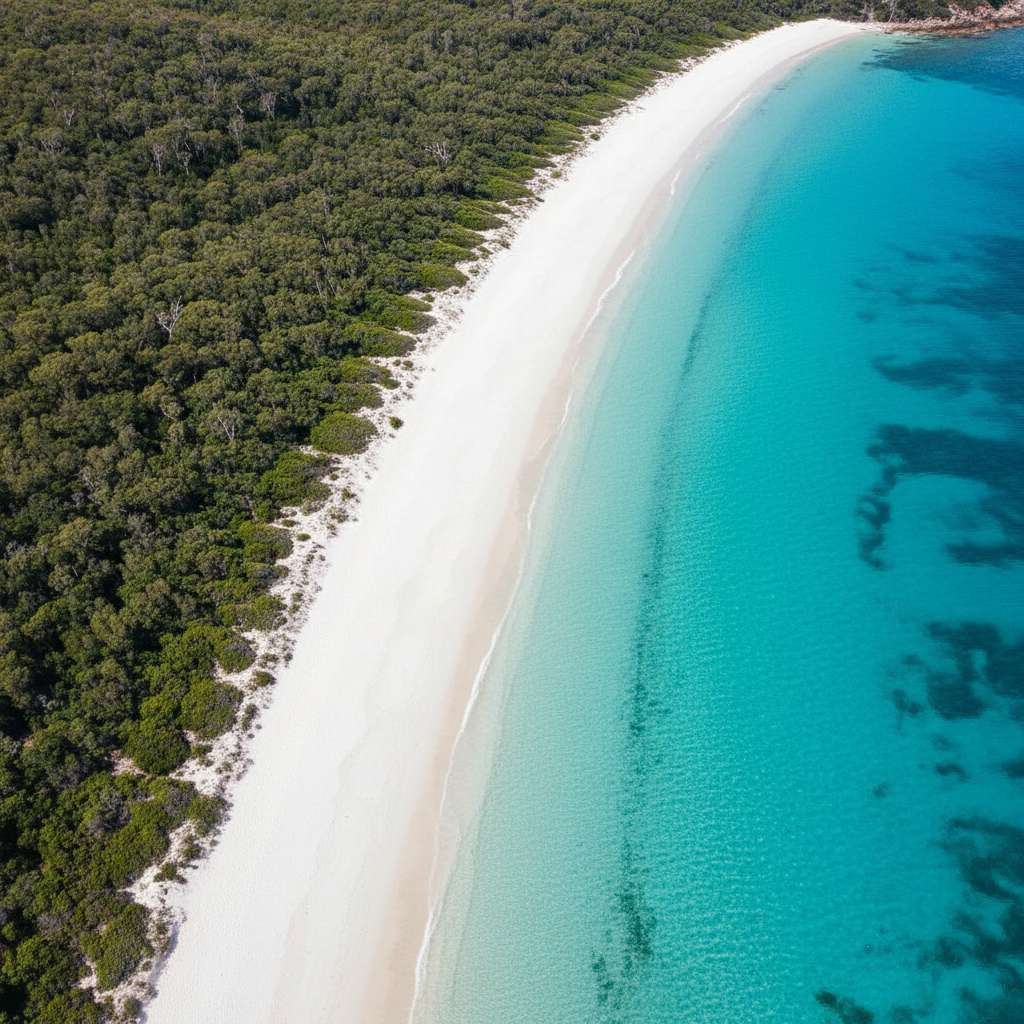
Hidden away on the southern end of Whitsunday Island, the South Whitehaven Beach lookout offers one of the region's most spectacular but lesser-known viewpoints. While most visitors flock to Hill Inlet at the northern end, this southern vantage point provides unobstructed views across Whitehaven Beach's pristine silica sand stretching for over 6 kilometres. The lookout sits approximately 150 metres above sea level, delivering sweeping panoramas of the Coral Sea, neighbouring islands, and that famous 98.9% pure silica sand that makes Whitehaven Beach a world icon.
Where exactly is the South Whitehaven Beach lookout located?
The South Whitehaven Beach lookout is positioned on the southern headland of Whitsunday Island, approximately 6.5 kilometres south of Hill Inlet and 32 kilometres southeast of Airlie Beach by boat.
This elevated viewpoint sits on the rocky outcrop that forms the southern boundary of Whitehaven Beach. The lookout provides a different perspective compared to the famous Hill Inlet lookout at the northern end, offering uninterrupted views northward along the entire length of Australia's most photographed beach. From this vantage point, you're looking across Whitehaven Beach toward Pentecost Island and the northern Whitsunday passages.
The exact coordinates place the lookout at approximately 20°19'S, 149°02'E, making it easily identifiable on marine charts and GPS systems. Unlike Hill Inlet, which faces west into the protected waters of the inlet, South Whitehaven faces east toward the open Coral Sea, providing dramatically different lighting conditions throughout the day.
How do you access South Whitehaven Beach lookout from Airlie Beach?
Access to South Whitehaven Beach lookout requires boat transport to Whitsunday Island followed by a 45-minute bushwalk from the beach, as no direct helicopter or seaplane landing sites exist nearby.
The journey begins with a boat trip from Airlie Beach, typically departing from Abel Point Marina or Shute Harbour. Vessels take approximately 45-60 minutes to reach Whitehaven Beach, depending on sea conditions and boat type. High-speed catamarans make the crossing faster, while traditional sailing boats offer a more leisurely approach.
Once at Whitehaven Beach, the walking track to South Whitehaven lookout starts from the southern end of the main beach area. The well-defined trail winds through native bushland, gaining approximately 150 metres in elevation over 1.8 kilometres. The track surface varies from sandy beach sections to rocky bush paths, requiring sturdy walking shoes.
During stinger season (November to May), boats anchor in deeper water, requiring tender transfers to reach the beach. This adds approximately 10-15 minutes to the overall journey time but ensures safety from marine stingers in shallow waters.
What can you see from the South Whitehaven Beach lookout?
From South Whitehaven Beach lookout, visitors enjoy panoramic views of the entire 6-kilometre Whitehaven Beach, the Coral Sea, Pentecost Island, and the southern Whitsunday passages, with visibility extending up to 30 kilometres on clear days.
The primary attraction is the bird's-eye view of Whitehaven Beach stretching northward, showcasing the stark contrast between the pure white silica sand and the brilliant turquoise waters of the Whitsunday Passage. The beach's famous sand purity of 98.9% silica creates an almost blinding white appearance that's particularly striking from this elevated position.
To the east, the Coral Sea extends to the horizon, often displaying multiple shades of blue from the varying depths of the continental shelf. On clear days, the outer reef line is visible as a thin white line of breaking waves approximately 15 kilometres offshore.
Pentecost Island dominates the northern view, with its distinctive rocky coastline and fringing reefs clearly visible. The narrow channel between Pentecost and Whitsunday Islands creates unique tidal patterns that can be observed from the lookout, particularly during spring tides.
The southern outlook reveals the scattered islands of the lower Whitsunday group, including parts of Hook Island and the distant peaks of the mainland ranges near Proserpine. Native wildlife is often spotted from the lookout, including white-bellied sea eagles, brahminy kites, and seasonal humpback whale sightings between June and September.
Which tours include South Whitehaven Beach lookout in their itinerary?
Full-day sailing tours and premium small-group excursions commonly include South Whitehaven Beach lookout, typically combined with Hill Inlet and snorkelling stops, with prices ranging from $189-$350 per person.
Most operators offering the South Whitehaven lookout focus on full-day experiences due to the additional walking time required. Ocean Rafting provides high-speed trips that include both lookouts, spending approximately 90 minutes at Whitehaven Beach to allow time for the southern walk.
Sailing operators like Whitsunday Bullet and Providence typically anchor at Whitehaven for 2-3 hours, giving passengers flexibility to choose between relaxing on the beach or tackling the southern lookout walk. These tours often cost between $189-$250 per person and include lunch and snorkelling gear.
Premium small-group tours with companies like Explore Whitsundays charge $280-$350 per person but limit numbers to 20 passengers, ensuring a more personalised experience and better photo opportunities without crowds. These operators often provide guided commentary about the geological and ecological significance of the viewpoint.
Half-day helicopter tours occasionally include an aerial view of the South Whitehaven area but don't offer landing opportunities due to National Park restrictions. The comprehensive Whitehaven Beach guide details all available tour options and their specific inclusions.
When is the best time to visit South Whitehaven Beach lookout?
The optimal time to visit South Whitehaven Beach lookout is during the dry season (April to November), particularly early morning or late afternoon for the best lighting and photography conditions.
Weather patterns significantly impact the lookout experience. The dry season offers consistently clear skies, lower humidity, and minimal rainfall, creating ideal conditions for the walk and photography. Temperatures during this period range from 20-28°C, making the 45-minute bushwalk more comfortable.
Daily timing affects the visual experience dramatically. Early morning visits (8-10 AM) provide softer lighting conditions and often clearer air before afternoon heat haze develops. The eastern-facing aspect means morning light illuminates the Coral Sea beautifully, while Whitehaven Beach remains in gentle shadow.
Late afternoon visits (3-5 PM) offer warmer light that enhances the contrast between the white sand and blue water. However, afternoon heat can make the walk more challenging, particularly during summer months.
Wet season visits (December to March) present challenges including afternoon thunderstorms, high humidity, and occasional cyclone activity. Tours frequently cancel during this period, and the walking track can become slippery and potentially dangerous during heavy rainfall.
Tidal conditions also influence access, particularly during very low tides when boat anchoring becomes challenging. Spring tides can create more dramatic water colour variations visible from the lookout.
What facilities and amenities are available at South Whitehaven Beach lookout?
South Whitehaven Beach lookout has no facilities, requiring visitors to bring water, sun protection, and snacks, while toilets and shelter are only available at the main Whitehaven Beach area 1.8 kilometres away.
The lookout itself consists of a natural rocky platform with no constructed viewing areas, seating, or safety barriers. Visitors must exercise caution near cliff edges, particularly in windy conditions or when photographing.
No shade structures exist at the lookout, making sun protection essential. The exposed position means visitors experience full sun exposure during the middle of the day, with limited natural shade from the sparse vegetation on the rocky headland.
Fresh water is not available along the walking track or at the lookout, making it crucial to carry adequate hydration for the return walk. Tour operators typically provide bottled water, but independent visitors must plan accordingly.
Mobile phone coverage is generally poor to non-existent at the lookout, though some high points may pick up signals from Hamilton Island or mainland towers. This isolation adds to the pristine nature experience but requires visitors to inform others of their plans.
The nearest facilities are at the main Whitehaven Beach area, which features composting toilets, picnic tables, and some shade structures among the pisonia trees. Most visitors use these facilities before beginning the walk to the southern lookout.
What are the best photography tips for South Whitehaven Beach lookout?
For optimal photography at South Whitehaven Beach lookout, shoot during golden hour with a polarising filter to reduce glare, use wide-angle lenses for panoramic shots, and include foreground rocks for compositional depth.
The lookout's eastern-facing aspect creates specific lighting challenges and opportunities. Morning golden hour (first hour after sunrise) provides warm, soft light that enhances the turquoise water colours and reduces harsh shadows on the white sand. The sun's position illuminates the Coral Sea while keeping Whitehaven Beach in flattering, even light.
Polarising filters prove essential for managing reflections off the water and sand. Rotating the filter can dramatically change the water's appearance, from brilliant turquoise to deeper blue tones. This technique also helps reduce glare from the white silica sand, preventing blown highlights in beach areas.
Wide-angle lenses (14-24mm on full-frame cameras) capture the full scope of the panoramic view, including the entire length of Whitehaven Beach. However, ultra-wide angles can distort the horizon, so careful composition is required.
Telephoto lenses (70-200mm) excel for isolating specific sections of the beach or capturing detailed shots of distant islands. These lenses also compress the perspective, making Pentecost Island appear closer and more prominent in the frame.
Including foreground elements like native vegetation or rock formations adds depth and scale to photographs. The weathered granite outcrops provide interesting textures that contrast with the smooth water and sand.
Drone photography is prohibited within the Whitsunday Islands National Park without specific permits, making the elevated lookout position particularly valuable for aerial-style perspectives.
How challenging is the walk to South Whitehaven Beach lookout?
The South Whitehaven Beach lookout walk is moderately challenging, covering 1.8 kilometres with 150 metres elevation gain over 45 minutes, requiring reasonable fitness and sturdy footwear for mixed terrain including sand and rocks.
The track begins from the southern end of Whitehaven Beach, initially crossing soft sand dunes before entering native bushland. This sand section can be energy-sapping, particularly in hot conditions, as feet sink into the fine silica particles.
After approximately 400 metres, the track transitions to firmer ground with exposed roots, rocks, and occasional muddy sections during wet weather. The gradient increases steadily but never becomes extremely steep, making it accessible to most people with basic fitness levels.
Native vegetation includes lawyer vines and stinging trees, making it essential to stay on the marked track. Long pants and closed shoes provide protection against scratches and potential stings from these plants.
The track is generally well-defined but not formally maintained, meaning fallen branches or overgrown sections can occasionally obstruct the path. Rangers from the Queensland Parks and Wildlife Service periodically clear major obstacles but don't provide regular maintenance.
Return journey time totals approximately 90 minutes including lookout time, though photography enthusiasts often spend longer at the viewpoint. Tour groups typically allow 1.5-2 hours for the complete experience.
Weather conditions significantly impact difficulty levels. High humidity and temperatures above 30°C make the walk substantially more challenging, while wet conditions create slippery surfaces that require extra caution.
What wildlife might you encounter at South Whitehaven Beach lookout?
Wildlife at South Whitehaven Beach lookout includes white-bellied sea eagles, brahminy kites, rainbow lorikeets, and monitor lizards, with seasonal humpback whale sightings possible from the elevated vantage point between June and September.
The elevated position makes the lookout excellent for bird watching, particularly raptors that use the thermals rising from the heated rocks. White-bellied sea eagles, with their distinctive white head and tail, frequently soar around the headland hunting for fish in the clear waters below.
Brahminy kites are commonly seen performing aerial displays, their red-brown plumage contrasting beautifully against the blue sky. These birds often nest in the surrounding bushland and can be quite inquisitive around visitors.
The native vegetation supports populations of rainbow lorikeets, noisy mynahs, and honeyeaters. Early morning visits increase wildlife spotting opportunities as many species are most active during cooler temperatures.
Monitor lizards, particularly lace monitors, inhabit the rocky outcrops and surrounding bushland. These impressive reptiles can exceed 1.5 metres in length and are generally harmless but should be observed from a respectful distance.
During whale migration season (June to September), humpback whales are regularly spotted from the lookout as they travel between feeding grounds in Antarctica and breeding areas in northern Queensland. The elevated position and unobstructed eastern view provide excellent whale watching opportunities without needing specialist boats.
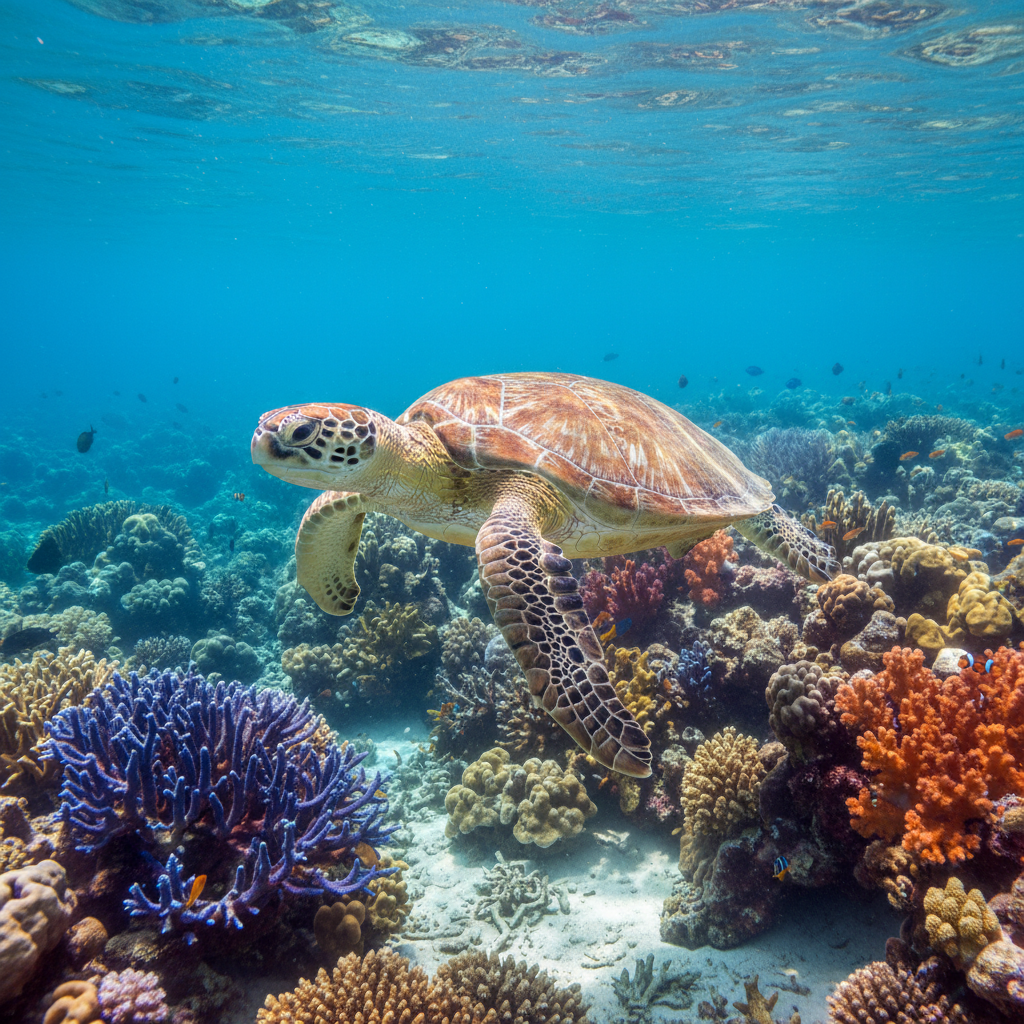
Marine life visible from the lookout includes occasional dolphins, rays gliding over sandy shallows, and various tropical fish species in the clear waters near the rocky headland.
How does South Whitehaven Beach lookout compare to other Whitsunday viewpoints?
South Whitehaven Beach lookout offers more solitude and eastern ocean views compared to the busier Hill Inlet lookout, while providing different perspectives than Tongue Point, making each viewpoint unique for specific photographic and scenic experiences.
The most obvious comparison is with Hill Inlet lookout at Whitehaven's northern end. Hill Inlet provides the famous swirling sand and water patterns but attracts significantly more visitors, particularly during peak season. South Whitehaven offers tranquillity and different photographic opportunities without the crowds.
Hill Inlet faces west, providing afternoon backlighting that creates dramatic silhouettes and golden water effects. South Whitehaven faces east, offering morning light that enhances water clarity and colour saturation. Photographers often visit both locations during different times to capture varying moods.
Tongue Point lookout provides elevated views over the entire Whitsunday Passage but requires helicopter access, making it less accessible than the walking tracks at Whitehaven. Tongue Point offers broader island vistas but lacks the intimate beach perspective available from South Whitehaven.
The South Whitehaven position provides unique views of the outer reef line that aren't visible from other major lookouts. This eastern outlook shows the transition from shallow coastal waters to the deep blue of the Coral Sea, creating layered colour effects particularly striking during morning light.
Access difficulty varies significantly between viewpoints. Hill Inlet requires a shorter, easier walk (20 minutes), while South Whitehaven demands more commitment with its 45-minute track. Tongue Point requires expensive helicopter transport but no walking.
Each lookout serves different purposes: Hill Inlet for iconic swirling patterns, South Whitehaven for solitude and ocean views, and Tongue Point for comprehensive island panoramas. Serious photographers and nature enthusiasts often plan itineraries including multiple viewpoints.
Ready to experience the hidden beauty of South Whitehaven Beach lookout? Book your Whitsunday adventure through Airlie to Whitehaven, where we've carefully selected tours that include this spectacular but lesser-known viewpoint. Our local expertise ensures you'll visit during optimal conditions for both the walk and the breathtaking views that make this remote corner of paradise so special.