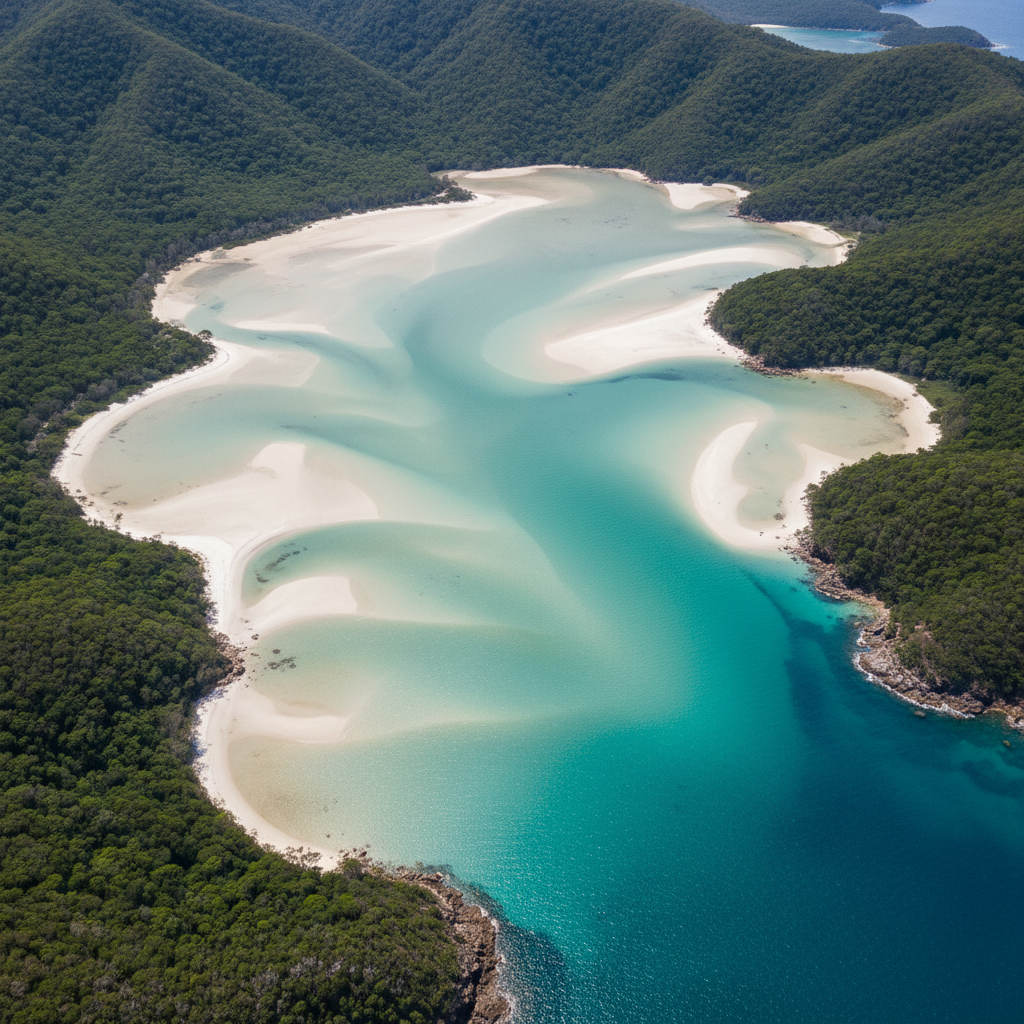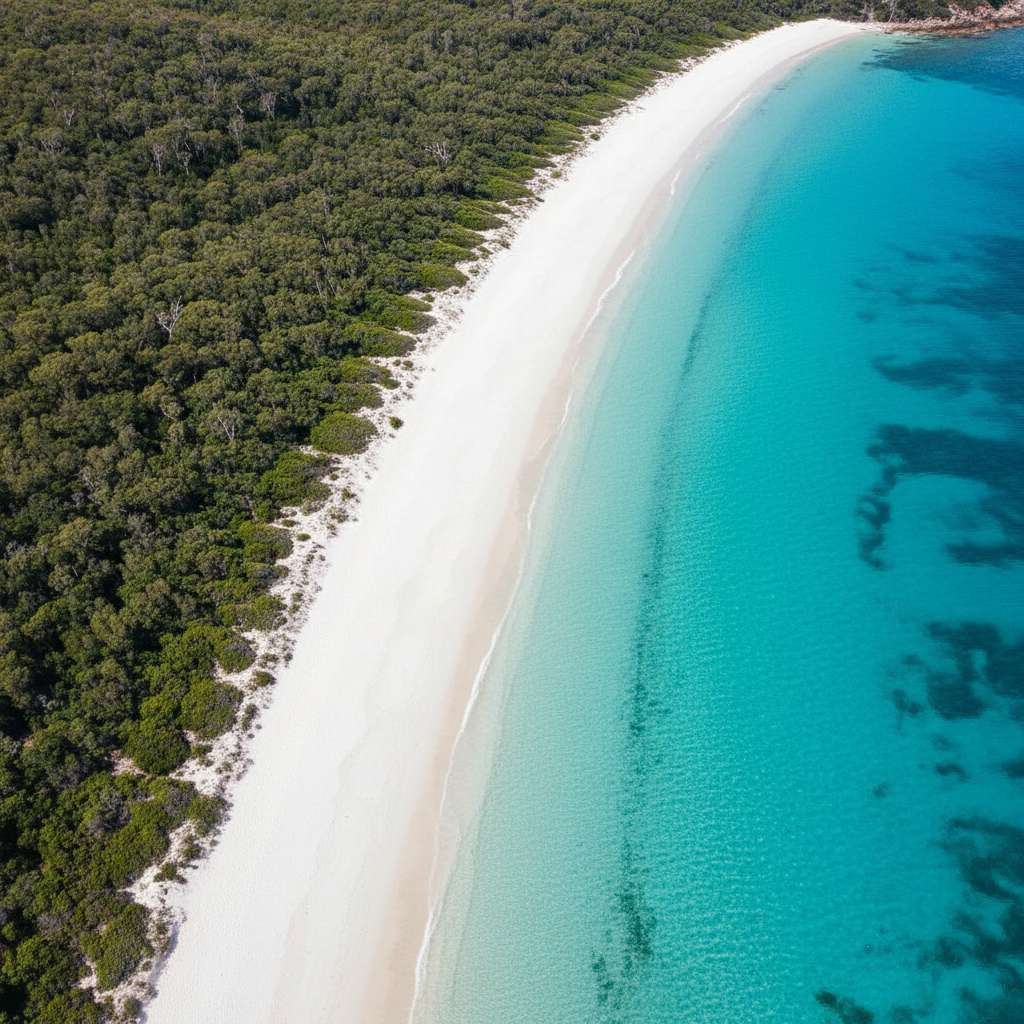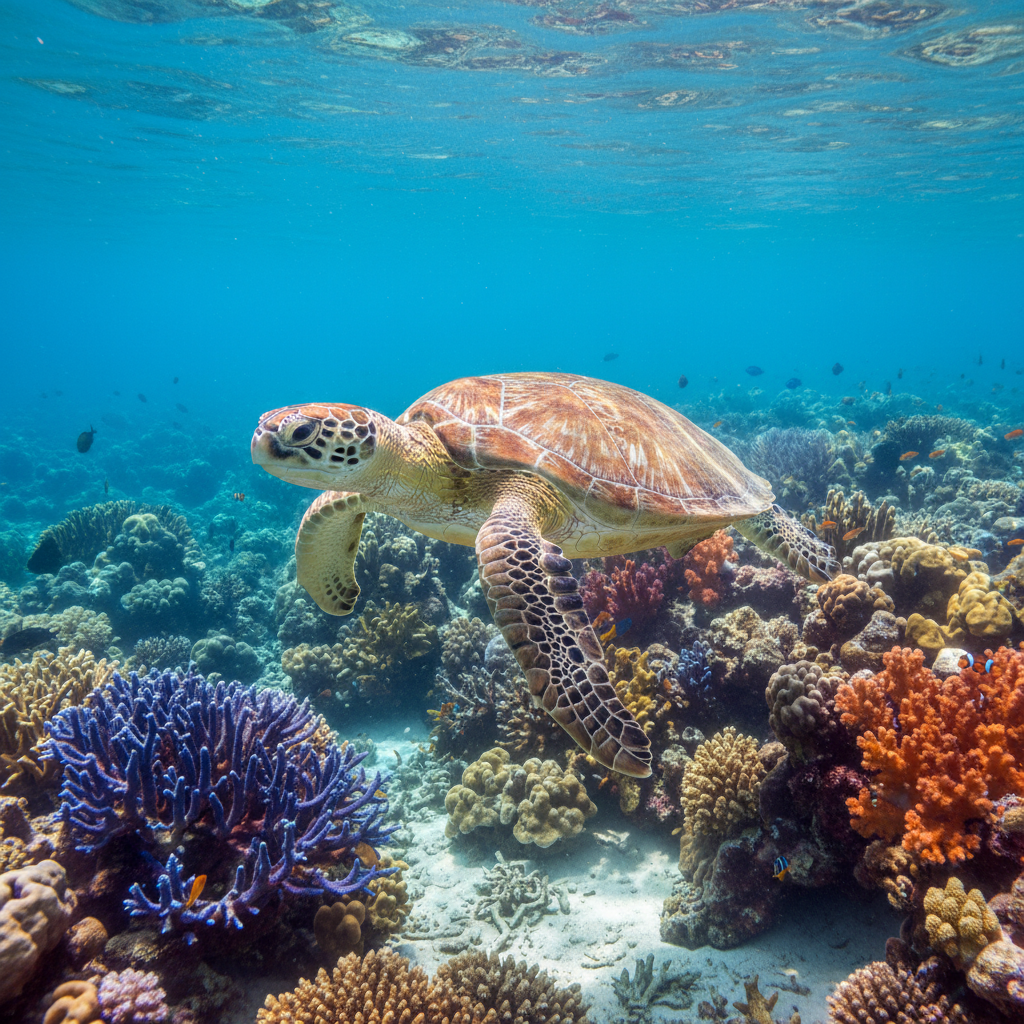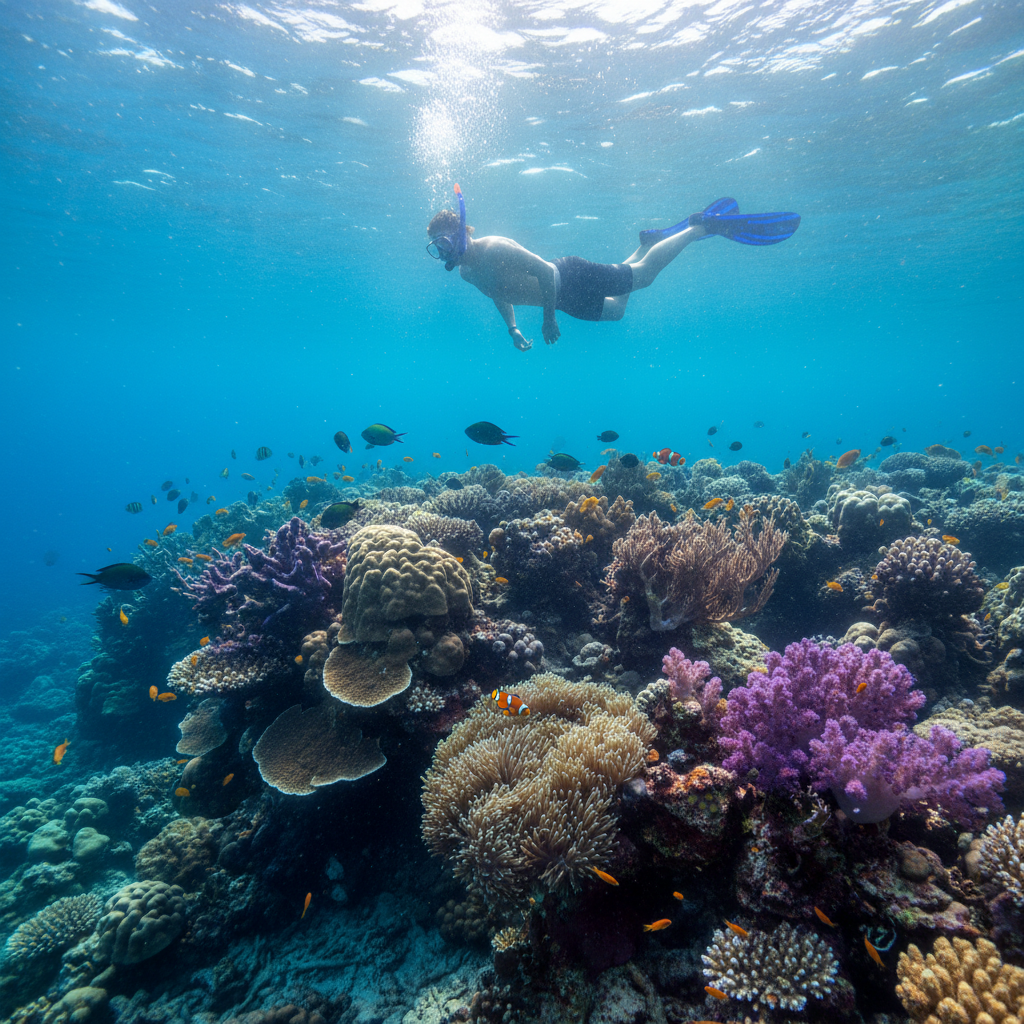
The warm tropical waters surrounding Airlie Beach offer some of Australia's most reliable turtle encounters, with green turtles and hawksbill turtles calling these coral reefs home year-round. From intimate snorkelling spots just minutes from shore to world-renowned reef systems, the Whitsundays region provides exceptional opportunities to swim alongside these ancient marine giants in their natural habitat.
Where are the best spots to snorkel with turtles near Airlie Beach?
Langford Island, Daydream Island's reef, and the fringing reefs around Hook Island offer the most consistent turtle encounters within 30 minutes of Airlie Beach, with green turtles particularly abundant at seagrass beds around these locations.
Langford Island stands out as the crown jewel for turtle snorkelling, located just 45 minutes by boat from Abel Point Marina. This small coral cay features extensive seagrass meadows where green turtles (Chelonia mydas) graze throughout the day. The island's protected lagoon maintains water temperatures between 24-28°C year-round, creating ideal conditions for both turtles and snorkellers.
The fringing reefs surrounding Daydream Island provide another exceptional location, particularly the coral gardens on the island's northern and eastern sides. Here, hawksbill turtles (Eretmochelys imbricata) frequent the coral formations, feeding on sponges and soft corals. The reef drops from 2-3 metres to 8-10 metres, accommodating snorkellers of all experience levels.
Hook Island's Nara Inlet and Macona Inlet feature protected bays with turtle nesting beaches nearby. The combination of coral reefs, seagrass beds, and mangrove systems creates a diverse ecosystem supporting both green and hawksbill turtles. These locations offer calmer waters, making them ideal for beginners or those seeking longer snorkelling sessions.
Border Island's southern reef system hosts a resident population of green turtles, with sightings reported on 85% of visits during optimal conditions. The reef's shallow platform (2-4 metres deep) extends 200 metres from shore, providing ample space for turtle encounters without requiring advanced swimming skills.
What turtle species can you encounter while snorkelling in the Whitsundays?
Green turtles and hawksbill turtles are the primary species encountered while snorkelling near Airlie Beach, with green turtles comprising approximately 70% of sightings and hawksbill turtles making up 25% of encounters year-round.
Green turtles represent the most commonly sighted species, despite their name deriving from the green colour of their body fat rather than their shell. Adult green turtles in the Whitsundays typically measure 80-120 centimetres in carapace length and weigh 110-190 kilograms. Their distinctive features include a single pair of prefrontal scales between their eyes and serrated lower jaw edges perfectly adapted for grazing seagrass and algae.
Hawksbill turtles, recognised by their distinctive hawk-like beaks and overlapping scutes (shell plates), frequent coral reef environments throughout the region. These critically endangered turtles measure 60-90 centimetres in length and display a more pointed head profile compared to green turtles. Their carapaces feature striking amber, brown, and yellow patterns that provide excellent camouflage among coral formations.
Loggerhead turtles (Caretta caretta) occasionally appear in Whitsundays waters, comprising roughly 4% of turtle encounters. These powerful swimmers are distinguished by their large heads (up to 25cm wide) and reddish-brown carapaces. Loggerheads typically inhabit deeper offshore waters but venture into shallower reefs during feeding migrations.
Flatback turtles (Natator depressus), endemic to Australian waters, represent the rarest encounters, accounting for less than 1% of sightings. These medium-sized turtles feature distinctive flat carapaces and are most likely observed during their November-February nesting season on nearby island beaches.
Which tour operators offer the best turtle snorkelling experiences?
Ocean Rafting, Whitehaven Xpress, and Red Cat Adventures consistently deliver turtle encounters on 80-90% of their snorkelling tours, departing daily from Abel Point Marina with small group sizes maximising individual attention and turtle spotting success.
Ocean Rafting operates high-speed rigid inflatable boats accommodating 32 passengers, visiting 2-3 prime turtle locations during their full-day Northern Exposure tours ($159 adults). Their experienced marine biologists provide turtle identification workshops and maintain detailed sighting logs, reporting green turtle encounters on 89% of tours over the past 12 months.
Whitehaven Xpress specialises in turtle-focused snorkelling experiences aboard their 24-metre catamaran, limiting groups to 45 passengers for personalised service. Their half-day turtle discovery tours ($115 adults) specifically target Langford Island and Daydream Island reefs, with hydrophones used to detect turtle movements underwater.
Red Cat Adventures combines sailing with dedicated turtle snorkelling stops, operating smaller vessels (maximum 20 passengers) for intimate wildlife encounters. Their full-day adventures ($169 adults) include underwater cameras for turtle photography and marine biology presentations covering turtle behaviour and conservation.
Cruise Whitsundays offers larger vessel experiences with their 35-metre catamarans, accommodating up to 150 passengers on their reef and turtle tours ($145 adults). While group sizes are larger, their established relationships with marine park authorities provide access to exclusive turtle monitoring sites.
Several operators provide specialised turtle education programs alongside snorkelling experiences, combining wildlife encounters with conservation awareness and citizen science participation opportunities.
What's the best time of day and season for turtle snorkelling?
Morning departures between 8:00-10:00 AM during April through November offer optimal turtle snorkelling conditions, with 15-20 metre visibility, calm seas, and active turtle feeding behaviour before afternoon thermal currents develop.
Early morning represents peak turtle activity periods, as these reptiles are most active during cooler water temperatures before midday heat increases metabolic demands. Green turtles typically graze seagrass meadows between 7:00-11:00 AM, making morning snorkelling sessions 40% more likely to produce encounters compared to afternoon trips.
The dry season (April-November) provides the most consistent snorkelling conditions, with southeast trade winds creating 1-2 metre swells and water visibility averaging 15-25 metres. During this period, water temperatures remain comfortable at 22-26°C, eliminating the need for full wetsuits while maintaining turtle activity levels.
Wet season considerations (December-March) include reduced visibility due to river runoff and increased stinger activity requiring full protective suits. However, this period coincides with turtle nesting season, potentially offering observations of nesting behaviour on nearby beaches during evening tours.
Tidal timing significantly impacts turtle encounters, with incoming and high tides providing optimal conditions. Turtles move closer to reefs during high tide periods, accessing shallow feeding areas that become exposed during low tides. Planning snorkelling activities 2-3 hours either side of high tide maximises encounter opportunities.
Moon phase influences turtle behaviour, with new moon periods (darker nights) correlating with increased daytime activity as turtles adjust their circadian rhythms. Full moon phases often result in more nocturnal activity, potentially reducing morning sighting success rates.
How can you identify different turtle species while snorkelling?
Green turtles display rounded heads with single prefrontal scales, smooth carapace edges, and paddle-like flippers, while hawksbills feature pointed beaks, overlapping shell scutes, and distinctly patterned carapaces with serrated rear margins.
Head shape provides the most reliable initial identification feature. Green turtles possess distinctly rounded heads proportional to their body size, with small eyes positioned laterally. Their prefrontal scales (between the eyes) consist of a single pair, creating a smooth forehead appearance. In contrast, hawksbill turtles display elongated, narrow heads with pronounced beak-like projections perfectly adapted for extracting prey from coral crevices.
Carapace characteristics offer definitive species identification. Green turtle shells feature smooth, non-overlapping scutes arranged in regular patterns with four lateral scutes on each side. The carapace appears heart-shaped from above with a relatively smooth posterior margin. Hawksbill carapaces display overlapping scutes creating a serrated, saw-like appearance along the posterior and lateral margins, with distinctive tortoiseshell patterns in amber, brown, and yellow hues.
Flipper morphology varies significantly between species. Green turtles possess broad, paddle-shaped flippers with single claws on their front flippers, optimised for powerful swimming strokes. Hawksbill flippers appear more elongated and narrow, featuring two claws on front flippers, facilitating precise maneuvering around coral formations.
Behavioural differences aid field identification during snorkelling encounters. Green turtles typically exhibit calm, methodical movements while grazing seagrass, often remaining stationary for extended periods. Hawksbills demonstrate more active behaviour, frequently investigating coral formations and changing positions rapidly while foraging.
Size considerations help distinguish species, though individual variation exists. Adult green turtles in Whitsundays waters typically measure 90-120cm in carapace length, while hawksbills average 70-90cm. However, juvenile specimens of both species may appear similar in size, requiring careful observation of other identification features.
What photography tips will help capture amazing turtle encounters?
Use underwater cameras with macro lenses, approach slowly from the side rather than directly above, maintain 2-3 metre distances, and capture turtles during feeding behaviour when they remain stationary for 30-60 second intervals.
Camera equipment selection significantly impacts turtle photography success. Waterproof action cameras (GoPro Hero 11, DJI Action 3) provide excellent wide-angle shots for capturing turtle-snorkeller interactions and environmental context. For detailed portraits, underwater compact cameras (Olympus TG-6, SeaLife DC2000) offer macro capabilities and manual exposure controls essential for coral reef lighting conditions.
Approach techniques determine photographic opportunities and turtle welfare. Moving slowly and deliberately from the turtle's side or slight rear angle prevents startling the animal while providing optimal photographic angles. Turtles possess excellent peripheral vision but limited forward focus, making side approaches less threatening than direct frontal movements.
Lighting considerations become critical in underwater photography. Natural light penetration decreases rapidly with depth, requiring external strobes or video lights for colours beyond 5 metres depth. Red wavelengths disappear first (by 3 metres), followed by oranges and yellows, making artificial lighting essential for capturing turtle shell patterns and colours accurately.
Composition techniques enhance turtle photography impact. Position turtles against clean backgrounds (blue water, coral formations) to create separation and focus. Include environmental elements like seagrass beds or coral gardens to provide context and tell complete ecological stories. Capture feeding behaviour, breathing sequences at the surface, and interactions with cleaning fish for dynamic imagery.
Camera settings optimisation improves underwater results. Use faster shutter speeds (1/125s or higher) to freeze turtle movement and eliminate motion blur. Set ISO values between 200-800 to balance image quality with available light. Continuous autofocus modes track moving subjects more effectively than single-shot focusing systems.
What safety precautions should you take when snorkelling with turtles?
Maintain minimum 2-metre distances from turtles, never touch or chase them, wear stinger suits during November-May, and always snorkel with operators providing safety briefings and marine park compliance guidance.
Distance regulations protect both snorkellers and turtles under Great Barrier Reef Marine Park Authority guidelines. Approaching closer than 2 metres constitutes harassment under federal law, potentially resulting in fines up to $52,000. Turtles require clear escape routes and become stressed when surrounded by multiple snorkellers, potentially leading to disorientation or injury during rapid escape attempts.
Physical contact restrictions apply absolutely to all turtle encounters. Touching, riding, or otherwise handling sea turtles violates Threatened Species Protection Act provisions and can transmit harmful bacteria or cause shell damage. Turtle shells contain living tissue and nerve endings, making physical contact both illegal and potentially painful for the animal.
Stinger protection becomes essential during November-May when box jellyfish (Chironex fleckeri) and Irukandji jellyfish populate tropical waters. Tour operators provide full-body lycra suits during stinger season, but private snorkellers should invest in quality stinger suits covering extremities completely. Vinegar treatment remains the recommended first aid for suspected stinger contact.
Current awareness prevents snorkeller separation from tour groups and reduces exhaustion risks. Whitsundays currents can exceed 2 knots during spring tides, easily overwhelming average swimmers. Always remain within designated snorkelling areas and maintain visual contact with tour vessels or guides.
Equipment safety checks include mask fit testing, snorkel function verification, and fin security assessment before entering water. Poorly fitting equipment increases panic risks and reduces enjoyment. Most quality tour operators provide equipment sizing sessions and replacement options for comfort issues.
How do turtle conservation efforts impact snorkelling experiences?
Marine park zoning restricts snorkelling access to designated areas, while turtle monitoring programs create opportunities for citizen science participation and educational encounters, enhancing rather than limiting turtle tourism experiences.
Great Barrier Reef Marine Park zoning designates specific areas for turtle protection while maintaining sustainable tourism access. Green zones (no-take areas) cover approximately 33% of the marine park, including critical turtle foraging and nesting habitats. These restrictions concentrate snorkelling activities in designated areas, often increasing encounter rates through habitat protection and turtle population recovery.
Research partnerships between tour operators and marine scientists create unique educational opportunities. The Whitsundays Turtle Monitoring Program involves citizen scientists in turtle identification, behaviour documentation, and health assessment protocols. Snorkellers contribute valuable data while gaining deeper understanding of turtle ecology and conservation challenges.
Turtle rehabilitation facilities on Hamilton Island and mainland centres provide educational components for many tour itineraries. These facilities treat injured turtles (often from boat strikes or plastic ingestion) while educating visitors about human impacts and conservation solutions. Tours incorporating these visits report 95% positive feedback regarding conservation awareness.
Indigenous cultural perspectives enhance turtle conservation messaging through traditional knowledge sharing. Local Ngaro people maintain cultural connections to turtles spanning thousands of years, contributing traditional ecological knowledge to contemporary conservation efforts. Several operators incorporate Indigenous guides and cultural stories into their turtle snorkelling experiences.
Plastic pollution reduction initiatives directly benefit turtle populations while engaging tourists in conservation action. Tour operators implement plastic-free policies, conduct underwater cleanup activities, and educate snorkellers about marine debris impacts. These efforts demonstrate tangible conservation outcomes while enhancing visitor experiences through meaningful participation.
What should you do if you encounter an injured or distressed turtle?
Immediately notify your tour operator or contact the Queensland Turtle Emergency Hotline (1300 130 372), document the turtle's condition with photos, maintain safe distances, and avoid attempting rescue without proper training and permits.
Recognition of turtle distress signals enables appropriate response to injured animals. Turtles floating unnaturally at the surface, displaying visible wounds, or showing plastic debris around their necks require immediate professional attention. Lethargic behaviour, unusual swimming patterns, or visible boat strike injuries indicate serious medical conditions requiring veterinary intervention.
Documentation procedures aid professional responders in assessing turtle conditions and planning rescue operations. Photograph injured turtles from multiple angles, noting location coordinates, time, and environmental conditions. Record turtle size estimates, behaviour patterns, and any visible injuries or foreign objects. This information proves crucial for veterinary assessment and treatment planning.
Professional rescue networks operate throughout the Whitsundays region, coordinated by Queensland Government and marine park authorities. SeaWorld Marine Rescue, Australia Zoo Wildlife Hospital, and regional turtle care organisations maintain 24-hour response capabilities for marine turtle emergencies. Never attempt direct rescue without proper training, as injured turtles can bite defensively or become further stressed.
Reporting requirements under wildlife protection legislation mandate disclosure of threatened species encounters. All tour operators maintain direct communication channels with marine park rangers and wildlife authorities. Private snorkellers should report turtle injuries to Queensland Parks and Wildlife Service through their dedicated hotline system.
Prevention education reduces future turtle injuries through awareness of primary threat factors. Boat strikes represent the leading cause of turtle mortality in the region, followed by plastic ingestion and fishing line entanglement. Supporting operators with responsible boating practices and participating in marine debris removal activities contributes directly to turtle welfare improvement.
Ready to experience these incredible turtle encounters yourself? Airlie to Whitehaven connects you with the region's most reputable turtle snorkelling operators, each committed to sustainable wildlife tourism and unforgettable marine experiences. Our carefully selected tour partners maintain the highest standards for turtle welfare while maximising your chances of magical underwater encounters. Book your turtle snorkelling adventure today and become part of the conservation story protecting these ancient mariners for future generations.