The Whitsundays isn't just about pristine beaches and coral gardens — it's one of Australia's premier fishing destinations. From Airlie Beach, you can access some of Queensland's most productive fishing grounds, where coral trout patrol the outer reef, Spanish mackerel cruise the continental shelf, and massive coral trout lurk around bommies just waiting for the right bait. Whether you're a seasoned angler chasing that trophy fish or a family wanting to try their luck with a line, fishing charters from Airlie Beach offer something for every skill level and budget.
What types of fishing charters operate from Airlie Beach?
Airlie Beach offers reef fishing charters targeting coral trout and sweetlip, game fishing expeditions for Spanish mackerel and tuna, estuary trips for barramundi and mangrove jack, plus family-friendly half-day tours with guaranteed catches.
The fishing charter scene from Airlie Beach caters to every angling ambition. Reef fishing charters head to the outer reef edges, typically 15-25 nautical miles offshore, where coral formations create perfect habitat for coral trout, red emperor, sweetlip, and nannygai. These trips usually target depths between 20-40 metres, using bottom-fishing techniques around coral bommies.
Game fishing charters venture further offshore to the continental shelf, roughly 30-50 nautical miles from Airlie Beach. Here, pelagic species like Spanish mackerel, yellowfin tuna, wahoo, and mahi-mahi patrol the deeper waters. During peak season (April to November), these charters often encounter schools of mackerel weighing 10-20kg.
Estuary and inshore charters explore the Proserpine River system and protected waters around the Whitsunday Islands. Target species include barramundi, mangrove jack, queenfish, and trevally. These calmer-water trips suit families and those prone to seasickness.
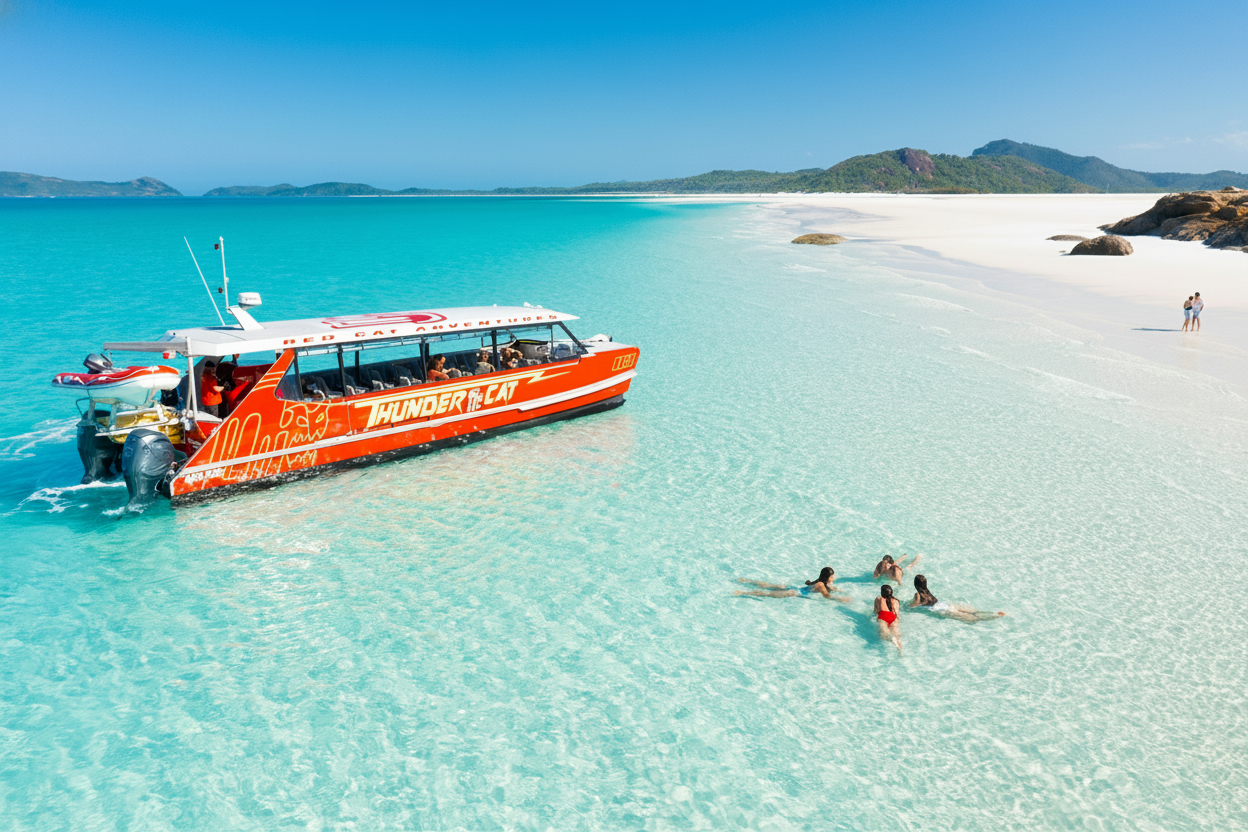
Shared fishing tours combine reef fishing with sightseeing, often including stops at Whitehaven Beach or snorkelling locations. These hybrid experiences appeal to groups with mixed interests, balancing fishing time with Whitsundays highlights.
How much do fishing charters from Airlie Beach cost?
Half-day fishing charters start from $180-220 per person, full-day reef fishing costs $280-350 per person, while private charters range from $1,800-3,500 depending on boat size and duration.
Pricing varies significantly based on charter type, duration, and group size. Shared half-day charters (4-5 hours) typically cost $180-220 per adult, with children often receiving 20-30% discounts. These trips include basic tackle, bait, and filleting service.
Full-day shared charters (7-8 hours) range from $280-350 per person, including lunch and all fishing equipment. Premium operators with newer vessels and better fish-finding technology command higher prices, but often deliver superior catch rates.
Private charters offer the most flexibility but require larger investment. Half-day private trips start around $1,800 for up to 6 people, while full-day private charters range from $2,800-3,500. Game fishing charters targeting larger pelagic species typically cost $3,000-4,500 for full-day trips due to higher fuel costs and specialized equipment requirements.
Multi-day fishing packages combining accommodation with consecutive fishing days offer better value for serious anglers. Three-day packages including accommodation and two full fishing days typically cost $800-1,200 per person.
Additional costs include fishing licenses ($44 for Queensland recreational fishing license), premium tackle upgrades ($20-50), and fish cleaning/bagging services ($10-20 per person).
When is the best time for fishing charters from Airlie Beach?
April to November offers optimal fishing conditions with calm seas and active fish. Spanish mackerel peak during April-June and September-November, while coral trout remain consistently active year-round in reef waters.
Seasonal patterns significantly impact fishing success in the Whitsundays region. The dry season (April to November) provides the most consistent fishing conditions, with trade winds typically under 20 knots and minimal rainfall. Sea temperatures during this period range from 22-26°C, ideal for most target species.
Spanish mackerel fishing peaks during the shoulder months of April-May and September-November when schools migrate along the continental shelf. Water temperatures between 24-26°C trigger their feeding activity, with dawn and dusk periods producing the most strikes.
Coral trout remain active throughout the year but show increased feeding during the cooler months of June-August. Full moon periods often coincide with spawning activity, creating excellent fishing opportunities around reef edges.
The wet season (December to March) brings challenges including afternoon thunderstorms, higher seas, and stinger presence in nearshore waters. However, this period can produce exceptional barramundi fishing in estuarine waters as runoff creates ideal feeding conditions.
Tidal influences play a crucial role regardless of season. The two hours either side of high tide generally produce the best reef fishing, while run-out tides often trigger pelagic feeding frenzies on the outer shelf.
What should beginners expect on their first fishing charter?
Beginner-friendly charters provide all tackle, bait, and instruction. Crew members assist with baiting hooks, landing fish, and safety procedures. Most operators guarantee fish for the table or provide backup fishing locations.
First-time charter participants need minimal prior experience — professional crew handle all technical aspects. Pre-departure briefings cover safety procedures, fishing techniques, and boat layout. Most charters depart between 6:30-7:30am from Abel Point Marina, requiring guests to arrive 15 minutes early for check-in.
Equipment provision includes rods, reels, tackle, bait, and filleting knives. Quality operators use Shimano or Penn reels with 30-50lb line suitable for reef fishing. Crew members pre-rig lines and explain basic techniques like bottom-bouncing for coral trout or trolling for mackerel.
Fish handling instruction covers proper landing techniques, species identification, and size/bag limit regulations. Queensland fishing regulations allow 5 coral trout per person (minimum 38cm) and 1 Spanish mackerel per person (minimum 90cm).
Most operators offer fish preparation services, filleting catches and vacuum-packing for transport. Some provide ice boxes, while others arrange overnight freezer storage for guests departing the following day.
Seasickness affects approximately 20% of first-time charter guests. Preventive measures include taking motion sickness medication 30 minutes before departure, eating light breakfasts, and staying hydrated throughout the trip.
Which fishing charters are best for families with children?
Family fishing charters focus on inshore/estuary fishing with shorter durations, shallow water fishing, kid-friendly species like whiting and flathead, plus combination tours including swimming stops to maintain children's interest throughout the day.
Half-day inshore charters work best for families, typically lasting 4-5 hours to match children's attention spans. These trips target sheltered waters around the Whitsunday Islands where seasickness is minimal and fish are readily caught.
Target species for family trips include whiting, flathead, sweetlip, and small coral trout — all excellent eating fish that fight well on light tackle. These species inhabit shallow reef areas (5-15 metres) where children can see the bottom and understand the fishing environment.
Combination fishing/sightseeing tours prove most successful with mixed-age groups. These 6-8 hour trips include 3-4 hours fishing, plus stops at Whitehaven Beach or snorkelling locations. The variety maintains interest when fishing slows.
Family-focused operators provide child-sized life jackets, smaller rods (5-6 foot spinning rods), and simplified tackle setups. Experienced crew members assign one staff member per 2-3 children, ensuring constant supervision and assistance.
Recommended family charter operators include those offering guaranteed fish policies — if natural fishing proves unsuccessful, they'll visit fish aggregation devices or easy fishing spots to ensure children catch fish for dinner.
What's included in reef fishing charters versus game fishing charters?
Reef fishing charters include bottom fishing tackle, bait, filleting service, and target coral trout/sweetlip. Game fishing charters provide heavy tackle, lures, gaff hooks, and target Spanish mackerel/tuna with longer travel distances.
Reef fishing charter inclusions: Medium-heavy spinning or baitcasting rods (6-7 feet), conventional reels with 30-40lb line, sinkers ranging from 2-8 ounces depending on depth and current, circle hooks (sizes 4/0-8/0), fresh bait including pilchards, squid, and prawns, plus filleting and bagging services.
Reef charters typically fish depths of 15-40 metres around coral formations 15-25 nautical miles from Airlie Beach. Target species include coral trout (up to 5kg), red emperor (up to 8kg), sweetlip, nannygai, and various cod species.
Game fishing charter inclusions: Heavy tackle setups with 80-130lb line, large conventional reels, trolling rods (6-7 feet with roller guides), wire leaders, large lures (skirted lures, spoons, and live bait rigs), gaff hooks for landing large fish, and specialized fish boxes for storing catches.
Game fishing charters venture 30-50 nautical miles offshore to the continental shelf where water depths exceed 100 metres. Primary targets include Spanish mackerel (10-20kg), yellowfin tuna (15-40kg), wahoo (up to 25kg), and seasonal mahi-mahi.
Travel time differences: Reef fishing locations require 45-90 minutes travel each way, while game fishing grounds often necessitate 2-3 hours travel, reducing actual fishing time but accessing more productive pelagic fishing areas.
How do weather conditions affect fishing charter availability?
Charters operate in winds up to 20-25 knots but cancel in conditions exceeding 30 knots or during thunderstorm activity. Operators monitor Bureau of Meteorology forecasts and provide 24-hour cancellation notices when possible.
Weather significantly impacts charter operations, with wind strength and direction being primary factors. Southeasterly trade winds under 20 knots create ideal conditions, while northerly winds or speeds exceeding 25 knots often force cancellations or destination changes.
Swell conditions matter more than wind speed for passenger comfort. Swells exceeding 2 metres typically result in uncomfortable conditions, particularly for reef fishing charters that anchor over fishing grounds. Game fishing charters handle larger swells better due to continuous boat movement.
During the wet season (November-April), afternoon thunderstorms frequently develop, forcing early returns or morning-only fishing schedules. Operators monitor radar closely and maintain radio contact with other vessels to track storm movements.
Fog conditions occasionally affect early morning departures, particularly during winter months when temperature differentials between land and sea create visibility issues. Modern GPS and radar systems allow operation in reduced visibility, but extreme fog may delay departures.
Reputable operators provide full refunds for weather cancellations and offer alternative dates when possible. Some maintain standby shorter trips to protected waters when outer reef conditions prove unsuitable.
The complete fishing guide for the Whitsundays provides detailed seasonal weather patterns and fishing forecasts to help plan your charter timing.
Should I choose a shared charter or private fishing charter?
Shared charters cost less ($180-350 per person) and suit solo travelers or couples, while private charters ($1,800-3,500) offer customized fishing locations, flexible timing, and exclusive access to the captain's best fishing spots.
Shared charter advantages include lower per-person costs, fixed departure schedules (easier planning), and social interaction with fellow anglers. Most shared charters limit groups to 8-12 people, ensuring adequate deck space and crew attention. These trips follow established fishing routes to productive, reliable locations.
Shared charter limitations include inflexible itineraries, shared fishing space leading to tangled lines, and inability to extend trips when fish are biting well. Departure and return times are fixed regardless of fishing conditions.
Private charter benefits encompass complete itinerary control, exclusive access to captain's preferred fishing spots, flexible departure times, and ability to extend trips when fishing is exceptional. Private groups can choose specific target species and fishing techniques.
For groups of 6 or more, private charters often provide better value — $3,000 divided by 8 people equals $375 per person, comparable to premium shared charter rates but with exclusive boat access.
Skill level considerations: Experienced anglers benefit more from private charters where they can request specific techniques or locations. Beginners often prefer shared charters with other novices and structured instruction.
Corporate groups and special occasions (birthdays, bucks parties) typically choose private charters for customization options and alcohol policies — many private operators allow BYO alcohol while shared charters maintain stricter policies.
What fishing licenses and regulations apply in the Whitsundays?
Queensland recreational fishing licenses cost $44 annually and are required for anyone 18+ fishing in tidal waters. Bag limits include 5 coral trout (38cm minimum) and 1 Spanish mackerel (90cm minimum) per person per day.
The Queensland recreational fishing license applies to all tidal waters around the Whitsundays, purchasable online through the Queensland Government website or at fishing shops in Airlie Beach. The license covers all Queensland waters and remains valid for 12 months from purchase date.
Key bag and size limits for popular species:
- Coral trout: 5 fish per person, minimum 38cm length
- Spanish mackerel: 1 fish per person, minimum 90cm length
- Red emperor: 3 fish per person, minimum 55cm length
- Sweetlip: 10 fish per person, minimum 35cm length
- Mangrove jack: 5 fish per person, minimum 35cm length
Marine park zoning affects fishing locations within the Great Barrier Reef Marine Park. Green zones (approximately 30% of the marine park) prohibit fishing entirely, while blue zones allow fishing with restrictions. Charter operators navigate these regulations and fish only in legal areas.
Seasonal closures protect spawning fish during critical periods. Coral trout closures typically occur in October-November, while Spanish mackerel may have brief closures during peak spawning times. Charter operators stay current with all closure information.
Most fishing charter operators include license checks in their pre-departure procedures, but individual responsibility remains with each angler. Penalties for unlicensed fishing or exceeding bag limits include substantial fines up to $2,875.
How do I choose between different fishing charter operators in Airlie Beach?
Compare vessel condition, crew experience, fish-finding technology, safety equipment, and guest reviews. Established operators with 5+ years experience, modern boats, quality tackle, and fish guarantee policies typically deliver better experiences.
Research begins with vessel specifications and condition. Look for boats under 10 years old with adequate deck space (minimum 4 square metres per angler), comfortable seating, toilet facilities, and shade areas. Modern fish-finders, GPS plotters, and quality sound systems indicate professional operations.
Captain and crew qualifications significantly impact trip success. Experienced captains hold Master 5 certificates (minimum requirement for charter operations), while quality operations employ crews with 3+ years local fishing experience. Ask about captain's tenure with the company — high staff turnover often indicates operational issues.
Fish-finding technology separates premium operators from budget alternatives. Quality charters use Lowrance, Garmin, or Simrad units with side-scan sonar, GPS mapping, and fish aggregation device (FAD) coordinates. These tools dramatically improve catch rates.
Review safety equipment and certifications. All charter vessels must carry Commercial Vessel Safety Management systems, emergency beacons, life rafts for passenger capacity, and current safety certificates. Ask to see safety briefing procedures and emergency equipment locations.
Guest review analysis reveals consistent patterns. Look for comments about fish catches, crew helpfulness, vessel cleanliness, and departure punctuality. Multiple reviews mentioning similar issues (positive or negative) indicate reliable patterns.
The comprehensive comparison of Whitsundays fishing charters evaluates all operators based on these criteria, helping narrow your options based on specific preferences and budgets.
What should I bring on a fishing charter from Airlie Beach?
Bring sun protection (hat, sunglasses, sunscreen 50+), comfortable clothing, non-slip shoes, camera, esky with drinks, motion sickness medication, and fishing license. Avoid white/bright clothing that spooks fish in clear water.
Essential sun protection: Wide-brimmed hat, polarized sunglasses, SPF 50+ sunscreen (reef-safe formulations), long-sleeved shirt for afternoon protection, and lip balm with UV protection. Whitsundays sun reflects off water, creating intense UV exposure even on cloudy days.
Clothing recommendations: Dark-colored shirts (navy, olive, grey) prevent spooking fish in clear water, non-slip boat shoes with good grip, lightweight long pants for leg protection, and waterproof jacket for spray protection during travel.
Personal items checklist:
- Waterproof camera or phone case
- Esky with ice for drinks (most charters allow BYO non-alcoholic beverages)
- Motion sickness medication (take 30 minutes before departure)
- Towel for spray protection
- Snacks (light foods only — heavy meals increase seasickness risk)
- Fishing license (printed copy or phone access)
Items to avoid: Banana products (superstition taken seriously by fishing crews), aerosol sunscreen near fishing lines, loose jewelry that might catch on hooks, and excessive alcohol before departure.
Most charter operators provide tackle, bait, ice, filleting services, and basic refreshments. Confirm inclusions when booking to avoid unnecessary duplication.
Experienced charter fishing guides recommend arriving with a positive attitude and realistic expectations — fishing success depends on weather, tides, and fish behavior, factors beyond operator control.
Ready to experience world-class fishing in the Whitsundays? Browse our carefully selected range of Airlie Beach fishing charters and book with confidence through Airlie to Whitehaven. Our platform connects you with the region's most reputable fishing charter operators, complete with transparent pricing, genuine guest reviews, and instant confirmation. Whether you're chasing that trophy Spanish mackerel on a game fishing adventure or planning a family-friendly reef fishing trip, we'll help you find the perfect charter for your Whitsundays fishing experience.