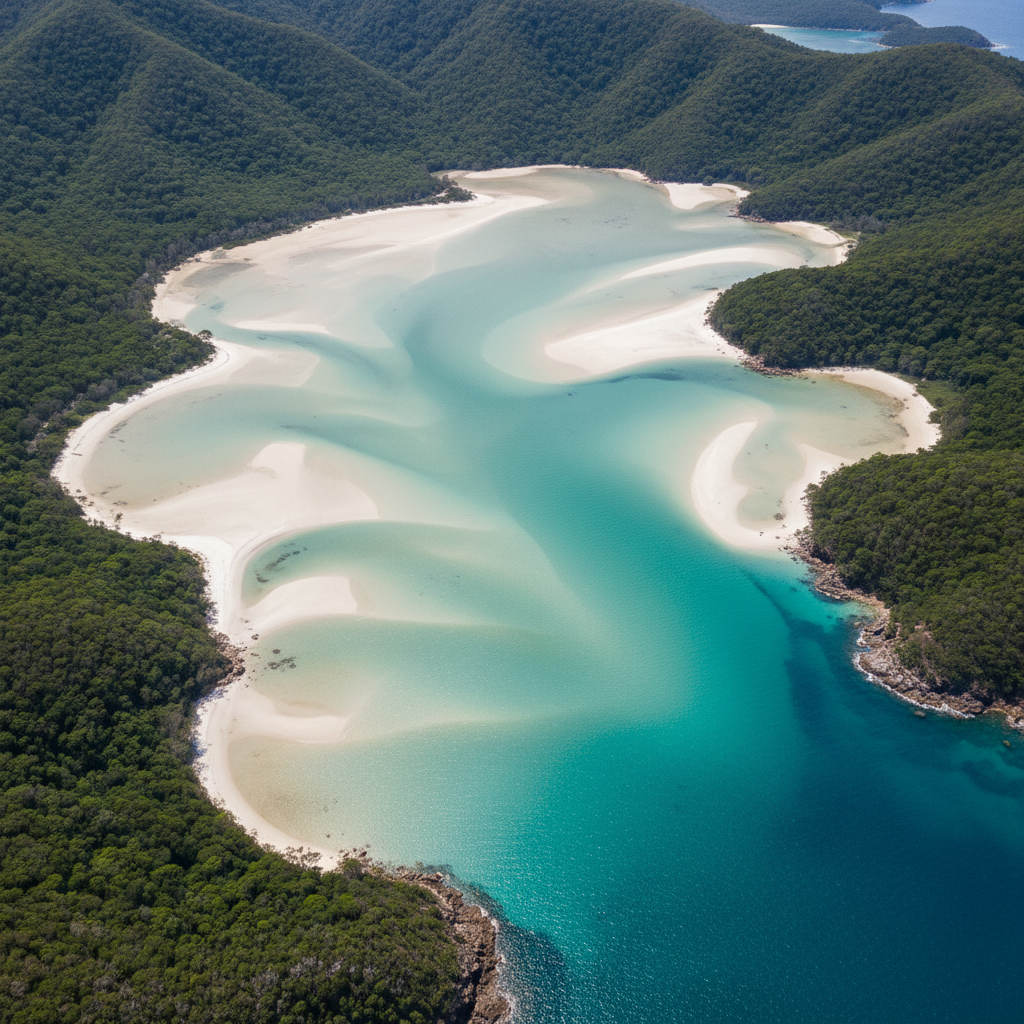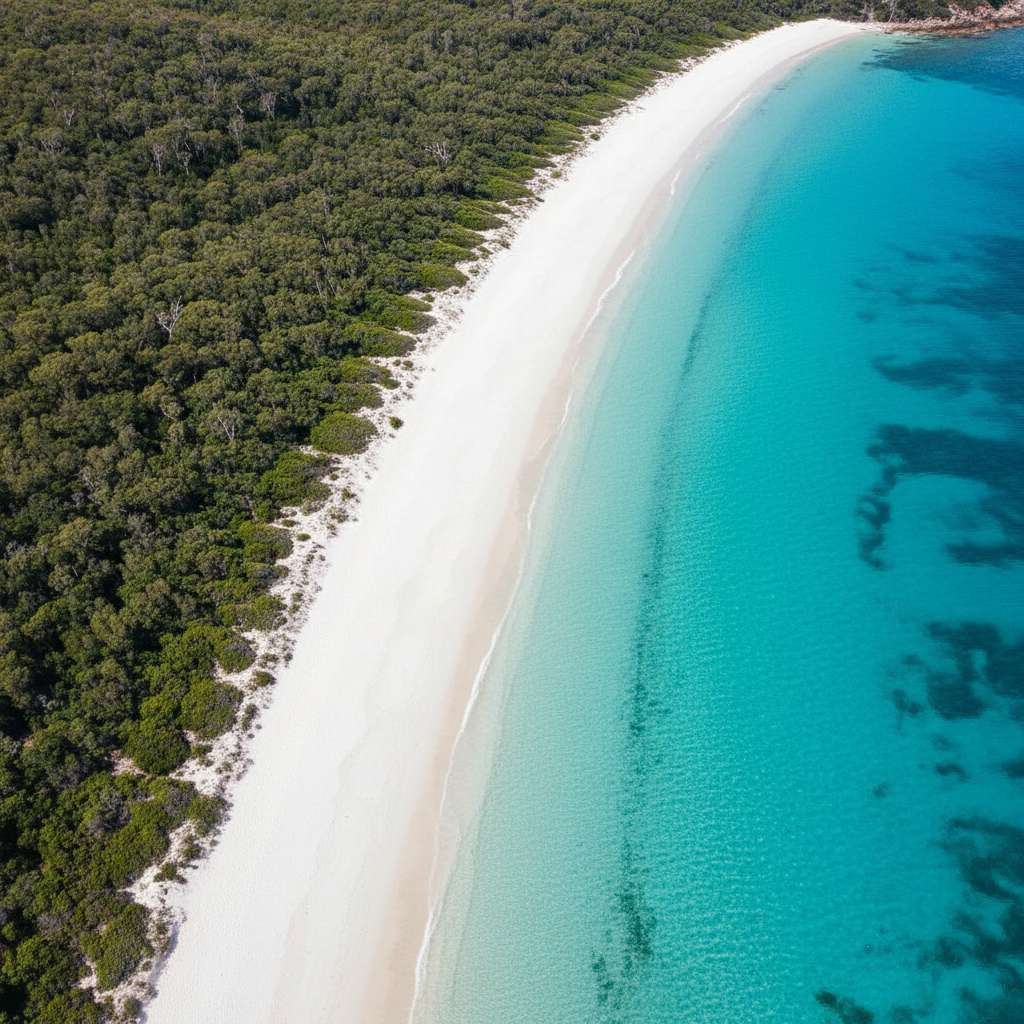
The Cruise Whitsundays Great Barrier Reef pontoon at Hardy Reef delivers one of Australia's most accessible Great Barrier Reef experiences, just two hours from Airlie Beach. This floating platform anchors directly over pristine coral gardens, offering snorkelling, diving, semi-submarine tours, and an underwater observatory — making it perfect for reef newcomers and experienced divers alike.
What exactly is the Cruise Whitsundays pontoon experience?
The Cruise Whitsundays pontoon is a two-level floating platform permanently moored at Hardy Reef, 72 kilometres northeast of Airlie Beach. It includes snorkelling areas, diving platforms, semi-submarine tours, underwater observatory, sun deck, and restaurant facilities for day trips.
This impressive pontoon measures 35 metres by 15 metres, making it one of the largest reef platforms on the Great Barrier Reef. The structure sits directly over Hardy Reef's outer edge, where the continental shelf drops away into deep blue water. This positioning means you're swimming above some of the healthiest coral gardens in the Whitsundays region, with visibility often exceeding 30 metres.
The pontoon operates year-round, with daily departures from Abel Point Marina in Airlie Beach aboard the high-speed catamaran Reefworld. The vessel accommodates up to 350 passengers and features air-conditioned indoor seating, outdoor decks, and onboard commentary during the scenic journey through the Whitsunday Passage.
Hardy Reef forms part of the Great Barrier Reef Marine Park's Green Zone, providing the highest level of protection for marine life. The reef system here spans over 150 square kilometres, with the pontoon positioned strategically above coral bommies that rise from 15-metre depths to just below the surface.
How much does the pontoon day trip cost and what's included?
Adult tickets cost $239 AUD, children (4-14 years) $119 AUD, and infants under 4 travel free. Price includes return transfers, buffet lunch, snorkelling gear, semi-submarine tour, underwater observatory access, and marine biologist presentations throughout the day.
The comprehensive day trip package represents excellent value when you break down what's included. Your ticket covers the two-hour scenic cruise each way through the Whitsunday Islands, with expert commentary about the reef's formation, marine life, and conservation efforts.
Once at Hardy Reef, you'll receive mask, snorkel, and fins at no extra charge. The pontoon stocks various sizes including children's equipment and prescription masks for glasses wearers. Flotation devices, including pool noodles and life jackets, are freely available for nervous swimmers.
The buffet lunch features fresh tropical dishes, including barramundi, prawns, salads, and vegetarian options. Complimentary tea, coffee, and drinking water are provided throughout the day, with additional beverages available for purchase from the licensed bar.
Optional extras include introductory scuba diving ($99 AUD for complete beginners, $89 AUD for certified divers bringing their own gear), helicopter scenic flights ($199 AUD for 10 minutes), and underwater scooter tours ($69 AUD for 30 minutes).
What marine life can you expect to see at Hardy Reef?
Hardy Reef hosts over 200 coral species and 400 fish varieties including Maori wrasse, reef sharks, giant clams, sea turtles, and colourful parrotfish. The outer reef location provides excellent visibility and healthy coral formations due to minimal tourist impact and strong ocean currents.
The coral gardens directly beneath the pontoon showcase massive plate corals, staghorn formations, and brain corals in vibrant yellows, purples, and oranges. These hard corals provide habitat for countless reef fish, from tiny neon gobies to metre-long Spanish mackerel.
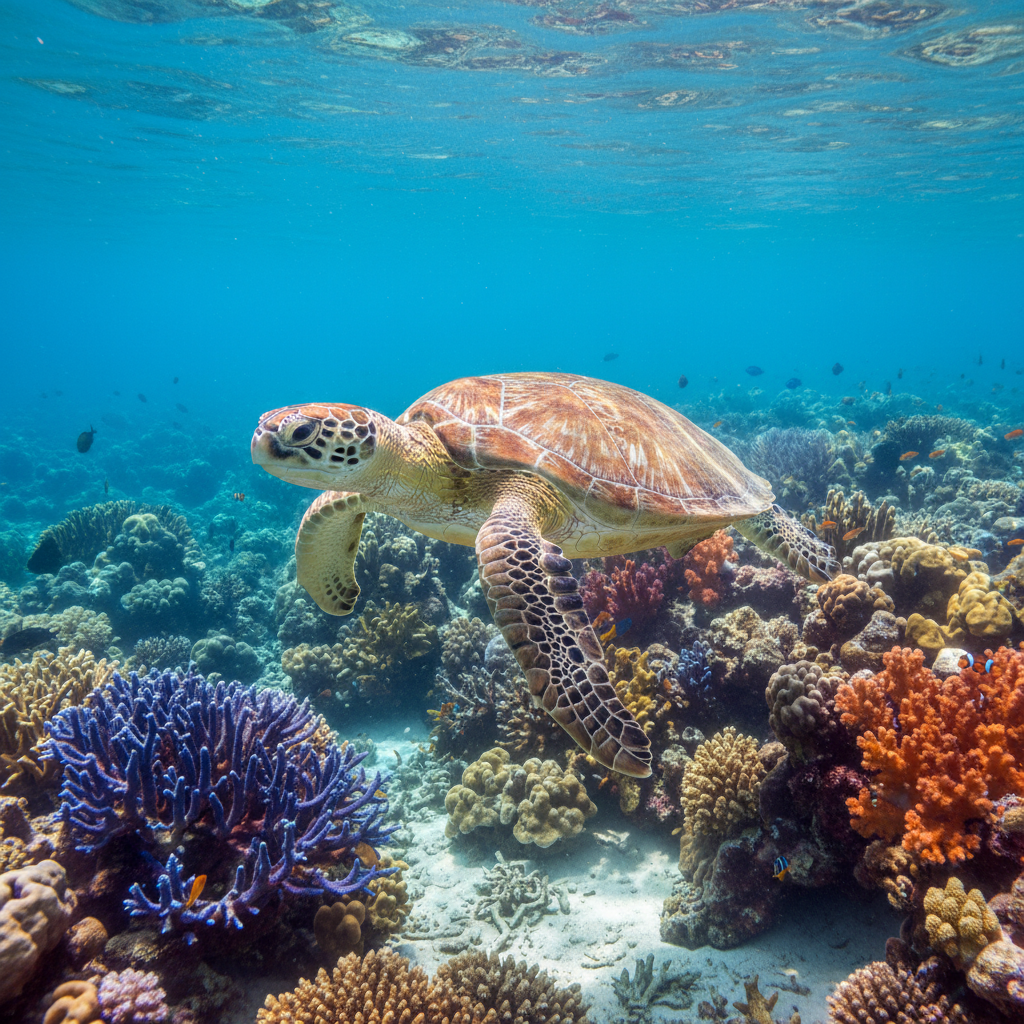
Green sea turtles frequently graze on algae around the pontoon's anchor points, often allowing snorkellers to observe them from just a few metres away. Hawksbill turtles also visit the area, distinguished by their pointed beaks and stunning shell patterns.
The reef's resident Maori wrasse, some weighing over 50 kilograms, have become accustomed to human visitors and often approach snorkellers out of curiosity. These gentle giants can live over 50 years and are considered a sign of a healthy reef ecosystem.
Whitetip and blacktip reef sharks patrol the deeper waters around the pontoon's edges, typically measuring 1-2 metres in length. These harmless sharks are actually an excellent sign of reef health and are completely safe to swim near.
Between June and November, humpback whales migrate through the area, and lucky visitors sometimes spot whale activity from the pontoon's upper deck. The marine biologists onboard provide expert interpretation of all wildlife sightings throughout the day.
How good is the snorkelling at the pontoon site?
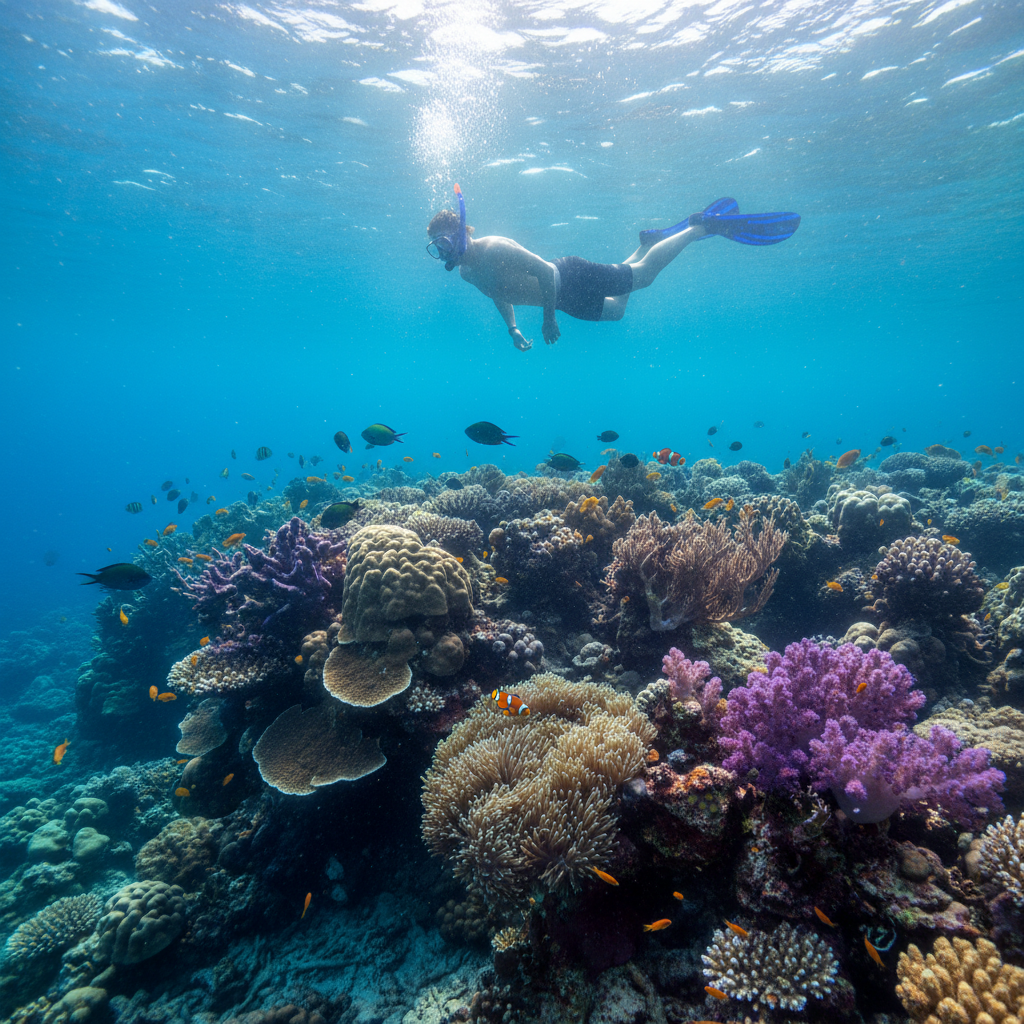
Snorkelling at Hardy Reef rates among Australia's best reef experiences, with 20-30 metre visibility, calm protected waters, and direct access to pristine coral gardens. Multiple snorkelling areas cater to different skill levels, from shallow 3-metre zones to deeper 15-metre coral walls.
The pontoon's strategic positioning in Hardy Reef's lagoon creates naturally calm conditions perfect for snorkelling, even when outer reef waters are choppy. The platform's lee side provides complete wind protection, while the lagoon's circular shape contains wave action.
Three designated snorkelling areas offer varying experiences. The shallow coral garden on the pontoon's western side stays between 3-5 metres deep, perfect for children and nervous swimmers. Here, massive table corals create underwater caves where angelfish and butterflyfish congregate in colorful schools.
The northern snorkelling zone drops to 8-12 metres, featuring dramatic coral walls and swim-throughs. This area attracts larger pelagic fish including trevally, queenfish, and occasionally small reef sharks. The increased depth provides cooler water temperatures and different coral species adapted to reduced light levels.
Advanced snorkellers can explore the eastern deep zone, where the reef wall plunges to over 25 metres. This area requires strong swimming ability but rewards visitors with the most diverse marine life, including giant clams over a metre across and rare fish species.
Water temperature remains comfortable year-round, ranging from 22°C in winter to 29°C in summer. During stinger season (November to May), complimentary stinger suits are provided for all snorkellers, ensuring safe enjoyment of the reef.
What facilities and amenities are available on the pontoon?
The two-level pontoon features freshwater showers, changing rooms, sun deck with shade, underwater observatory, semi-submarine boarding platform, restaurant area, and first aid station. Solar power provides electricity while maintaining environmental sustainability through reef-friendly operations.
The main deck houses the restaurant and bar area, with seating for 200 people under permanent shade structures. Large windows provide reef views while you dine, and the space doubles as a lecture theatre for marine biology presentations.
Four freshwater shower stations allow visitors to rinse off salt water and sand before lunch. Adjacent changing rooms include private cubicles with hooks and benches, though most visitors change on the boat during the return journey.
The upper sun deck offers panoramic 360-degree views of the reef and surrounding ocean. Permanent shade sails provide relief from tropical sun, while comfortable loungers allow relaxation between snorkelling sessions. This level also houses the helicopter landing pad for scenic flight passengers.
The underwater observatory, accessed via spiral stairs from the main deck, provides a unique dry reef experience. Large viewing windows extend 2 metres below the surface, offering fish-eye views of the coral gardens without getting wet. This facility is particularly valuable for non-swimmers or those who prefer to stay dry.
Safety equipment includes life rings, first aid station staffed by qualified personnel, and direct radio contact with Airlie Beach Coast Guard. The pontoon's stability means seasickness is rarely an issue, even for sensitive individuals.
How does the Hardy Reef pontoon compare to other reef tours?
The Hardy Reef pontoon offers superior reef health and marine diversity compared to inner reef sites, with the trade-off of a longer journey time. While Knuckle Reef and Hook Reef provide closer alternatives, Hardy Reef's outer location delivers pristine conditions and more dramatic underwater topography.
Our comprehensive reef tours comparison shows Hardy Reef consistently rates highest for coral coverage and fish diversity. The outer reef's exposure to ocean swells brings nutrient-rich water that supports larger marine life populations, including regular shark and turtle sightings that are less common at inner reef sites.
The two-hour journey each way represents the main drawback compared to closer reefs accessible in 45 minutes. However, this distance means Hardy Reef receives fewer daily visitors, reducing human impact and maintaining more natural fish behaviour. Many operators visit inner reefs multiple times daily, while Hardy Reef hosts just one pontoon.
Reef health at Hardy Reef significantly exceeds inner locations due to better water circulation and minimal anchor damage. The outer reef's exposure to oceanic currents brings cooler, cleaner water during summer months, reducing coral bleaching risk compared to shallower inner reef areas.
For detailed information about all Cruise Whitsundays options, including their sailing and island combinations, the company operates the most comprehensive reef and island program from Airlie Beach.
What's the best time of year to visit Hardy Reef?
April to November offers optimal conditions with calm seas, excellent visibility, and comfortable temperatures. Stinger season (November-May) requires protective suits but still provides good reef access, while June-September adds possible whale sightings during humpback migration season.
The dry season (April to November) delivers the most reliable weather, with southeast trade winds creating calm conditions on Hardy Reef's protected side. Visibility during these months typically exceeds 25 metres, allowing spectacular underwater photography and wildlife observation.
Winter months (June to September) provide the most comfortable conditions for spending a full day on the reef. Air temperatures range from 20-25°C, water stays around 22-24°C, and humidity levels remain low. This period coincides with humpback whale migration, adding the possibility of whale watching from the pontoon's upper deck.
Summer (December to March) brings warmer water temperatures (26-29°C) that many visitors prefer for extended snorkelling. However, this period also coincides with stinger season, requiring protective lycra suits. The increased marine stinger risk is effectively managed through the complimentary suit provision and safety briefings.
Shoulder seasons (April-May and September-November) often provide the best overall experience, combining excellent weather with moderate tourist numbers. Water visibility peaks during these periods as reduced rainfall means less runoff affecting outer reef clarity.
How do you book the Hardy Reef pontoon experience?
Book directly through tour operators or local booking platforms with advance reservations essential during peak seasons. Compare package options including diving add-ons and helicopter flights, with pickup transfers available from Airlie Beach accommodation. Check weather conditions and cancellation policies before finalizing bookings.
The Hardy Reef pontoon operates daily except Christmas Day, with departures from Abel Point Marina at 8:00 AM and returns around 5:30 PM. During peak season (June to September), tours frequently sell out, particularly on weekends and school holidays.
Most visitors book 2-3 days in advance during quiet periods, but peak season requires 5-7 days notice for preferred dates. Last-minute availability sometimes occurs due to cancellations, but relying on this risks disappointment.
Package deals often provide better value when combining the reef trip with other Whitsunday experiences. Multi-day packages might include Whitehaven Beach tours, sailing trips, or island resort stays, with operators offering discounts for multiple bookings.
For comprehensive information about this experience and other reef options, visit our detailed Hardy Reef pontoon guide, which covers booking strategies, what to pack, and insider tips for maximizing your reef day.
Ready to explore the Great Barrier Reef's pristine waters at Hardy Reef? Airlie to Whitehaven makes booking your reef adventure simple, with instant confirmation and competitive pricing on the Cruise Whitsundays pontoon experience. Compare all reef tour options, read detailed reviews, and secure your spot on this unforgettable Great Barrier Reef adventure through our platform.