Flying with Air Whitsunday isn't just about getting from A to B — it's about experiencing the Whitsundays from a perspective that turns even seasoned locals into wide-eyed tourists. Their seaplane tours combine the thrill of water takeoffs and landings with unparalleled aerial views of pristine islands, coral gardens, and the world-famous Whitehaven Beach. After dozens of flights with various operators, I can tell you that Air Whitsunday's fleet of modern seaplanes and their experienced pilots deliver something truly special.
What makes Air Whitsunday seaplane tours different from other scenic flights?
Air Whitsunday operates modern DHC-2 Beaver seaplanes that land directly on water, offering beach landings at Whitehaven Beach and reef landings for snorkelling, unlike fixed-wing aircraft that only provide aerial views.
The key difference lies in the amphibious capability of their aircraft. While most scenic flights in the Whitsundays operate from airstrips and offer only aerial perspectives, Air Whitsunday's seaplanes can touch down on water surfaces. This means you can land directly on the lagoon at Whitehaven Beach, step out onto the sand within minutes of your aerial tour, and experience both the bird's-eye view and ground-level magic.
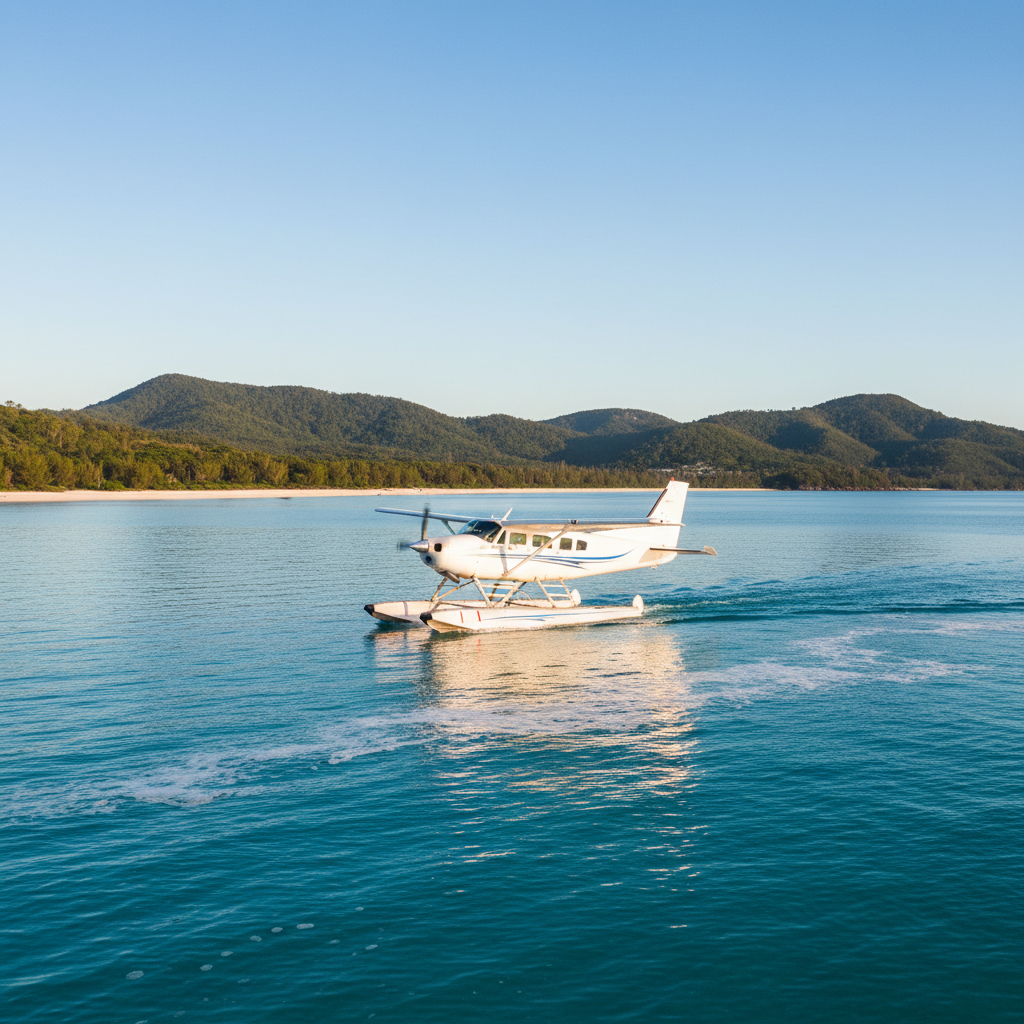
Their fleet consists of restored DHC-2 Beaver aircraft, each seating up to 8 passengers. These aircraft have been specifically chosen for their reliability in marine environments and their large windows that provide unobstructed views during flight. The high-wing design ensures every seat offers excellent photo opportunities without wing interference.
Air Whitsunday's pilots average over 3,000 flight hours in the region, giving them intimate knowledge of tidal conditions, weather patterns, and the best photo angles. They'll adjust flight paths based on lighting conditions and point out marine life like turtles, rays, and dolphins that are often visible from altitude.
How much do Air Whitsunday seaplane tours cost and what's included?
Air Whitsunday seaplane tours range from $599 to $1,899 per person depending on duration and inclusions, with all tours including scenic flights, professional pilot commentary, and complimentary refreshments during beach or reef stops.
The most popular option is the Whitehaven Beach Half Day tour at $899 per adult, which includes a 35-minute scenic flight each way, 2.5 hours on Whitehaven Beach, and light refreshments. The full breakdown:
- Reef and Whitehaven Combo: $1,899 per adult (6.5 hours total)
- Whitehaven Beach Half Day: $899 per adult (4 hours total)
- Reef Experience: $1,299 per adult (4 hours total)
- Scenic Flight Only: $599 per adult (1 hour flight time)
All tours include comprehensive insurance, professional pilot commentary, and digital flight certificates. Beach tours provide beach umbrellas, and reef tours include snorkelling equipment and stinger suits. Children aged 3-14 receive 20% discounts on most tours, while infants under 3 fly free when sharing a parent's lap (though dedicated seating is recommended for safety and comfort).
Group bookings of 6+ passengers receive 10% discounts, and advance bookings often qualify for seasonal promotions. Cancellations due to weather are fully refundable or can be rescheduled without penalty.
Which seaplane tour offers the best value for experiencing Whitehaven Beach?
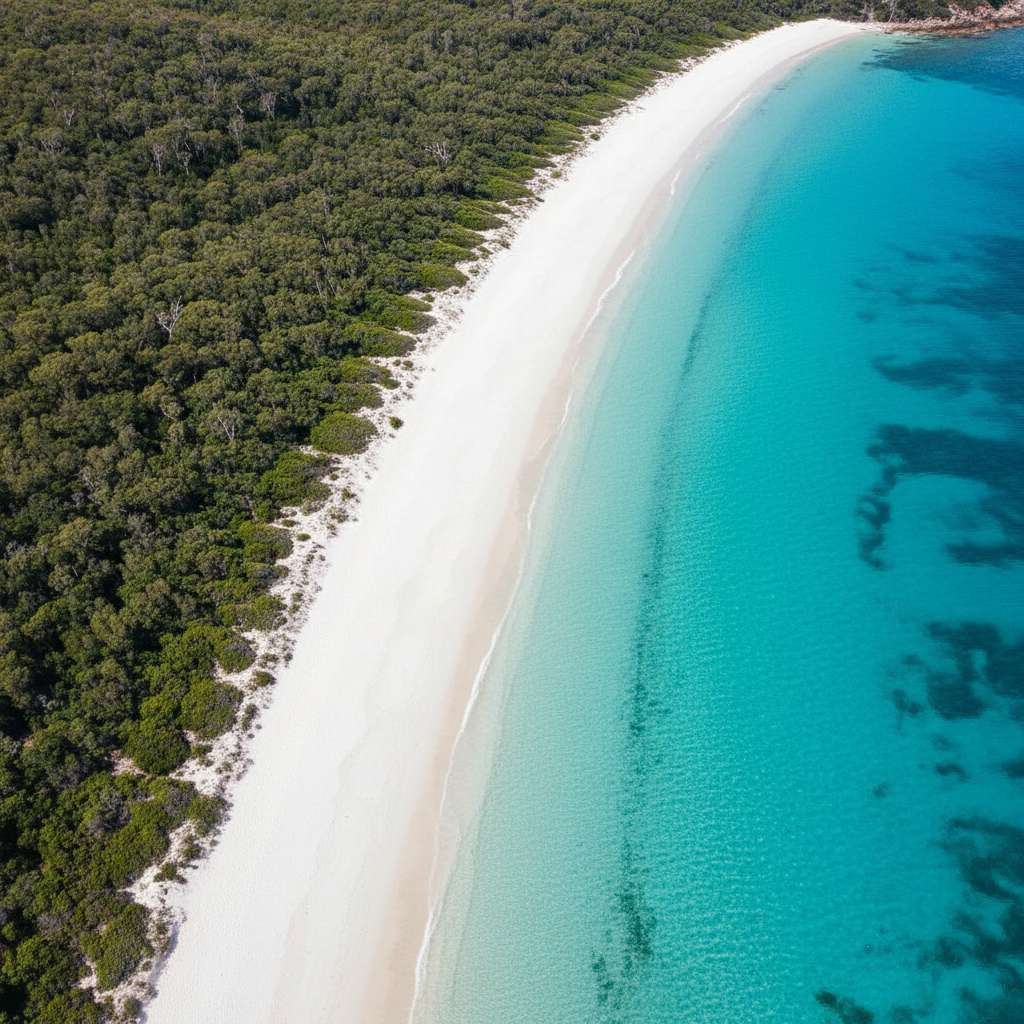
The Whitehaven Beach Half Day tour offers optimal value at $899, providing 2.5 hours beach time, scenic flights over Hill Inlet, and sufficient time to explore both ends of the 7km beach.
This tour strikes the perfect balance between flight time and beach experience. You'll depart Airlie Beach at either 8:30 AM or 1:00 PM, with the morning departure offering better photography conditions due to eastern lighting on Hill Inlet's swirling sands.
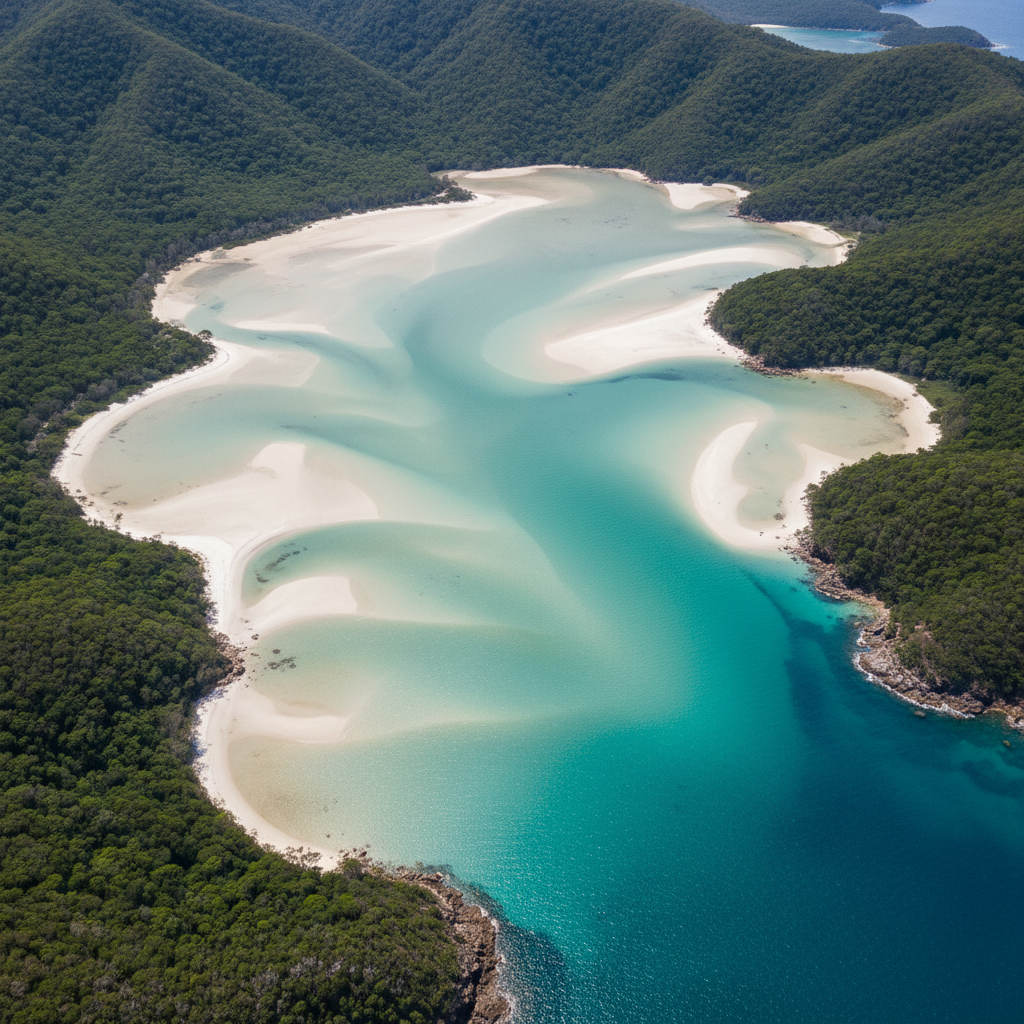
During the 35-minute flight to Whitehaven, pilots typically route over Hook Island's pristine bays, then approach Whitehaven from the south to showcase the famous Hill Inlet lookout from above. The aerial perspective reveals the incredible contrast between the 98.9% pure silica sand and the deeper blue channels.
The 2.5-hour beach time allows you to walk the southern section near Hill Inlet, swim in the calm northern lagoon, and explore the middle sections where most day-trip boats don't venture. The seaplane lands in the protected lagoon area, meaning you're immediately on the beach without tender transfers required by larger vessels.
Compared to full-day boat tours that often include Whitehaven as just one stop, the seaplane tour dedicates quality time specifically to the beach while providing aerial views impossible from sea level. The time efficiency also leaves your afternoon free for other Whitsunday activities.
What can you see during the scenic flight portion of Air Whitsunday tours?
Air Whitsunday scenic flights showcase Heart Reef, Hill Inlet's swirling sands, pristine outer reef coral gardens, and 74 tropical islands from altitudes between 500-1500 feet, providing unmatched photographic opportunities of coral formations and marine life.
The flight path varies by tour type and weather conditions, but typically includes several iconic landmarks. Heart Reef, located on Hardy Reef approximately 60km from Airlie Beach, appears as a natural heart-shaped coral formation best viewed from 1,000 feet altitude. The pilots position aircraft for optimal viewing and photography, often circling twice to ensure passengers on both sides capture the perfect shot.
Hill Inlet on Whitehaven Beach showcases its famous swirling sand patterns, created by tidal movements mixing pure silica sand with darker sediments. The patterns change constantly, meaning every flight reveals unique formations. From 800 feet altitude, the contrast between turquoise shallows and deep blue channels creates a natural masterpiece.
The outer Great Barrier Reef sections visited during reef tours reveal pristine coral gardens, with coral formations visible through crystal-clear water. Bommies (isolated coral towers) appear as dark circles surrounded by brilliant blue, while reef channels create natural highways through coral walls.
Between destinations, flights pass over uninhabited islands like Haselwood Island, Lupton Island, and Border Island, showcasing secluded beaches, rainforest canopies, and hidden lagoons accessible only by private yacht or helicopter. Eagle rays, sea turtles, and reef sharks are frequently spotted from altitude, particularly around coral reef edges.
How does the seaplane landing experience work at Whitehaven Beach?
Air Whitsunday seaplanes land in Whitehaven's protected northern lagoon during high tide periods, with pilots beaching aircraft on sand bars, allowing passengers to step directly onto the beach without transfers or wet landings.
The landing sequence begins approximately 10 minutes before touchdown, with pilots providing detailed briefings about disembarkation procedures. Approach angles depend on wind conditions, but typically involve a low pass over the beach to assess conditions before turning for final approach into the lagoon.
Touch down occurs in 2-3 feet of water depth, with aircraft momentum carrying it toward sandy shallows where pilots beach the nose wheel on firm sand. Passengers disembark through the main cabin door directly onto sand, keeping feet dry throughout the process. The pilot remains with the aircraft to monitor tidal conditions and secure equipment.
Landing times coordinate with tidal schedules, ensuring sufficient water depth for safe operations while maintaining access to the beach. High tide periods (typically 2-3 hours around peak tide) provide optimal conditions, though experienced pilots can operate during medium tide levels with adjusted landing zones.
During beach time, the seaplane remains anchored in shallow water, creating an impressive backdrop for photos while ensuring quick departure capability. Pilots monitor weather conditions continuously and maintain radio contact with Air Whitsunday base operations for real-time updates.
What should you expect during Air Whitsunday's Great Barrier Reef landing tours?
Great Barrier Reef seaplane tours land at exclusive reef locations 60km offshore, providing direct access to pristine coral gardens, complimentary snorkelling equipment, marine biology talks, and floating pontoon facilities for non-swimmers.
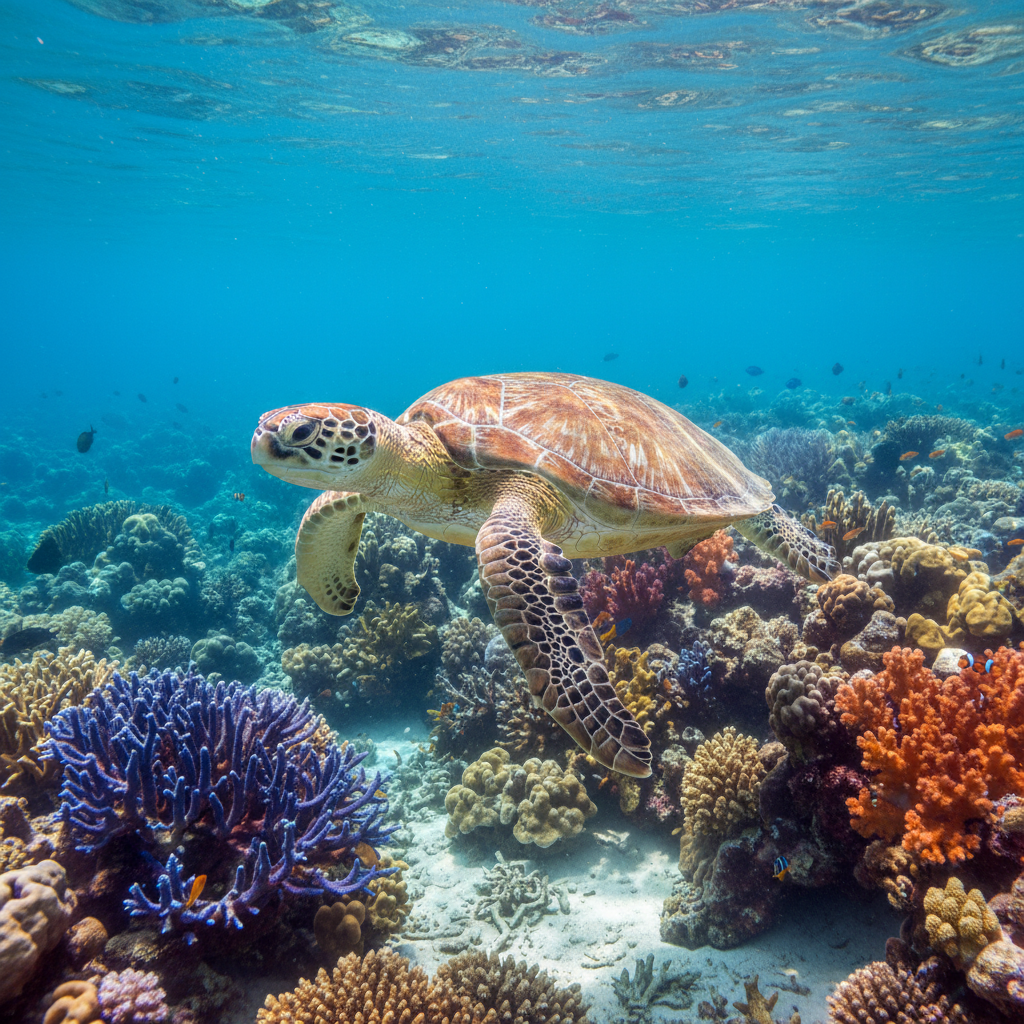
Reef tours typically visit Hardy Reef or similar outer reef locations where coral coverage exceeds 80% and marine life density rivals world-class dive sites. The seaplane lands in protected reef lagoons with water depths of 8-15 metres, clear enough to see coral formations from the surface.
Upon landing, pilots deploy a floating pontoon system that serves as the base for reef activities. Snorkelling equipment includes masks, snorkels, fins, and full-body stinger suits for protection against marine stingers. Prescription mask inserts are available for guests requiring vision correction.
Marine life encounters frequently include Green and Hawksbill turtles, Maori wrasse, giant trevally, coral trout, and countless tropical fish species. Coral formations include staghorn corals, brain corals, and massive plate corals that create underwater cathedrals spanning several metres.
Professional pilots provide marine biology briefings, highlighting reef ecology, conservation efforts, and identification tips for common species. Photography assistance ensures guests capture underwater memories, with waterproof camera rental available for those without equipment.
Non-swimmers can enjoy reef views through glass-bottom viewing boxes while remaining on the pontoon, ensuring everyone experiences reef magic regardless of swimming ability. Total reef time averages 2-2.5 hours, providing sufficient opportunity for multiple snorkel sessions and relaxation.
How do Air Whitsunday seaplanes compare to helicopter tours for scenic viewing?
Seaplanes offer longer flight times, water landing capabilities, and larger windows at lower altitudes (500-1500ft) compared to helicopters, while helicopters provide hover capabilities and doors-off photography options from higher altitudes.
Flight characteristics differ significantly between aircraft types. Seaplanes maintain cruise speeds of 160-180 km/h at altitudes between 500-1500 feet, providing extended viewing opportunities and smoother photography conditions. The high-wing design eliminates wing obstruction, while large cabin windows offer panoramic views for every passenger.
Helicopters excel in maneuverability, offering precise positioning over specific landmarks and hover capabilities for extended photography. However, flight durations are typically shorter due to fuel consumption, and doors-off options expose passengers to wind and noise that can impact photography quality.
Landing capabilities represent the major differentiator. Seaplanes can land at multiple destinations during single flights, transforming scenic tours into multi-experience adventures. Helicopters require designated landing pads, limiting destination options to specific facilities like resorts or purpose-built helipads.
Cost comparisons favor seaplanes for extended tours, with equivalent flight time plus landing experiences often costing 20-30% less than helicopter-only scenic flights. However, helicopter tours provide unique perspectives impossible from fixed-wing aircraft, particularly for vertical landmark photography.
Weather tolerance also differs, with seaplanes operating in broader wind conditions while helicopters face restrictions during gusty conditions common around mountainous islands. The choice depends on priorities: adventure and destination access (seaplanes) versus photographic precision and unique angles (helicopters).
What are the best photography opportunities during Air Whitsunday tours?
Optimal photography occurs during morning departures with eastern lighting on Hill Inlet, Heart Reef circling maneuvers, and low-altitude reef passes, with pilots coordinating aircraft positioning for unobstructed shots from both cabin sides.
Camera equipment recommendations include wide-angle lenses (16-35mm equivalent) for landscape shots, telephoto lenses (70-200mm) for wildlife spotting, and polarizing filters to reduce water surface reflections. Window glare minimizes with circular polarizing filters, particularly important during midday flights.
Hill Inlet photography benefits from morning eastern lighting that illuminates sand patterns while casting shadows that enhance texture definition. The famous swirling sand formations appear most dramatic during mid-tide periods when water channels create maximum contrast against white silica sand.
Heart Reef positioning occurs at 1,000-1200 feet altitude, with pilots completing figure-eight patterns to ensure both cabin sides capture optimal angles. The coral formation measures approximately 17 metres across, requiring telephoto focal lengths for detailed shots while wide-angle captures surrounding reef context.
Underwater photography during reef stops requires waterproof housings or dedicated underwater cameras. Water clarity typically exceeds 30 metres visibility, enabling natural-light photography without flash requirements down to 5-metre depths.
Pilots provide photography coaching throughout flights, identifying optimal moments for specific shots and adjusting aircraft bank angles when safe to do so. They'll announce wildlife sightings and coordinate with passengers to ensure everyone captures key moments.
What safety measures and qualifications do Air Whitsunday pilots have?
Air Whitsunday pilots hold Commercial Pilot Licences with seaplane endorsements, averaging over 3,000 regional flight hours, while aircraft undergo daily inspections and comprehensive maintenance following Australian Civil Aviation Safety Authority standards.
Pilot qualification requirements exceed industry minimums, with all pilots holding CPL(A) licenses plus seaplane category endorsements specifically for water operations. Regional experience requirements include minimum 1,000 hours flight time in tropical marine environments, ensuring familiarity with local weather patterns, tidal conditions, and reef navigation.
Aircraft maintenance follows CASA Part 145 approved maintenance organization standards, with daily pre-flight inspections covering engine performance, control systems, flotation equipment, and emergency systems. Each aircraft carries comprehensive emergency equipment including life jackets, emergency locator beacons, first aid supplies, and marine distress signals.
Weather monitoring utilizes real-time meteorological data, radar imagery, and pilot reports from other operators. Minimum weather conditions include 5km visibility, cloud bases above 1,500 feet, and surface winds below 25 knots for safe operations.
Emergency procedures training covers water landings, passenger evacuation, marine rescue coordination, and medical emergency response. Pilots complete annual recurrent training including simulator sessions for emergency scenarios and water survival training.
Communication systems maintain constant contact with air traffic control, marine rescue coordination centers, and Air Whitsunday operations. GPS navigation systems provide precise positioning while backup navigation equipment ensures redundancy for critical systems.
When is the best time to book Air Whitsunday seaplane tours for optimal conditions?
Optimal seaplane conditions occur during dry season months (April-November) with morning departures, avoiding afternoon wind builds and stinger season restrictions, while booking 2-3 weeks advance ensures preferred departure times and seasonal pricing.
Weather patterns favor morning departures year-round, with calmer winds, better visibility, and superior lighting conditions for photography. Trade wind patterns typically strengthen after midday, creating choppy water conditions that impact landing comfort and photography quality.
Dry season months (April through November) provide most reliable weather windows, with minimal rainfall, consistent trade winds, and lower humidity. Wet season operations (December-March) face increased weather cancellations due to afternoon thunderstorms and reduced visibility from tropical moisture.
Stinger season considerations affect reef tours between November and May, though stinger suits provide complete protection. Some operators prefer dry season reef tours when stinger risks eliminate protective clothing requirements and underwater visibility peaks.
Advance booking recommendations vary by season. Peak periods (June-August, December-January) require 3-4 weeks advance notice for preferred times, while shoulder seasons (April-May, September-November) often accommodate 1-2 weeks notice.
Tidal considerations impact Whitehaven Beach landing times, with high tide periods providing optimal conditions. Air Whitsunday coordinates departure times with tidal schedules, meaning some dates offer limited departure options based on natural conditions.
Whale migration seasons (June-September) add bonus wildlife viewing opportunities during flights, with humpback whales frequently spotted during their annual north-south migration routes through Whitsunday waters.
How do you prepare for and what should you bring on Air Whitsunday tours?
Essential preparation includes reef-safe sunscreen, polarized sunglasses, comfortable walking shoes, quick-dry clothing, and waterproof camera protection, while avoiding loose items and following 15kg baggage restrictions for aircraft weight limitations.
Clothing recommendations prioritize comfort and sun protection. Long-sleeved shirts and pants provide UV protection during extended sun exposure, while quick-dry fabrics handle beach and reef activities. Closed-toe shoes with good grip prevent slips on wet aircraft surfaces, though reef tours provide aqua shoes for water activities.
Sun protection requirements intensify at altitude and on reflective water surfaces. SPF 50+ reef-safe sunscreen protects marine environments while providing adequate protection. Wide-brimmed hats secure with chin straps prevent loss during aircraft operations, while polarized sunglasses reduce glare for better landmark visibility.
Photography equipment should include lens cleaning cloths for salt spray removal, extra memory cards for extended shooting opportunities, and waterproof cases for reef tours. Aircraft vibration affects telephoto shots, making image stabilization valuable for wildlife photography.
Personal medication, especially motion sickness remedies, should be taken 30 minutes before departure. While seaplanes provide smoother rides than helicopters, sensitive passengers benefit from preventive measures during extended flights.
Items to avoid include loose jewelry, large hats without securing straps, and aerosol products that may affect aircraft instruments. Weight restrictions apply to personal bags, though camera equipment typically receives exemptions when discussed during booking.
Documentation requirements include valid photo identification for all passengers, with international visitors requiring passports for security verification procedures.
Ready to experience the Whitsundays from a truly unique perspective? Air Whitsunday's seaplane tours offer unmatched access to pristine destinations combined with unforgettable aerial views that will redefine your understanding of this tropical paradise. Whether you're drawn to the swirling sands of Hill Inlet, the pristine coral gardens of the outer reef, or simply want to tick Heart Reef off your bucket list, these tours deliver experiences that photos alone cannot capture. Book your Air Whitsunday seaplane adventure through Airlie to Whitehaven and discover why this remains one of the most sought-after ways to explore the Great Barrier Reef and Whitsunday Islands. For more aerial options, check out our comprehensive guide to the best scenic flights in the Whitsundays or browse our full selection of Whitehaven Beach tours to find your perfect island adventure.