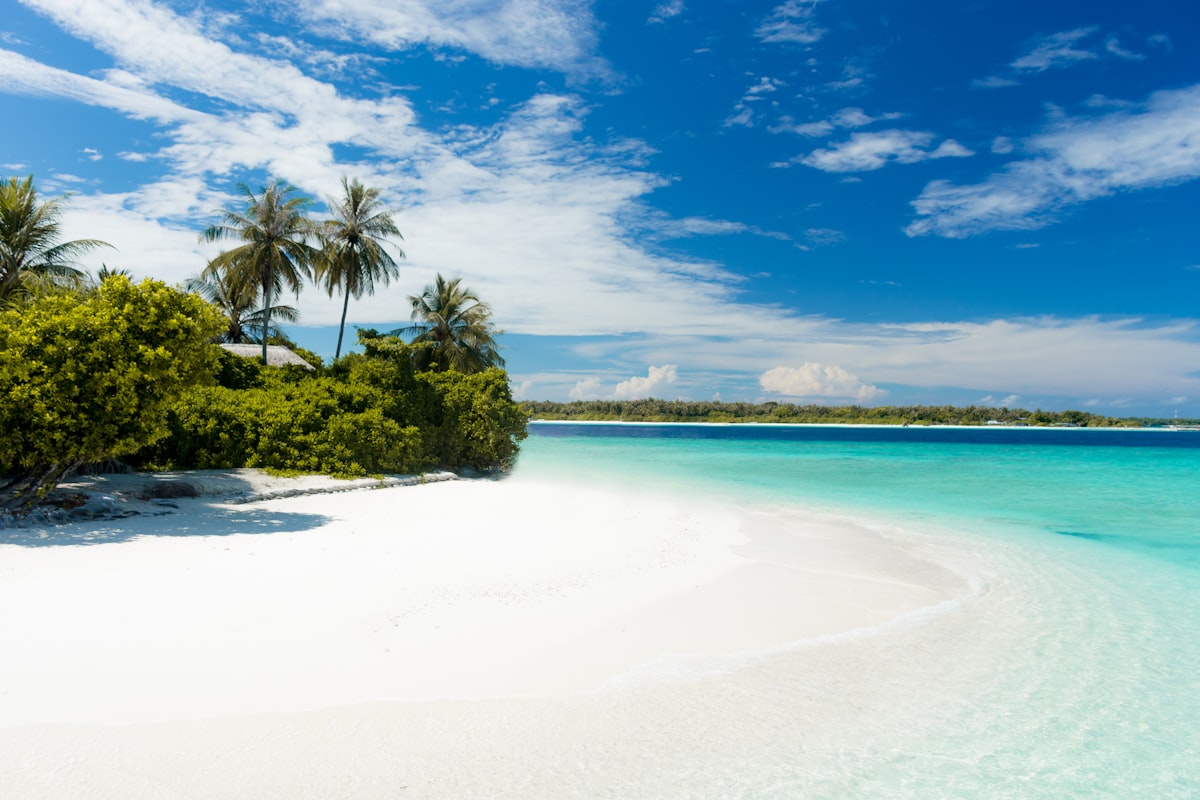
Standing on Whitehaven Beach feels like stepping onto another planet. The sand beneath your feet gleams with an almost supernatural brilliance, staying cool even under the Queensland sun and squeaking audibly as you walk. This isn't just any beach sand — it's a geological marvel that took millions of years to perfect, composed of 98.9% pure silica that makes it one of the purest natural sands on Earth.
The science behind Whitehaven's extraordinary sand tells a fascinating story of ancient rock formations, ocean currents, and marine life working together to create something truly unique. Understanding why this sand is so special helps explain why Whitehaven Beach consistently ranks among the world's best beaches and why it deserves its protected status within the Whitsunday Islands National Park.
What Makes Whitehaven Beach Sand So Pure?
Whitehaven Beach sand is 98.9% pure silica, formed from weathered quartz crystals that originated from ancient granite formations on the Australian mainland millions of years ago. Ocean currents transported and refined these particles, removing impurities through constant washing and sorting.
The extraordinary purity comes from a geological process called aeolian sorting, where wind and water gradually separate materials by weight and composition. Heavier minerals like iron oxide (which gives most beach sands their yellow or brown colour) sink or wash away, leaving behind the lightest, purest silica particles.
Silica (silicon dioxide) has several unique properties that distinguish Whitehaven's sand from typical beach sand. The quartz crystals are extremely hard, rating 7 on the Mohs scale, making them resistant to weathering and chemical breakdown. This hardness explains why the sand grains maintain their angular, crystalline structure rather than becoming smooth and rounded like most beach sands.
The absence of coral fragments, shell pieces, and organic matter further contributes to the sand's purity. While most tropical beaches contain significant amounts of broken coral and marine organism remains, Whitehaven's sand composition is almost entirely terrestrial in origin, transported from the mainland during ancient geological periods when sea levels were different.
How Did Ancient Granite Create This White Sand?
Whitehaven's sand originated from Paleozoic granite formations on the Australian mainland, weathered over 400 million years. Quartz crystals within these granite masses broke down through chemical and physical weathering, creating pure silica particles that rivers eventually carried to ancient coastlines.
During the Permian period (roughly 280 million years ago), the Australian continent experienced different climatic conditions and sea levels. Rivers flowing from the granite-rich interior carried massive quantities of quartz-derived sediments toward the coast. These sediments accumulated in coastal environments and were subsequently reworked by marine processes.
The Whitsunday Islands region was submerged and exposed multiple times throughout geological history due to sea level fluctuations during ice ages. Each submersion cycle allowed ocean currents to further refine and sort the sediments, gradually concentrating the purest silica particles in specific locations.
Tectonic activity during the formation of the Great Barrier Reef also played a crucial role. As the continental shelf was reshaped, existing sediment deposits were redistributed, with the purest materials settling in protected embayments like Whitehaven Beach. The beach's east-facing orientation and the protective influence of surrounding islands created ideal conditions for accumulating and retaining these refined silica sands.
Why Does Whitehaven Beach Sand Stay Cool?
Silica sand has low thermal conductivity and high reflectivity, reflecting up to 85% of solar radiation rather than absorbing it as heat. Unlike darker sands containing iron oxides, pure silica doesn't retain thermal energy, keeping the surface comfortable for bare feet even at noon.
The physics behind this cooling effect involves both reflection and conduction properties. Dark-coloured beach sands typically contain iron oxide, titanium oxide, and organic matter that absorb solar radiation across the visible spectrum. These materials convert light energy into heat, raising sand temperature to levels that can burn bare skin.
Whitehaven's pure silica crystals behave differently. Their molecular structure reflects most visible light, particularly in the blue and white spectrum ranges. This high albedo (reflectivity) means less solar energy is converted to heat within the sand grains themselves.
Additionally, silica has poor thermal conductivity compared to materials like quartz-rich sands with metallic inclusions. Even when surface grains do warm up, heat doesn't transfer efficiently through the sand mass, creating an insulating effect that maintains cooler subsurface temperatures.
The crystalline structure of the sand grains also contributes to air circulation. Unlike smooth, rounded sand particles that pack tightly together, Whitehaven's angular silica crystals create microscopic air pockets that provide additional insulation and allow heat to dissipate more effectively through convection.
What Marine Life Contributes to Whitehaven's Sand Formation?
While most of Whitehaven's sand is terrestrial silica, parrotfish and other reef species contribute microscopic amounts through bio-erosion of coral and rock surfaces. However, unlike typical tropical beaches, marine organism contributions represent less than 1% of total sand composition.
Parrotfish species including the steephead parrotfish (Chlorurus microrhinos) and humphead parrotfish (Bolbometopon muricatum) do feed on coral polyps and algae around the Whitsunday reefs. These fish ingest coral fragments while feeding, grinding the material in their pharyngeal mills before excreting fine calcium carbonate sand. A single large parrotfish can produce up to 200 kilograms of sand annually.
However, the currents and wave action around Whitehaven Beach create a sorting mechanism that removes most of this marine-derived material. Calcium carbonate sand is less dense than pure silica and tends to be transported away from the beach by tidal flows and seasonal current patterns.
Sea urchins, particularly the long-spined sea urchin (Diadema setosum) and slate pencil urchin (Heterocentrotus mammillatus), also contribute to marine sand production through their feeding activities on rock surfaces. Their scraping and boring activities create fine sediments, but again, these materials are typically sorted out by natural processes before reaching Whitehaven's shoreline.
The protected status of waters around Whitehaven Beach within the Great Barrier Reef Marine Park ensures these natural sand-producing processes continue without interference from activities like coral harvesting or destructive fishing practices that could alter the delicate balance.
How Do Ocean Currents Maintain the Sand's Purity?
The East Australian Current and local tidal flows continuously wash Whitehaven Beach, removing heavier particles and organic matter while retaining pure silica grains. This natural sorting process has operated for thousands of years, maintaining the sand's extraordinary purity.
Whitehaven Beach sits within a complex current system influenced by the larger East Australian Current, tidal exchanges with the Coral Sea, and local wind-driven circulation patterns. These currents create what oceanographers call a "sediment trap" — conditions that favour the accumulation of specific particle types while removing others.
During flood tides, nutrient-rich waters flow into Hill Inlet from the northeast, carrying fine organic particles and planktonic material. However, the beach's orientation and the underwater topography cause these waters to flow parallel to the shore rather than directly onto the beach face, preventing organic matter from settling on the pure silica sands.
Seasonal wind patterns also influence sand sorting. During the southeast trade wind season (April to October), consistent wave action mobilises sand particles, allowing natural density separation. Lighter organic matter and broken shell fragments are kept in suspension and carried away, while the heavier silica grains settle back onto the beach.
The semi-enclosed nature of Hill Inlet creates additional sorting mechanisms. As tidal waters recede through the narrow inlet mouth, they create venturi effects that can transport fine particles away from the beach system while leaving the coarser, purer silica sands behind.
What Conservation Measures Protect Whitehaven's Unique Sand?
Whitehaven Beach operates under strict Great Barrier Reef Marine Park Authority regulations prohibiting sand removal, camping, and motorised vehicle access. Visitor numbers are controlled through permitted tour operators, with designated walking areas preventing erosion of sensitive dune systems.
The beach is classified as a Habitat Protection Zone under the Great Barrier Reef Marine Park Zoning Plan, which means commercial fishing, collecting, and most extractive activities are prohibited. This protection extends to the sand itself — removing even small amounts as souvenirs carries penalties of up to $12,600 under Queensland regulations.
Access is strictly controlled through licensed tour operators who must follow detailed environmental management plans. Tour operators are limited in group sizes and visit durations, with most half-day tours allowing 2-3 hours on the beach and full-day tours extending to 4-5 hours maximum.
The Queensland Parks and Wildlife Service maintains boardwalks and designated pathways to minimise foot traffic impact on vegetation and prevent erosion of sand dunes. These elevated walkways also protect nesting sites for seabirds including sooty terns (Onychoprion fuscatus) and bridled terns (Onychoprion anaethetus) that use the beach periphery during breeding season.
Rangers conduct regular monitoring of sand composition, water quality, and visitor impact indicators. This data helps inform adaptive management strategies to ensure the beach's unique characteristics are preserved for future generations while maintaining sustainable tourism access.
Why Is Whitehaven Beach Sand Important to Marine Ecosystems?
The pure silica sand creates unique pH-neutral conditions and excellent water filtration, supporting specialised microbial communities and providing critical habitat for juvenile fish species. The sand's inert nature prevents chemical reactions that could alter local water chemistry.
Unlike carbonate-based coral sands, silica sand doesn't buffer seawater pH, maintaining stable chemical conditions that many marine organisms require. This stability is particularly important for juvenile fish that use the shallow waters around Whitehaven as nursery habitat during their early life stages.
The angular nature of the silica grains creates exceptional interstitial spaces — gaps between sand particles where beneficial bacteria colonies establish. These bacterial communities process organic matter and nutrients, functioning as biological filters that help maintain water quality around the beach.
Several endemic invertebrate species have adapted specifically to pure silica sand environments. The Whitsunday sand hopper (Talitrus whitsundayensis) and various polychaete worms require the specific grain size and chemical neutrality that Whitehaven's sand provides. These species form the base of food webs that support larger marine animals.
Sea turtles, particularly green turtles (Chelonia mydas) and loggerhead turtles (Caretta caretta), use the waters around Whitehaven for feeding and resting. The pure sand creates ideal conditions for seagrass growth in adjacent areas, providing essential turtle feeding habitat.
During stinger season (November to May), the sand's reflective properties help maintain water temperatures that influence the distribution of box jellyfish (Chironex fleckeri) and Irukandji jellyfish (Carukia barnesi). While stingers can still be present, the cooler water temperatures around Whitehaven sometimes reduce their activity levels.
How Can Visitors Help Preserve Whitehaven Beach?
Visitors preserve Whitehaven by following Leave No Trace principles, staying on designated walkways, using reef-safe sunscreen, and choosing eco-certified tour operators. Never remove sand, avoid disturbing wildlife, and dispose of all waste responsibly in designated bins.
The most critical preservation action is sand protection — never collect sand samples, even small amounts. The cumulative impact of thousands of visitors taking "just a handful" would gradually diminish this irreplaceable resource. Tour guides are trained to explain the science behind the sand's formation to help visitors understand its value.
Sunscreen choice significantly impacts the marine environment around Whitehaven. Use reef-safe sunscreens free from oxybenzone, octinoxate, and other chemicals that can bleach coral and disrupt marine ecosystems. Many tour operators provide complimentary reef-safe sunscreen or sell it onboard.
Wildlife observation requires responsible behaviour, particularly around bird nesting areas and marine life. Maintain at least 3 metres distance from any wildlife, never feed animals, and avoid flash photography that could disturb behaviour. During turtle season (November to March), be extra cautious in shallow water areas where juvenile turtles may rest.
Choose tour operators with EcoGuide Australia certification or similar environmental credentials. These operators follow strict environmental protocols, contribute to conservation research, and ensure their activities don't exceed sustainable impact levels. The additional cost of eco-certified tours directly supports ongoing conservation efforts.
Support marine park research by participating in citizen science programs when available. Some tours include opportunities to contribute to coral health monitoring or marine animal sighting databases that help scientists understand ecosystem changes.
Ready to experience the scientific marvel of Whitehaven Beach firsthand? Book your eco-friendly tour through Airlie to Whitehaven and join knowledgeable guides who'll share the fascinating geology and marine science behind this world-renowned destination while ensuring your visit contributes to its long-term preservation.